

Russian rocket launches Iranian satellites into orbit as Moscow and Tehran expand ties
Advertisement
Read this article for free:
or
Already have an account? Log in here »
To continue reading, please subscribe:

Digital Subscription
One year of digital access for only $205*
- Enjoy unlimited reading on winnipegfreepress.com
- Read the E-Edition, our digital replica newspaper
- Access News Break, our award-winning app
- Play interactive puzzles
*First annual payment billed as $205.00 + GST for one year. This annual subscription will automatically renew at $233.00 + GST every 52 weeks (10% off the regular annual price of $259.35). Offer available to new and qualified returning subscribers only. Cancel any time.
To continue reading, please subscribe:
Add Free Press access to your Brandon Sun subscription for only an additional
$1 for the first 4 weeks*
- Enjoy unlimited reading on winnipegfreepress.com
- Read the E-Edition, our digital replica newspaper
- Access News Break, our award-winning app
- Play interactive puzzles
*Your next Brandon Sun subscription payment will increase by $1.00 and you will be charged $17.95 plus GST for four weeks. After four weeks, your payment will increase to $24.95 plus GST every four weeks.
Read unlimited articles for free today:
or
Already have an account? Log in here »
Hey there, time traveller!
This article was published 04/11/2024 (659 days ago), so information in it may no longer be current.
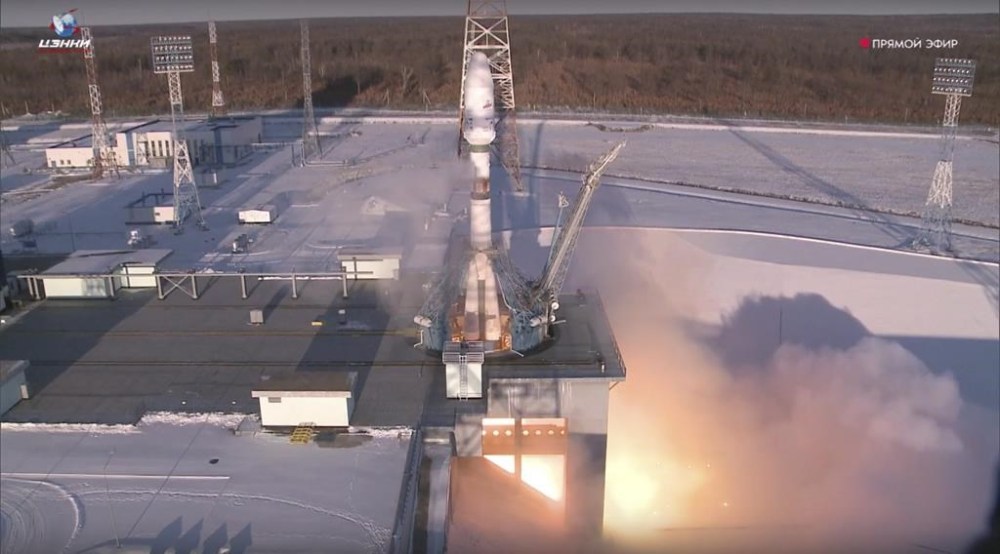
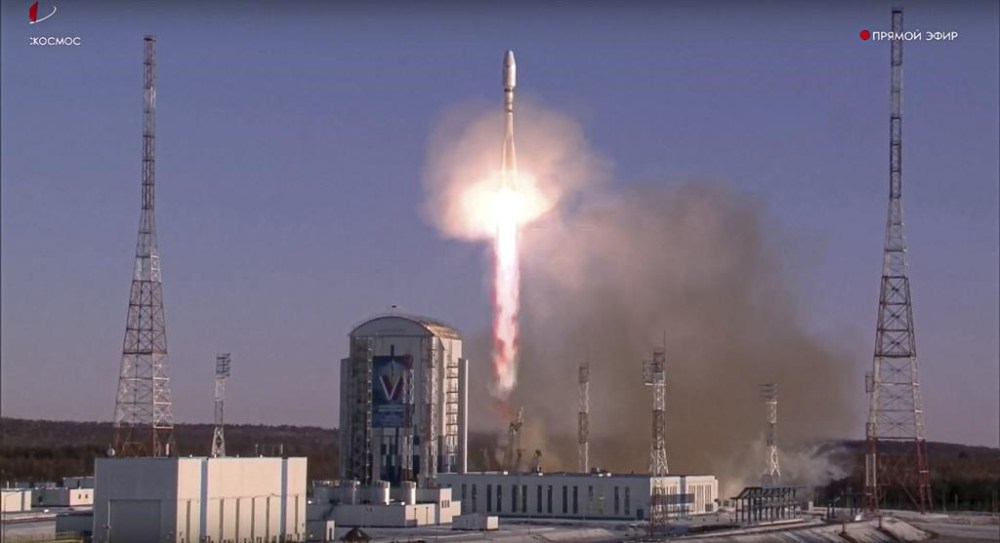
MOSCOW (AP) — A Russian rocket on Tuesday blasted off successfully to carry a pair of Iranian satellites into orbit, a launch that reflected growing cooperation between Moscow and Tehran.
The Soyuz rocket lifted off as scheduled from Vostochny launchpad in far eastern Russia and put its payload into a designated orbit nine minutes after the launch. It was carrying two Russian Ionosphere-M Earth observation satellites and several dozen smaller satellites, including the two Iranian ones.
Iran’s two satellites, named Kowsar and Hodhod, were the first launched on behalf of the country’s private sector. In 2022, a Russian rocket launched an Iranian Earth observation satellite called Khayyam that was built in Russia on Tehran’s order, and in February Russia put another Iranian satellite named Pars-1 into orbit.
Tuesday’s launch comes as Russia and Iran have expanded ties in various spheres. Ukraine and the West have accused Tehran of providing Moscow with hundreds of exploding drones for use on the battlefield in Ukraine and helped launch their production in Russia. The Iranian drone deliveries, which Moscow and Tehran have denied, have allowed for a constant barrage of long-range drone strikes at Ukraine’s infrastructure.
Moscow and Tehran are planning to further bolster their ties with a “comprehensive strategic partnership” that is set to be signed during Iranian President Masoud Pezeshkian’s planned visit to Russia. The date for that visit hasn’t been set yet, but the Kremlin said it could happen soon.
Tuesday’s successful launch of the Iranian satellites atop a Russian rocket follows a series of failed launches suffered by Iran’s civilian space program in recent years. There have been five failed launches in a row for the Simorgh program, a satellite-carrying rocket.
A fire at the Imam Khomeini Spaceport in February 2019 killed three researchers, authorities said at the time. A launchpad rocket explosion later that year drew the attention of then-President Donald Trump, who taunted Iran with a tweet showing what appeared to be a U.S. surveillance photo of the site.
At the same time, a separate Iranian space program run by the country’s paramilitary Revolutionary Guard has seen successful launches from a military base outside of Shahroud, some 350 kilometers (215 miles) east of the capital, Tehran. However, satellite images analyzed by The Associated Press show Israel likely bombed the site during its Oct. 26 retaliatory strike on Iran.
The U.S. intelligence community’s worldwide threat assessment this year said Iran’s development of satellite launch vehicles “would shorten the timeline” for Iran to develop an intercontinental ballistic missile because it uses similar technology.
Intercontinental ballistic missiles can be used to deliver nuclear weapons. Iran is now producing uranium close to weapons-grade levels after the collapse of its nuclear deal with world powers. Tehran has enough enriched uranium for “several” nuclear weapons, if it chooses to produce them, the head of the International Atomic Energy Agency has warned.
Iran has always denied seeking nuclear weapons and says its space program, like its nuclear activities, is for purely civilian purposes. However, U.S. intelligence agencies and the IAEA say Iran had an organized military nuclear program up until 2003.