A dire diagnosis

Ontario doctor challenged academic institutions, helping open doors for marginalized communities to study medicine

Advertisement

Advertise with us

Revelations of bias and exclusion have ripped away the myth of equality in Canada, from systemic discrimination against Indigenous peoples to the deliberate marginalization of ethnic minorities throughout history.

Read this article for free:

or

Already have an account? Log in here »

To continue reading, please subscribe:

Subscribe and receive a limited-edition Free Press branded hat or tote.

Digital Subscription

One year of digital access for only $205*

  • Enjoy unlimited reading on winnipegfreepress.com
  • Read the E-Edition, our digital replica newspaper
  • Access News Break, our award-winning app
  • Play interactive puzzles

*First annual payment billed as $205.00 + GST for one year. This annual subscription will automatically renew at $233.00 + GST every 52 weeks (10% off the regular annual price of $259.35). Offer available to new and qualified returning subscribers only. Cancel any time.

To continue reading, please subscribe:

Add Free Press access to your Brandon Sun subscription for only an additional

$1 for the first 4 weeks*

  • Enjoy unlimited reading on winnipegfreepress.com
  • Read the E-Edition, our digital replica newspaper
  • Access News Break, our award-winning app
  • Play interactive puzzles
Start now

*Your next Brandon Sun subscription payment will increase by $1.00 and you will be charged $17.95 plus GST for four weeks. After four weeks, your payment will increase to $24.95 plus GST every four weeks.

Hey there, time traveller!
This article was published 09/11/2024 (631 days ago), so information in it may no longer be current.

Revelations of bias and exclusion have ripped away the myth of equality in Canada, from systemic discrimination against Indigenous peoples to the deliberate marginalization of ethnic minorities throughout history.

Today, we would hope our institutions and professions represent our changing population. Dr. Chika Stacy Oriuwa’s memoir, Unlike the Rest, reminds us that change only comes through advocacy and activism.

Getting accepted into the University of Toronto’s medical school in 2016 was the culmination of Oriuwa’s childhood dream and enormously hard work. The glow she felt dimmed when she realized she was the only Black student in a class of 259, in a city where Blacks constitute about 10 per cent of the population.

Christie Vuong photo
                                When Chika Stacy Oriuwa began medical school at the University of Toronto in 2016, she was the only Black student in a class of 259.

Christie Vuong photo

When Chika Stacy Oriuwa began medical school at the University of Toronto in 2016, she was the only Black student in a class of 259.

Oriuwa details her life’s journey from Brampton, Ont. as the daughter of struggling Nigerian immigrant parents who encouraged her ambitions. She says she always felt the sting of racism, from overt comments to microaggressions about the shade of her skin to whether her hairstyles appeared “aggressive.” She channeled her feelings through the intense storytelling rhythms of spoken-word poetry, an art she carried on through her studies.

The university saw the imbalance, too, and asked her to help right it.

Despite fearing she would be branded a troublemaker and frozen out of favoured positions by a hierarchy protecting its historical structure, she joined organizations challenging the perception that Blacks made it into the school through lowered criteria or special streams.

Oriuwa’s activism included giving lectures and interviews to the media about how economic advantage favours some while perpetually disenfranchising people of marginalized communities. Her outspoken statements inspired young people who had felt intimidated from applying by the financial constraints and racism they might face. As a validation of their fears, Oriuwa recounts the viciousness of online trolls who disparaged her achievements and repeated racist tropes about Blacks.

Not surprisingly, there were teachers and classmates echoing these stereotypes.

Oriuwa managed to do all this while simultaneously navigating the crushing curriculum of medical school, writing exams every two weeks, engaging in clinical care, participating in extracurricular groups and tutoring to support herself. It took a toll, and she discusses her struggle with disordered eating as she sought to control everything going on around her.

Her efforts paid off. In 2018, 14 Black students were admitted to the U of T’s Faculty of Medicine, and 24 were enrolled in 2024, a number at least reflective of the population. For her efforts Oriuwa, now a resident psychiatrist, has been applauded as a role model. Mattel Toys modeled a lookalike Barbie doll after her, with her hairstyle, a white coat, scrubs and a stethoscope.
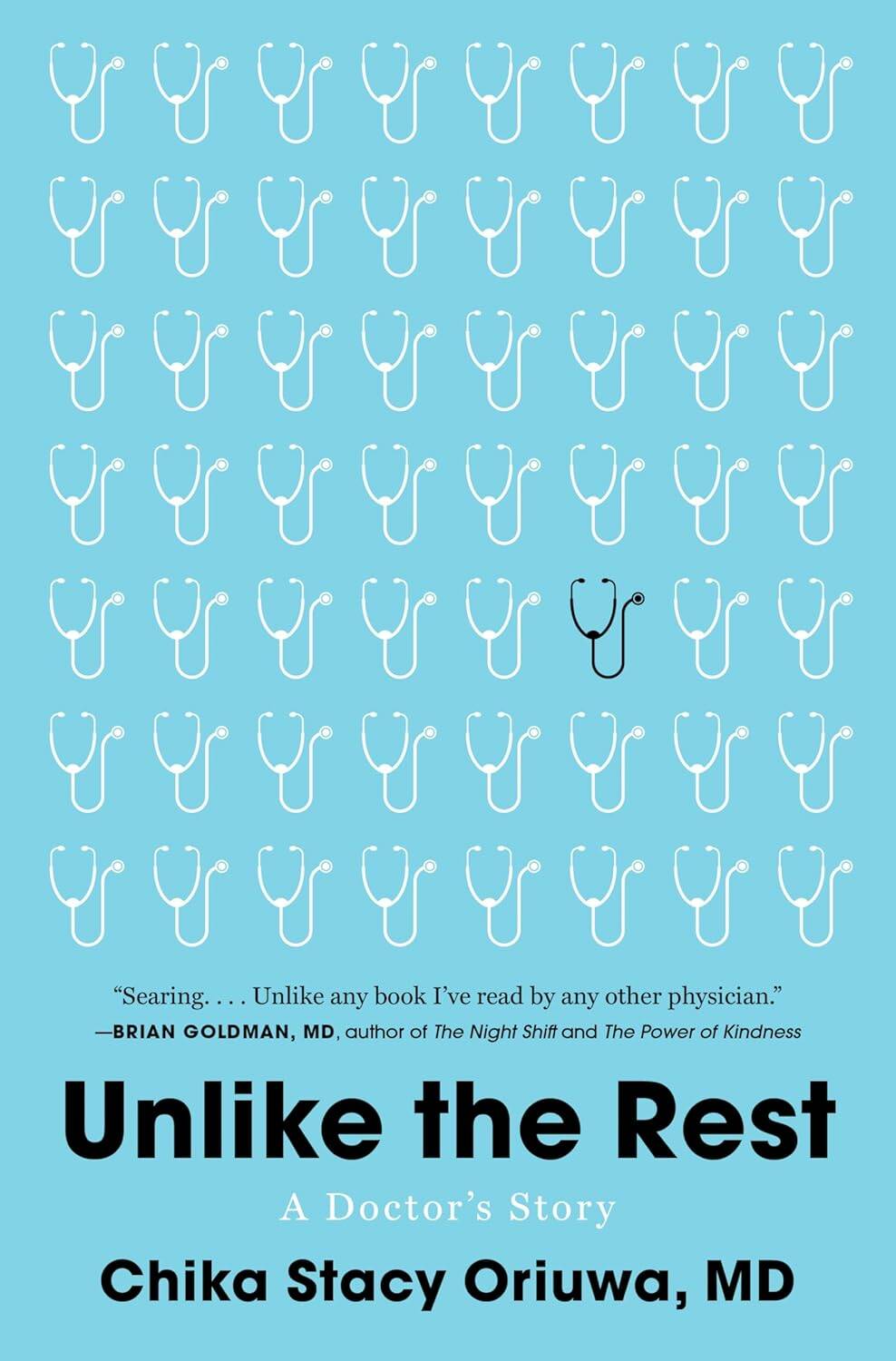
Unlike the Rest

Unlike the Rest

Examples abound of prejudices in academia, an institution supposedly built on merit. Manitobans might remember the unwritten numerus clausus quota system used by the University of Manitoba Medical School in the 1930s and ’40s to limit the number of Jews, Ukrainians, Poles and other ethnic groups admitted each year to maintain the domination of the Anglo elite in the medical profession, until it was exposed. Queen’s University Medical School excluded Black students from 1918 to 1965, only apologizing in 2018, an embarrassing reflection of how entrenched attitudes remain. Clearly there are more institutions and professional groups that need to self-examine, acknowledge past harms and engage in reconciliation.

At one point in her childhood, Oriuwa announced she would rather become a writer than a doctor. Knowing more than she could have about a writer’s income, her mother and father urged her to study medicine first and write later.

It was sound advice, but Oriuwa’s writing didn’t suffer from neglect — her writing is passionate, detailed and analytical, and worth reading as Canadian society evolves.

Harriet Zaidman is an award-winning writer for young people living in Winnipeg.

Report Error Submit a Tip

More Stories

Culture minister’s pledge sends officials on hunt for money to fix Islamic centre after apparent hate crime

Carol Sanders 5 minute read Preview

Culture minister’s pledge sends officials on hunt for money to fix Islamic centre after apparent hate crime

Carol Sanders 5 minute read Friday, Jul. 31, 2026

Government officials were left scrambling Friday to explain why the province is paying for repairs at a mosque recently targeted in a potential hate crime after a $1 million security enhancement fund was fully allocated in June.

Read
Friday, Jul. 31, 2026

Sci-fi, fantasy bookstore to land downtown

Ben Sigurdson 4 minute read Yesterday at 2:03 AM CDT

New bookstore alert! New bookstore alert!

On Tuesday at 10 a.m., Other Places Books is slated to open its doors at 436 Graham Ave., just a few doors down from mainstay Bison Books (424 Graham Ave.).

The bookstore’s focus will be science fiction and fantasy, and, says the website (opbooks.store), “will be a friendly, inclusive, and very queer space.” Other Places is the project of Didi Chanoch, who has been chronicling the bookstore’s progress on Bluesky (@didichanoch.northsky.social).

Other Places is the third genre-specific bookstore to open in Winnipeg in recent years. Raven’s End Books (1859 Portage Ave.) opened in 2024, specializing in the horror genre, while Bound to Please (995 McPhillips St.) kicked off selling books in the romance genre in February.

Giant Tiger decision creates giant void for desperate population

Niigaan Sinclair 5 minute read Preview

Giant Tiger decision creates giant void for desperate population

Niigaan Sinclair 5 minute read Friday, Jul. 31, 2026

A lot of Winnipeggers may shrug, but the end of Giant Tiger’s downtown store is a giant problem for many of the people living in the centre of the city.

It would have been difficult for anyone going into or passing by the Canadian discount chain’s Donald Street and Ellice Avenue location Thursday to miss the red notices posted on the store’s windows advising it will close on Nov. 7.

According to a 2024 Downtown Winnipeg BIZ report, about 18,000 people live in Winnipeg’s downtown.

More than 60,000 people work there, and some days — when there’s a big concert or the Jets play at Canada Life Centre, for example — the number of people spending time in the area increases significantly.

Read
Friday, Jul. 31, 2026

On eve of Folklorama, Ghana pavilion scrambles to replace stolen outfits

Chris Kitching 4 minute read Preview

On eve of Folklorama, Ghana pavilion scrambles to replace stolen outfits

Chris Kitching 4 minute read Friday, Jul. 31, 2026

Volunteers from Folklorama’s Ghana pavilion scrambled to replace cultural costumes for about 40 young dancers after the outfits were stolen in Winnipeg days before the annual festival begins.

Two plastic storage bins containing the costumes, to be worn by children and teenagers, were taken from the trunk of a parked car on Banning Street, near Notre Dame Avenue in the West End, likely late Wednesday or early Thursday.

“I felt sad that this has happened. I felt completely devastated for the mother who had them in her car,” said pavilion co-ordinator Abigail Larson. “The initial feeling of sadness changed to, ‘OK, how do we make this a positive?’”

The costumes belong to the Ghana Union of Manitoba Dancers, whose members have rehearsed for months for Folklorama, which begins Sunday.

Read
Friday, Jul. 31, 2026

Winnipeg police ticketed a man accused of leaving his dog locked in his vehicle in a grocery store parking lot during the intense heat earlier this week, then attacking bystanders who were concerned about the animal’s welfare.

It’s not uncommon for city police to be contacted about pets left locked in cars during heat waves, but typically those calls don’t escalate to the extent of the incident Wednesday afternoon, said Winnipeg Police Service spokesman Const. Claude Chancy.

“It definitely comes up every time we have heat events in the city, we do get concerned citizens calling about pets being left in vehicles, even for a short period of time,” said Chancy.

“Typically, what will happen is that the owner or the caretaker of the pet will present themselves to police and proper, appropriate advice is given about the care of these animals — this is definitely an extreme case.”

Domestic-duty distribution must suit you both

Maureen Scurfield 5 minute read Yesterday at 2:00 AM CDT

DEAR MISS LONELYHEARTS: I fear I’m going to end up with prolonged indigestion! My husband — a pretty boring cook — has decided it’s his turn to be the house parent again, and that I should go back to my profession, as he has come to hate his job.

I couldn’t be happier! He knows I love my work and I know he’s bored stiff by his accounting career. (He sometimes even has nightmares about numbers!)

The trouble is he’s a lousy housekeeper and cook. He’s patient and fun with our three kids, but I know that once he gets them off to school this fall, he’ll be on the couch watching TV until they get home.

I’m not looking forward to this. The place is always a wreck when he’s on home duty. Also, as soon as the kids come through the door, he makes them adult-sized sandwiches and store-bought snacks. So when I get home from work, they’re not hungry for a healthy dinner and my man certainly won’t be busy cooking up something nice for the two of us.