Societal secularization in spotlight
Authors say life without religion would go on pretty much as it always has

Advertisement
Read this article for free:
or
Already have an account? Log in here »
To continue reading, please subscribe:

Digital Subscription
One year of digital access for only $205*
- Enjoy unlimited reading on winnipegfreepress.com
- Read the E-Edition, our digital replica newspaper
- Access News Break, our award-winning app
- Play interactive puzzles
*First annual payment billed as $205.00 + GST for one year. This annual subscription will automatically renew at $233.00 + GST every 52 weeks (10% off the regular annual price of $259.35). Offer available to new and qualified returning subscribers only. Cancel any time.
To continue reading, please subscribe:
Add Free Press access to your Brandon Sun subscription for only an additional
$1 for the first 4 weeks*
- Enjoy unlimited reading on winnipegfreepress.com
- Read the E-Edition, our digital replica newspaper
- Access News Break, our award-winning app
- Play interactive puzzles
*Your next Brandon Sun subscription payment will increase by $1.00 and you will be charged $17.95 plus GST for four weeks. After four weeks, your payment will increase to $24.95 plus GST every four weeks.
Read unlimited articles for free today:
or
Already have an account? Log in here »
Hey there, time traveller!
This article was published 09/11/2024 (670 days ago), so information in it may no longer be current.
The story of religion in Canada in the first part of the 21st century is about people leaving it. Across all demographics, people are disaffiliating from religious groups and no longer attending religious services.
As fewer and fewer people claim any religious adherence, what will happen to society? The answer, according to a new book is — nothing. No societal collapse, no dramatic rise in crime, no huge fall in morality.
That’s the conclusion of Goodbye Religion: The Causes and Consequences of Secularization (NYU Press) by American sociologists Ryan Cragun and Jesse Smith.
Luis Andres Henao / The Associated Press files
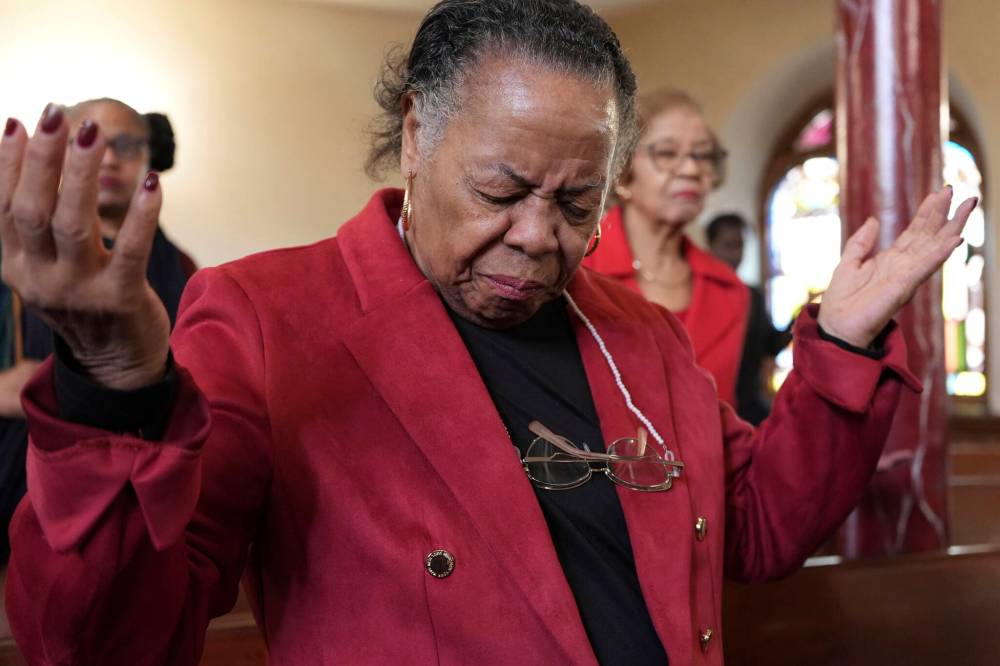
Even without religion, Americans would remain engaged in society, volunteer, give to charity and continue to strive to make the world a better place, the book’s authors say.
According to the authors, life without religion would go on pretty much as it always has. Americans would remain engaged in society, keep volunteering and giving to charity and continue to strive to make the world a better place.
People won’t stop doing those things because religion has waned, said Cragun, who teaches sociology of religion at the University of Tampa. They just won’t do it out of a context of religion.
“These are normal people doing normal things and when religion declines, it’s really not that big of a deal,” he said.
The authors based their findings on over 100 interviews with people who are religious, were never religious or who left religion, together with data from the General Social Survey and other research in the U.S.
From that research, they found when it comes to things such as stealing, cheating on taxes, not paying bus fare, accepting bribes or committing acts of violence, there is no significant statistical difference between people who say they are religious, people who are not religious and people who say they are atheists.
A non-religious world wouldn’t be a catastrophe, in other words.
But that also doesn’t mean society would suddenly be a much better place if religion was gone, they add.
“Both ardent secularists who are hoping for some secular utopia and devoutly religious people who think this will spell catastrophe are both wrong,” said Smith, who studies secularity and religion at Western Michigan University. “The truth lies somewhere in the boring middle.”
The idea that society won’t be worse because religion is diminished, or be better because it is gone, probably disappoints both the religious and the non-religious, the authors said.
“We can fully understand the desire to see your ‘side’ come out on top; to somehow be better than the other side,” they wrote in the book. “But data are data, and what some might consider disappointing we believe is actually a new perspective on people leaving religions.”
Through the book, Cragun and Smith hope both religious and non-religious Americans will see they have more in common than they might realize.
“Yes, there are some differences here and there, but if the pillars of American society include morality, charity, civic engagement, families, education, purpose, health and kindness, we shouldn’t fear more people leaving religion. Life will go on,” they write.
Thinking about their book brought a few things to my mind.
First, it’s a study of religion in the U.S. There will be some similarities to Canada, but religion occupies a very different place in that country. Not everything in the book may apply north of the border.
Second, studies in Canada consistently show the more religious people are — the more they go to religious services, pray and read their holy scriptures — the more they volunteer and donate to charity. (And not just to religious charities.) Things may be different in the U.S. in this regard. Or perhaps it is really the same, and it just hasn’t been studied enough in this country.

Third, the authors don’t take into account what is called the “Halo Effect” when it comes to the financial value places of worship add to a community. This effect results from how places of worship provide space for groups such as AA or for food banks or by providing free or inexpensive space for concerts or theatre groups.
If enough people stop being religious, and places of worship close, what would happen to those activities? Where would those groups go? Someone buying an old downtown church to turn it into condos is likely not going to offer space in the new building for a soup kitchen.
As for Cragun and Smith, they aren’t that worried about what the future will hold. People who are worried about what might happen if religion ceases to be a major force in society should, using their word, “relax.”
That, they said, “might help us (re)focus more attention on the many social problems we should be worried about.”
faith@freepress.mb.ca
The Free Press is committed to covering faith in Manitoba through our Religion in the News project. This reporting continues because readers like you step forward to fund it.
Donate now to support our reporting on religion.
Your donation is eligible for a charitable tax receipt.
BECOME A FAITH JOURNALISM SUPPORTER
Our newsroom depends on a growing audience of readers to power our journalism. If you are not a paid reader, please consider becoming a subscriber.
Our newsroom depends on its audience of readers to power our journalism. Thank you for your support.
The Free Press is committed to covering faith in Manitoba through our Religion in the News project. This reporting continues because readers like you step forward to fund it.
Donate now to support our reporting on religion.
Your donation is eligible for a charitable tax receipt.
BECOME A FAITH JOURNALISM SUPPORTER
Our newsroom depends on a growing audience of readers to power our journalism. If you are not a paid reader, please consider becoming a subscriber.
Our newsroom depends on its audience of readers to power our journalism. Thank you for your support.
Advertisement Advertise With Us
Advertisement Advertise With Us
The Free Press acknowledges the financial support it receives from members of the city’s faith community, which makes our coverage of religion possible.