

Left-wing austerity turns out to be worse
Advertisement
Read this article for free:
or
Already have an account? Log in here »
To continue reading, please subscribe:

Digital Subscription
One year of digital access for only $205*
- Enjoy unlimited reading on winnipegfreepress.com
- Read the E-Edition, our digital replica newspaper
- Access News Break, our award-winning app
- Play interactive puzzles
*First annual payment billed as $205.00 + GST for one year. This annual subscription will automatically renew at $233.00 + GST every 52 weeks (10% off the regular annual price of $259.35). Offer available to new and qualified returning subscribers only. Cancel any time.
To continue reading, please subscribe:
Add Free Press access to your Brandon Sun subscription for only an additional
$1 for the first 4 weeks*
- Enjoy unlimited reading on winnipegfreepress.com
- Read the E-Edition, our digital replica newspaper
- Access News Break, our award-winning app
- Play interactive puzzles
*Your next Brandon Sun subscription payment will increase by $1.00 and you will be charged $17.95 plus GST for four weeks. After four weeks, your payment will increase to $24.95 plus GST every four weeks.
Read unlimited articles for free today:
or
Already have an account? Log in here »
Hey there, time traveller!
This article was published 18/11/2024 (657 days ago), so information in it may no longer be current.
I observe concerns being raised lately by a variety of left-of-centre commentators warning of the evils of potential right-of-centre governments imposing dire austerity, destroying the lives of so many. Yet there is something very wrong about such assertions.
It is true some right-of-centre governments can and have imposed austerity. At the same time, it is equally true that left-of-centre governments can and have done exactly the same. And based on experience up to the present, the grief caused by left-of-centre austerity tends to be worse.
“This cannot be,” some will opine. “That would never happen with governments claiming to be progressive!”
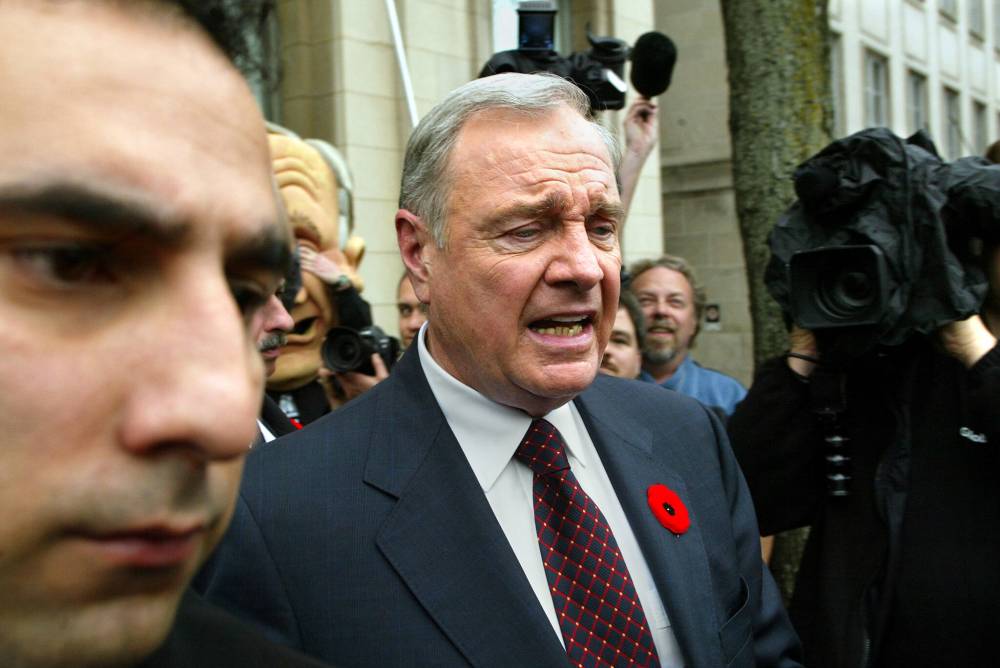
Julie Oliver/File
It isn’t just right-wing governments that have taken the austerity route: former federal finance minister Paul Martin was responsible for some of the most severe cost-cutting.
As proof, honestly answer this question, “What government made the largest absolute and unilateral cuts to health care in the country’s history?” Of course, it was the “progressive” Liberals, Jean Chrétien and Paul Martin.
The ramifications are still here, creating a situation where “kicking health issues down the road” became expedient. The pandemic highlighted Canada’s long-term care crisis. There is a broader background, with many governments sharing some blame. Nevertheless, it is easy to connect such long-running problems back to overarching Liberal cuts in the past.
The behaviour of Justin Trudeau’s government is particularly problematic. During COVID, they implemented the Canada Emergency Response Benefit, which has been described by some as a vital lifeline. Canadians were encouraged to apply, importantly with no means testing. Fair enough, but afterward, many Canadians who are not well-off found themselves, without warning, facing clawbacks. It was not just sloppy administration. It was cruel and unfair.
The Trudeau government over a number of years deliberately encouraged increased immigration, including foreign students. As a result, Canada’s population grew at a phenomenal rate. Yet in the background, they were also warned of looming problems associated with housing and did nothing.
Remember Roxham Road too? Tens of thousands of refugee claimants stormed across the border from the U.S., and the Liberals did nothing. Capacity in a number of provinces was overwhelmed, with some refugee claimants documented as even sleeping on the streets in Toronto.
We now have the same government trying to shift the blame for Canada’s affordability crisis onto immigrants and foreign students. As a native-born Canadian, I am ashamed of the actions of the federal government in literally throwing them under the bus. The Liberals now pretend to sound “tough” on immigration in an attempt to rescue plummeting polls, unlikely to help, while exposing their own blazing hypocrisy. In context, the position of the leader of the Opposition is absolutely reasonable, that immigration, refugee and international student levels all should be tied directly to the country’s ability to absorb and adequately provide services to new people.
Despite rhetoric, austerity has never been at the heart of policies for governments of any political flavour. It is imposed not because they want to, but because they feel they must. And it is this situation, especially when fiscal or political desperation sets in, that has made impacts much worse when undertaken by the political left.
On the fiscal front, the classic cautionary tale involves Bob Rae’s provincial NDP government in Ontario. It deserves reiteration. I was in Ontario at the time, and due to circumstances, I obtained insights from rather close to government on their predicament.
Rae won a stunning upset over David Peterson’s Liberals in 1990. Rae advanced many “progressivist” policies. Most important, given looming recessionary concerns, his government sought to literally grow the economy out of recession. This tactic was their undoing.
When governments go into debt, they do not get bank loans. Rather, they sell bonds, with these purchased overwhelmingly by institutional investors. Yet, such investors are also bound by internal rules regarding risks, both for prudence and accountability.
As it turned out, there was a problem. Unless Rae’s government reined in spending immediately, elevated riskiness of Ontario bonds meant that the number of institutional investors allowed under their own rules to buy would plummet from in the thousands to something around a few hundred or less. This was a pending catastrophe.

The response was immediate austerity, including the unilateral “Social Contract.” The NDP was loathed and abandoned.
This tale is cautionary, but important to keep in mind. Both the federal Liberals and now provincial NDP continue to accumulate significant deficits and debts. Such “good times” cannot last, and a time of reckoning will ultimately arrive.
As a last interesting comment, a while after his election loss Rae made what was for him an astonishing revelation. He was questioned by a young activist, “When are you going to tax the rich and give it to people like me?” Rae responded, “Let me tell you, there is only one taxpayer, and that taxpayer is you!”
This truism, actually stated at one time by Bob Rae, is important for all governments to remember.
Robert Parsons teaches at the I.H. Asper School of Business, University of Manitoba, in the Department of Supply Chain Management.