

Alabama looks to carry out third nitrogen execution as critics say method needs more scrutiny
Advertisement
Read this article for free:
or
Already have an account? Log in here »
To continue reading, please subscribe:
Monthly Digital Subscription
$0 for the first 4 weeks*
- Enjoy unlimited reading on winnipegfreepress.com
- Read the E-Edition, our digital replica newspaper
- Access News Break, our award-winning app
- Play interactive puzzles
*No charge for 4 weeks then price increases to the regular rate of $19.00 plus GST every four weeks. Offer available to new and qualified returning subscribers only. Cancel any time.
Monthly Digital Subscription
$4.75/week*
- Enjoy unlimited reading on winnipegfreepress.com
- Read the E-Edition, our digital replica newspaper
- Access News Break, our award-winning app
- Play interactive puzzles
*Billed as $19 plus GST every four weeks. Cancel any time.
To continue reading, please subscribe:
Add Free Press access to your Brandon Sun subscription for only an additional
$1 for the first 4 weeks*
*Your next subscription payment will increase by $1.00 and you will be charged $16.99 plus GST for four weeks. After four weeks, your payment will increase to $23.99 plus GST every four weeks.
Read unlimited articles for free today:
or
Already have an account? Log in here »
Hey there, time traveller!
This article was published 18/11/2024 (383 days ago), so information in it may no longer be current.
MONTGOMERY, Ala. (AP) — Alabama is planning to carry out the nation’s third execution with nitrogen gas as critics argue the method needs more scrutiny before it is used to put another person to death.
Carey Dale Grayson, who was convicted of the 1994 killing of Vickie Deblieux, is scheduled to be executed Thursday by the method Alabama began using earlier this year. It involves placing a respirator gas mask over the inmate’s face to replace breathable air with pure nitrogen gas, causing death by lack of oxygen. The 11th U.S. Court of Appeals heard arguments Monday in a request to block the execution.
Lawyers for Grayson and the Alabama attorney general’s office gave contrasting accounts of the state’s first two nitrogen gas executions and the risk that the inmate will feel unconstitutional levels of physical and mental pain.
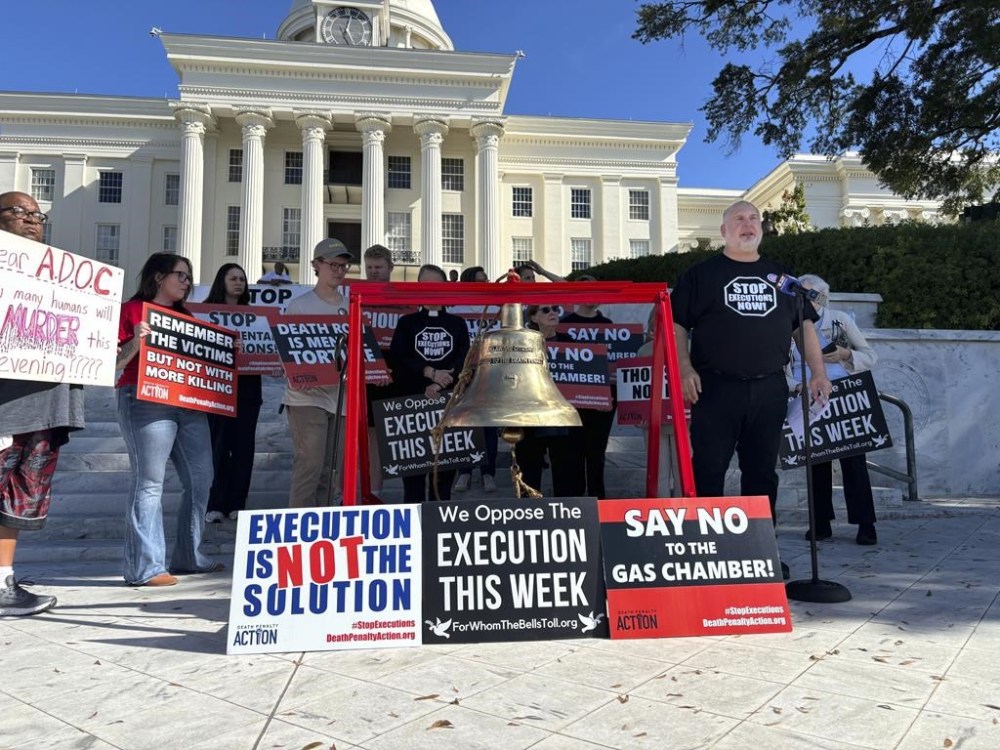
“The state’s protocol as written is designed to suffocate a conscious individual, which violates United States Supreme Court precedent,” John Palombi, an attorney with the Federal Defenders Program, told the three-judge panel.
Palombi argued that the inmate feels “conscious suffocation” before the nitrogen renders the prisoner unconscious.
“I would submit to the court that being conscious and being suffocated for a period of time constitutes terror,” Palombi told the court. Grayson is asking for the execution to be blocked or to change the protocol to give him a high-dose sedative before the gas begins flowing.
Members of the three-judge panel seemed skeptical at times of Grayson’s argument. One of the judges questioned how the method is any different from the gas chamber, which involves an inmate inhaling poisonous gas while conscious. The gas chamber hasn’t been used to carry out an execution in the United States since 1999, but the method is still authorized.
A lawyer for the state urged the court to let the execution go forward, arguing that nitrogen hypoxia causes no physical pain while causing rapid unconsciousness.
“Yes, nitrogen hypoxia deprives the condemned inmate of oxygen, but it is not suffocation in the lay sense, like drowning or smothering with a plastic bag or paralyzing the lungs. This is really apples and oranges,” Robert Overing, deputy solicitor general for Alabama, told the three-judge panel.
He said Grayson is using the term suffocation “to evoke a sense of fear and pain that doesn’t exist with this method.”
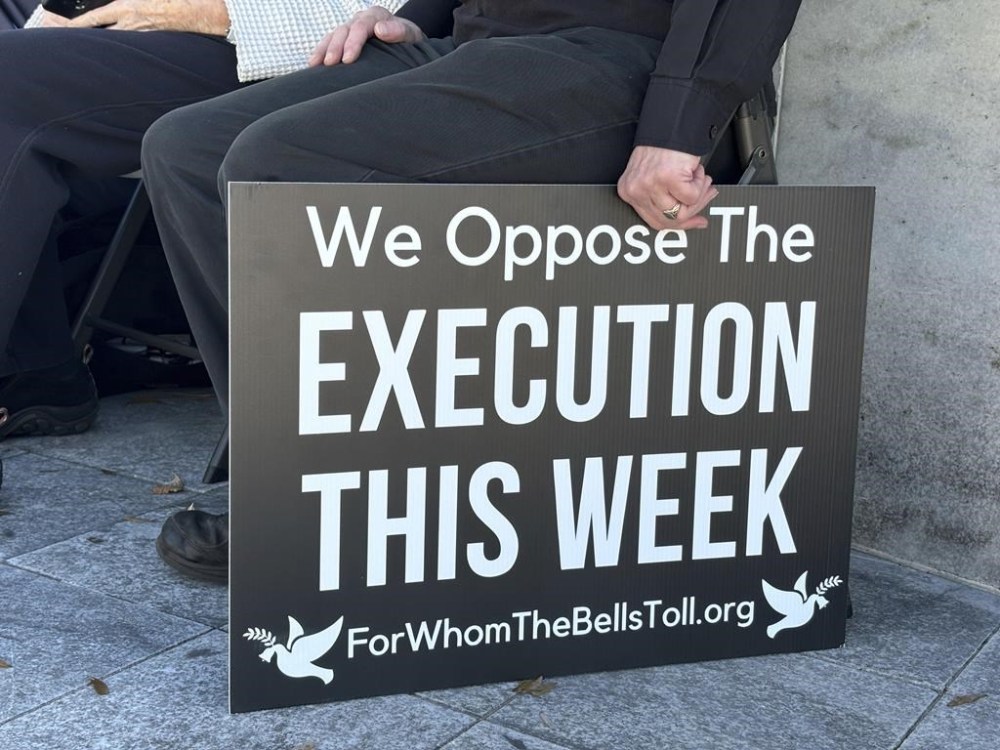
One judge on the panel noted that predictions by a state expert that nitrogen gas would render an inmate unconscious within 10 to 40 seconds was inconsistent with what was observed at the state’s first two nitrogen gas executions. Media witnesses, including The Associated Press, described how the inmates shook on the gurney for two minutes or longer, the movements followed by what appeared to be several minutes of periodic labored breaths with long pauses in between. The state maintained the movements were involuntary.
Overing responded that it was difficult to pinpoint exactly when the inmates became unconscious. The state has maintained that Kenneth Smith held his breath during his January execution, causing it to take longer than expected.
Grayson was one of four teenagers convicted of killing of Deblieux, 37, in Jefferson County. Prosecutors said Deblieux was hitchhiking from Tennessee to her mother’s home in Louisiana when the teens offered her a ride. Prosecutors said the accused took her to a wooded area, attacked her, threw her off a cliff and later mutilated her body.
Grayson is the only one facing a death sentence. Two other teens had their death sentences set aside when the U.S. Supreme Court banned the execution of offenders who were younger than 18 at the time of the crime. Grayson was 19.