Two spirits, 35 years: event celebrates term’s anniversary

Advertisement

Advertise with us

The Canadian Museum for Human Rights, in collaboration with Day of Pink, hosts an event this afternoon commemorating the 35th anniversary of the term “two-spirit.”

Read this article for free:


or

Already have an account? Log in here »

To continue reading, please subscribe:

Subscribe and receive a limited-edition Free Press branded hat or tote.

Digital Subscription

One year of digital access for only $205*

  • Enjoy unlimited reading on winnipegfreepress.com
  • Read the E-Edition, our digital replica newspaper
  • Access News Break, our award-winning app
  • Play interactive puzzles

*First annual payment billed as $205.00 + GST for one year. This annual subscription will automatically renew at $233.00 + GST every 52 weeks (10% off the regular annual price of $259.35). Offer available to new and qualified returning subscribers only. Cancel any time.

To continue reading, please subscribe:

Add Free Press access to your Brandon Sun subscription for only an additional

$1 for the first 4 weeks*

  • Enjoy unlimited reading on winnipegfreepress.com
  • Read the E-Edition, our digital replica newspaper
  • Access News Break, our award-winning app
  • Play interactive puzzles
Start now

*Your next Brandon Sun subscription payment will increase by $1.00 and you will be charged $17.95 plus GST for four weeks. After four weeks, your payment will increase to $24.95 plus GST every four weeks.

Hey there, time traveller!
This article was published 19/11/2024 (667 days ago), so information in it may no longer be current.

The Canadian Museum for Human Rights, in collaboration with Day of Pink, hosts an event this afternoon commemorating the 35th anniversary of the term “two-spirit.”

It includes a première screening of a documentary, the launch of a two-spirit curriculum, and the unveiling of the world’s first Two-Spirit Pride Flag which promotes a concept, Day of Pink organizers say, symbolizing “diverse Indigenous gender identities and roles that colonialism sought to suppress through discriminatory policies.”

Coined at a Winnipeg conference in 1990, the word two-spirit is a translation of the Anishinaabemowin term niizh manidoowag, meaning someone who embodies both a masculine and feminine spirit.

Supplied
                                The flag symbolizes Indigenous customs about gender ‘that colonialism sought to suppress through discriminatory policies.’

Supplied

The flag symbolizes Indigenous customs about gender ‘that colonialism sought to suppress through discriminatory policies.’

While not universally accepted or used by Indigenous communities across North America, two-spirit has become a widely used umbrella term for Indigenous practices relating to gender non-conformity and third gender, documented as stretching back well before European colonialism.

Many queer Indigenous people today self-identify as two-spirit, and the Canadian government officially uses 2SLGBTQI+ (with 2S representing Two Spirit) as an alternative to LGBTTQ+.

The documentary to be shown at this event, filmed in Winnipeg, addresses the impacts of the Indian residential school system on two-spirit survivors and communities.

The Two-Spirit Pride Flag, designed by Patrick Hunter, features eagle feathers symbolizing masculine and feminine spirits, a sun representing human potential, and circles symbolizing visibility and inclusion.

Organizers say their event is guided by both regional and international human-rights discourses, including the Path to Reconciliation Act, the Truth and Reconciliation Commission’s Calls to Action, and the United Nations Declaration on the Rights of Indigenous Peoples (UNDRIP).

The 35th anniversary celebration of Two-Spirit is part of the Day of Pink, a global campaign against bullying and discrimination, and is aimed at educators and students as well as the general public.

conrad.sweatman@freepress.mb.ca

Conrad Sweatman

Conrad Sweatman
Reporter

Conrad Sweatman is an arts reporter and feature writer. Before joining the Free Press full-time in 2024, he worked in the U.K. and Canadian cultural sectors and freelanced for outlets including The Walrus, VICE and Prairie Fire. Read more about Conrad.

Our newsroom depends on a growing audience of readers to power our journalism. If you are not a paid reader, please consider becoming a subscriber.

Our newsroom depends on its audience of readers to power our journalism. Thank you for your support.

Report Error Submit a Tip

More Stories

Manitoba’s police watchdog is investigating after a man was found dead eight days after officers were unable to locate him following a 911 call from Canupawakpa Dakota First Nation in 2024.

The Independent Investigation Unit said the call came in just after midnight on Nov. 22, 2024, with a disturbance audible in the background. GPS coordinates traced it to the First Nation, 305 kilometres west of Winnipeg, prompting Manitoba First Nations Police Service officers to search the area.

Officers could not find the caller, whom they believed to be a local man. Eight days later, on Nov. 30, MFNPS conducted another search and found a man dead.

The death was initially referred to RCMP Major Crime Services as suspicious. The RCMP later returned the case to MFNPS for possible referral to the IIU because of concerns about the eight-day delay in locating the man. MFNPS notified the IIU on Sept. 15, 2026 — nearly two years after the incident.

Powerful personal drama provides both bark and bite

Ben Waldman 4 minute read Preview

Powerful personal drama provides both bark and bite

Ben Waldman 4 minute read 4:22 PM CDT

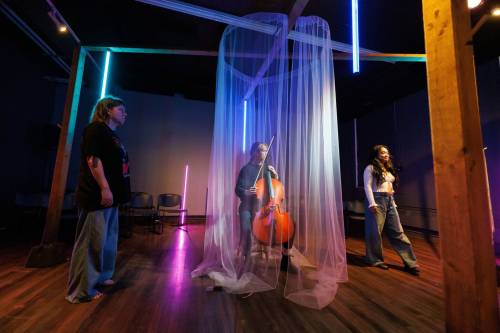
Well before playwright Rafaella Marcus’ words have the chance to entangle us in the stickiness of Sap, the performance space initiates the task in director Elio Zarrillo’s staging of this discomfiting and affecting story of restraint and liberation.

Shortly after the audience takes its seats in four segments surrounding a central channel — a shimmering tunnel containing cellist Grace Morningstar — it becomes clear as actors Hera Nalam and Liz Whitbread make their way around the tight corners of David Oro and Hazel Venzon’s set that certain actions will go unseen unless viewers keeps their heads on a swivel: in a production meant to uproot understanding, a fixed perspective will never do.

In this vulnerable and powerful production from Theatre by the River (105 minutes) the actors meet the excellence of Marcus’s twisty script, which calls for emotionally draining and jolting depictions of a relationship headed down a rocky road.

Nalam plays a young communications pro for a women’s aid charity whose dating life is a work in progress. She’s bright and optimistic, taking notice of elements of nature that nobody else seems to recognize. On her daily commute, she looks out from the bus window in awe of a home overflowing with branches and leaves.

Read
4:22 PM CDT

Son found guilty in hatchet slaying of his mother

Tessa Adamski 3 minute read Yesterday at 2:01 AM CDT

A Brandon man has been found guilty of killing his 71-year-old mother with a hatchet in the fall of 2023 after his lawyers argued he should be held not criminally responsible.

Federal Court awards OCN $27M, 62 years after construction of hydro dam

Nicole Buffie 5 minute read Preview

Federal Court awards OCN $27M, 62 years after construction of hydro dam

Nicole Buffie 5 minute read Updated: 12:02 PM CDT

The Federal Court has ordered Ottawa pay Opaskwayak Cree Nation $27 million over damages suffered due to the construction of the Grand Rapids hydro dam in the 1960s.

In a decision dated Sept. 3, Federal Court Justice Sébastien Grammond says the federal government had a fiduciary duty to protect the community from the impacts of the dam.

“When the Crown exercises a discretionary power over an Indigenous interest, it has a fiduciary duty and it must exercise the discretion in the best interests of the Indigenous group,” the ruling said. “Canada breached its fiduciary duty to OCN because it approved the (project) without ensuring that the impacts of the Grand Rapids dam on OCN’s traditional way of life were mitigated or compensated.”

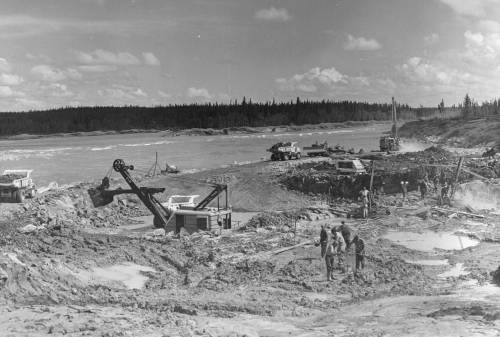
The First Nation took the federal government to court in February over impacts on the community after the dam, located about 145 kilometres southeast of Opaskwayak Cree Nation, was installed on the Saskatchewan River in 1964. The case was heard over 14 days in a judge-alone trial in Winnipeg.

Read
Updated: 12:02 PM CDT

Transit safety drives first mayoral debate

Morgan Modjeski 4 minute read Preview

Transit safety drives first mayoral debate

Morgan Modjeski 4 minute read Yesterday at 2:01 AM CDT

The safety of Winnipeg Transit drivers was front and centre Monday as the first mayoral debate of the 2026 election focused on public transit.

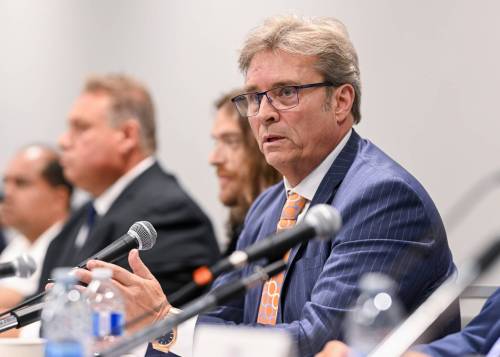
Kevin Klein, the most experienced of the 10 candidates at the Amalgamated Transit Union 1505-hosted debate, said the time for partial safety shields has passed.

“The partial shields have failed drivers. That’s why we need change,” the former PC MLA and city councillor said, adding driver safety is not a staffing issue, but a “protection failure.”

If elected, Klein said he will bring in full-shield implementation across the city within two years and start a nine-bus pilot project immediately.

Read
Yesterday at 2:01 AM CDT

Gillingham pledges police, firefighter staffing increases to serve growing population

Joyanne Pursaga 5 minute read Preview

Gillingham pledges police, firefighter staffing increases to serve growing population

Joyanne Pursaga 5 minute read 6:39 PM CDT

Scott Gillingham is promising to set long-term staffing targets to raise the ratio of firefighters and police officers to Winnipeg’s population, if re-elected as mayor next month.

Read
6:39 PM CDT