

Breaking the silence about being lonely

Advertisement
Read this article for free:
or
Already have an account? Log in here »
To continue reading, please subscribe:

Digital Subscription
One year of digital access for only $205*
- Enjoy unlimited reading on winnipegfreepress.com
- Read the E-Edition, our digital replica newspaper
- Access News Break, our award-winning app
- Play interactive puzzles
*First annual payment billed as $205.00 + GST for one year. This annual subscription will automatically renew at $233.00 + GST every 52 weeks (10% off the regular annual price of $259.35). Offer available to new and qualified returning subscribers only. Cancel any time.
To continue reading, please subscribe:
Add Free Press access to your Brandon Sun subscription for only an additional
$1 for the first 4 weeks*
- Enjoy unlimited reading on winnipegfreepress.com
- Read the E-Edition, our digital replica newspaper
- Access News Break, our award-winning app
- Play interactive puzzles
*Your next Brandon Sun subscription payment will increase by $1.00 and you will be charged $17.95 plus GST for four weeks. After four weeks, your payment will increase to $24.95 plus GST every four weeks.
Read unlimited articles for free today:
or
Already have an account? Log in here »
Hey there, time traveller!
This article was published 27/11/2024 (630 days ago), so information in it may no longer be current.
When I offered some observations on loneliness in a column last month, a reader from Winnipeg wrote to tell me what it really feels like.
I am calling her “Celia” to spare her the stigma and vulnerability that might attach themselves if I used her real name in this context.
Celia is an avid traveller who’s had an interesting career and is still valued for her expertise. She volunteers for several arts organizations, is outgoing and independent. She has her own home and still drives.
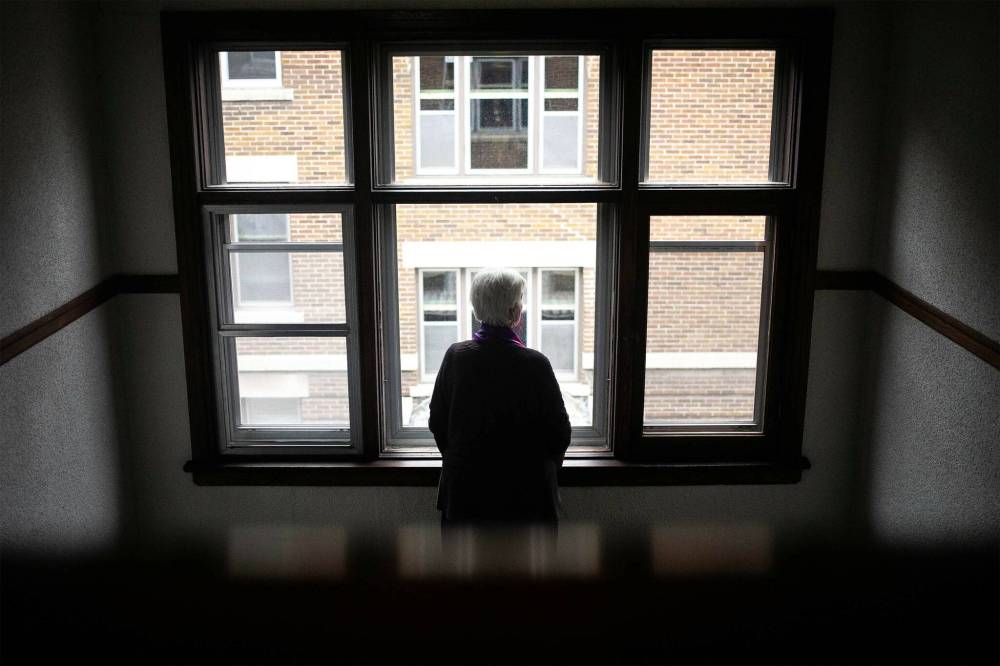
Mikaela MacKenzie / Free Press files
A Winnipeg woman says ‘loneliness is living like an island,’ and that she longs to develop meaningful connections with people beyond mere acquaintanceship.
So, she isn’t socially isolated. And yet for all the interactions she has as she goes about her busy life, none of them has offered the kind of fulfilling connection she’s longing for — not necessarily romance, but the kind of friendship that goes beyond the superficial.
“Every day is just a day of ‘What’s the point for my existence?’” she writes via email.
“How can I know thousands of people in this city, and not one of them gives a thought to me? What’s the meaning of life if you live it alone?”
It’s a daunting question.
Celia has spent most of her life in Winnipeg. While she’s had romantic relationships, she’s never married or had children of her own.
Solitude has often been compared to a state of rich and fulfilled existence; loneliness to poverty of the spirit, and pain. She knows all too well the difference between the two.
Loneliness is something Celia’s written and thought deeply about. At the end of the day, it’s the only thing she knows will be waiting for her.
“I’m very good at socializing and talking to people, yet I am overwhelmed with loneliness,” she said.
She sends me a piece she’s written on the subject. It is eloquent, impassioned and permeated with pain.
“Loneliness is living like an island … No one to reminisce with, ever. Having no one to share sadness with, or joy or special moments. No one to care … No one to ever verify that I have been and actually am in this world.”
Her words made me think of poet Anne Carson’s lines from The Glass Essay: “I feel I am turning into Emily Brontë / my lonely life around me like a moor…”
Celia’s family ties have unravelled, and not all of her past relationships ended amicably. But she still yearns for connection.
I call her and we talk for an hour about her life, how she awoke one day to find herself 80 years old and alone. We talk about loneliness in general, and why it is endemic in many countries, particularly at a time when technology allows us to be more connected than ever.
“The word ‘lonely’ has such a taboo,” she says, “which is ironic in such a plugged-in time. But online life seems all about me-me-me — how wonderful I am. We’ve lost that ability to care and share with other people. Why should anyone have to be lonely?”
She is candid and quick-witted, the kind of person you can imagine keeping a crowd enthralled at a party, yet she despairs at returning alone each day to a home that echoes with her own thoughts.
The World Health Organization has likened the detrimental effect of loneliness on human health to risk factors such as smoking, obesity and physical inactivity.
Celia says she has done everything she can to avoid being lonely and yet still feels a debilitating emptiness. She told me she once tried to explain it to an acquaintance who quickly changed the subject and instead shared an anecdote about something her dog had done.
I ask Celia if she thinks that meeting a lonely person is like confronting grief or physical suffering — the kind of raw pain that can make other people feel uncomfortable.
Why aren’t we more willing to let lonely people into our lives? Is it because their loneliness demands something of us?
Celia figures people are too caught up in their own lives and routines to let someone else into their circle. She wishes someone would go beyond polite greetings to actually ask how she is faring in life.
“Maybe people see me and think, she’s still alive so she must be doing OK. But being alive is not the same as living,” she says.

Celia and I muse about what would happen if people took to street corners and park benches holding signs saying, “I’m lonely.”
Would such unvarnished honesty make people approach or turn away?
Ask yourself.
Pam Frampton is a freelance writer and editor who lives in St. John’s.
Email pamelajframpton@gmail.com X: pam_frampton | Bluesky: @pamframpton.bsky.social
Pam Frampton is a columnist for the Free Press. She has worked in print media since 1990 and has been offering up her opinions for more than 20 years. Read more about Pam.
Pam’s columns are built on facts, but offer her personal views through arguments and analysis. Every column Pam produces is reviewed by an editing team before it is posted online or published in print — part of the Free Press‘s tradition, since 1872, of producing reliable independent journalism. Read more about Free Press’s history and mandate, and learn how our newsroom operates.
Our newsroom depends on a growing audience of readers to power our journalism. If you are not a paid reader, please consider becoming a subscriber.
Our newsroom depends on its audience of readers to power our journalism. Thank you for your support.
Pam Frampton is a columnist for the Free Press. She has worked in print media since 1990 and has been offering up her opinions for more than 20 years. Read more about Pam.
Pam’s columns are built on facts, but offer her personal views through arguments and analysis. Every column Pam produces is reviewed by an editing team before it is posted online or published in print — part of the Free Press‘s tradition, since 1872, of producing reliable independent journalism. Read more about Free Press’s history and mandate, and learn how our newsroom operates.
Our newsroom depends on a growing audience of readers to power our journalism. If you are not a paid reader, please consider becoming a subscriber.
Our newsroom depends on its audience of readers to power our journalism. Thank you for your support.
Advertisement Advertise With Us
Advertisement Advertise With Us