

Japan’s popular Princess Aiko turns 23 with her future as a royal in doubt
Advertisement
Read this article for free:
or
Already have an account? Log in here »
To continue reading, please subscribe:

Digital Subscription
One year of digital access for only $205*
- Enjoy unlimited reading on winnipegfreepress.com
- Read the E-Edition, our digital replica newspaper
- Access News Break, our award-winning app
- Play interactive puzzles
*First annual payment billed as $205.00 + GST for one year. This annual subscription will automatically renew at $233.00 + GST every 52 weeks (10% off the regular annual price of $259.35). Offer available to new and qualified returning subscribers only. Cancel any time.
To continue reading, please subscribe:
Add Free Press access to your Brandon Sun subscription for only an additional
$1 for the first 4 weeks*
- Enjoy unlimited reading on winnipegfreepress.com
- Read the E-Edition, our digital replica newspaper
- Access News Break, our award-winning app
- Play interactive puzzles
*Your next Brandon Sun subscription payment will increase by $1.00 and you will be charged $17.95 plus GST for four weeks. After four weeks, your payment will increase to $24.95 plus GST every four weeks.
Read unlimited articles for free today:
or
Already have an account? Log in here »
Hey there, time traveller!
This article was published 30/11/2024 (622 days ago), so information in it may no longer be current.
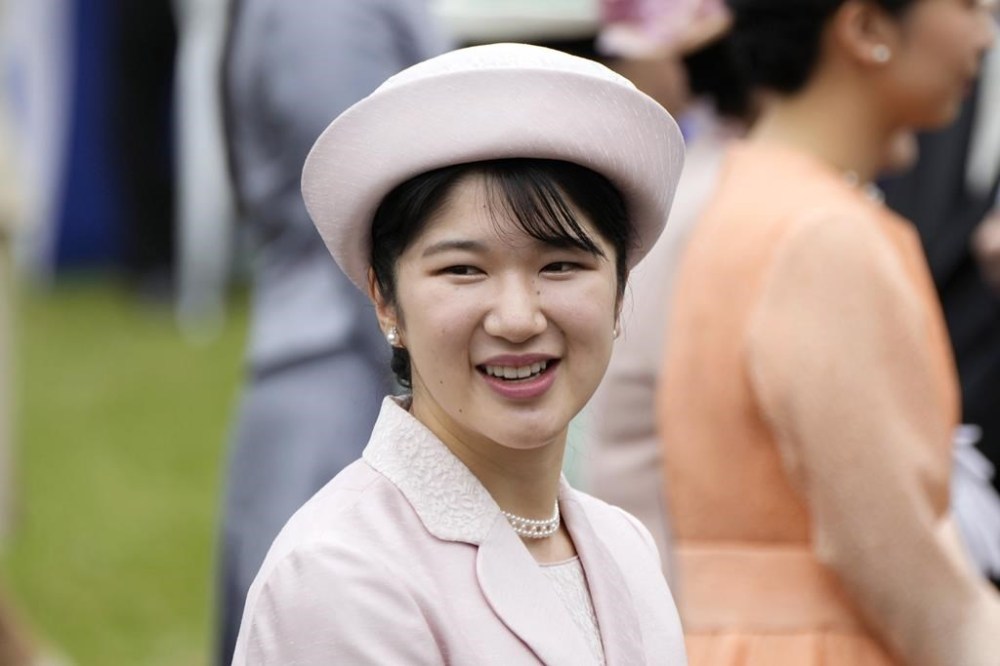
TOKYO (AP) — Japan’s popular Princess Aiko turned 23 on Sunday, as she takes on more official duties even while her future in the imperial family remains in doubt.
Aiko, the only child of Emperor Naruhito and Empress Masako, graduated from university earlier this year and has since been participating in official duties and palace rituals while working at the Red Cross Society, according to the Imperial Household Agency.
But Japanese law requires her to renounce her royal status and leave the family if she marries outside the imperial family.
The vast majority of Japan’s public supports changing the law to allow her to remain a royal and become emperor, but conservatives in the governing party insist on keeping male-only succession. Japan’s rapidly dwindling imperial family has only 16 members, including four men.
Aiko was to mark her birthday with her parents at the imperial palace in Tokyo. The IHA also released several photos of Aiko, including one of her standing by a persimmon tree at a palace garden. Another showed her holding pieces of traditional hand-crafted washi paper that she made at a workshop during her first solo official trip in October to the National Sports Festival in Japan’s southwestern prefecture of Saga.
The 1947 Imperial House Law, which largely preserves conservative prewar family values, allows only males to take the throne and forces female royals who marry outside the family to give up their status. With only one young male member, that puts the survival of the 2,000-year-old monarchy in jeopardy.
The youngest male member of the imperial family, Prince Hisahito — Aiko’s 18-year-old cousin — is currently the last heir apparent, posing a major problem for the system.
The government is looking for a way to keep the succession stable without relying on women, such as allowing the family to adopt new male members from former noble families that lost their status after World War II.
Aiko’s own views on the topic are unknown. She’s only had one full news conference, when she reached adulthood.
Last month, the United Nations women’s rights committee in Geneva issued a report that called for the Japanese government to allow a female emperor, among other issues hindering gender equality in the country.
Chief Cabinet Secretary Yoshimasa Hayashi dismissed the report “regrettable” and “inappropriate.” He said the imperial succession is a matter of fundamental national identity and that it is not covered by constitutional basic rights.
Crown Prince Akishino, Aiko’s uncle, was asked about the succession debate at a news conference marking his 59th birthday Saturday, and replied that members of the royal family are “living humans” and that the palace officials who support their daily lives should know how it affects them.
At her work at the Japanese Red Cross Society, Aiko is assigned to volunteer training program, the IHA said. On weekends, it said, the princess enjoys taking walks with her parents and playing volleyball, tennis and badminton with palace officials.