

Thousands march in Serbia to mark 1 month since a roof collapse killed 15 people
Advertisement
Read this article for free:
or
Already have an account? Log in here »
To continue reading, please subscribe:

Digital Subscription
One year of digital access for only $205*
- Enjoy unlimited reading on winnipegfreepress.com
- Read the E-Edition, our digital replica newspaper
- Access News Break, our award-winning app
- Play interactive puzzles
*First annual payment billed as $205.00 + GST for one year. This annual subscription will automatically renew at $233.00 + GST every 52 weeks (10% off the regular annual price of $259.35). Offer available to new and qualified returning subscribers only. Cancel any time.
To continue reading, please subscribe:
Add Free Press access to your Brandon Sun subscription for only an additional
$1 for the first 4 weeks*
- Enjoy unlimited reading on winnipegfreepress.com
- Read the E-Edition, our digital replica newspaper
- Access News Break, our award-winning app
- Play interactive puzzles
*Your next Brandon Sun subscription payment will increase by $1.00 and you will be charged $17.95 plus GST for four weeks. After four weeks, your payment will increase to $24.95 plus GST every four weeks.
Read unlimited articles for free today:
or
Already have an account? Log in here »
Hey there, time traveller!
This article was published 01/12/2024 (677 days ago), so information in it may no longer be current.
NOVI SAD, Serbia (AP) — Thousands joined a protest march on Sunday in the northern Serbian city of Novi Sad that marked one month since a concrete canopy ouside of the city’s railway station collapsed, killing 15 people and injuring two.
Protesters held a huge banner with a red handprint at the front of the column — a message for the populist authorities that they have blood on their hands. Participants later left the same symbolic message on the pavement at the main square in Novi Sad while also painting much of the square red.
Street protests and blockades have been held almost daily since the Nov. 1 roof collapse, demanding accountability after tons of concrete fell on people sitting or walking below on a sunny day.
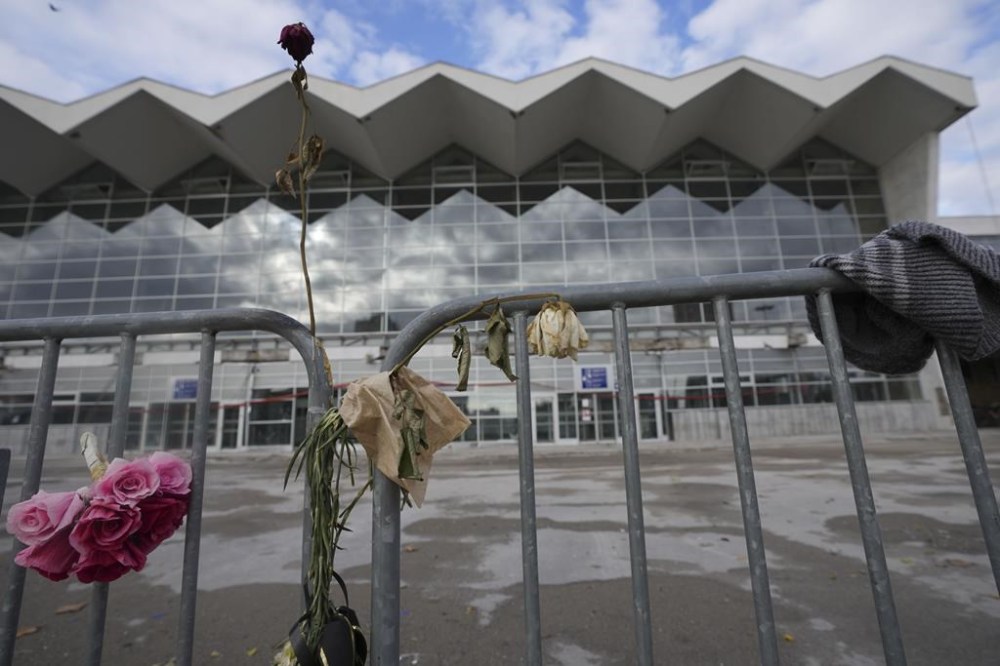
The railway station building was renovated twice in recent years. Many in Serbia believe rampant corruption and opaque deals resulted in sloppy work and led to the collapse of the roof.
While prosecutors have announced the arrests of 13 people, a Serbian court has since released from detention former government construction minister Goran Vesic. This has fueled widespread skepticism of the ongoing investigation, as the populists control both the police and judiciary.
The march on Sunday in Novi Sad was held in silence and passed peacefully, unlike some traffic blockades in past weeks when pro-government supporters have sought to disrupt the gatherings and scuffled with the protesters. Scuffles have also erupted in Serbia’s parliament between the ruling party and opposition lawmakers.
The protests are seen as a challenge for Serbia’s authoritarian President Aleksandar Vucic, whose populist government holds firm control over the mainstream media and institutions.
Vucic on Sunday defended his supporters’ appearance at the opposition-led traffic blockades. Vucic said halting traffic presented the “ultimate violence” against citizens.
Opposition parties are demanding the resignation of Serbia’s prime minister and his government, as well as access to full documentation on the train station building and other infrastructure projects carried out in conjunction with Chinese state companies.
The station in Novi Sad was originally built in 1964. Its renovation was part of a bigger project with China and Hungary to build a high-speed railway between Belgrade and Budapest.