Better drugs through AI? Insitro CEO on what machine learning can teach Big Pharma
Advertisement
Read this article for free:
or
Already have an account? Log in here »
To continue reading, please subscribe:

Digital Subscription
One year of digital access for only $205*
- Enjoy unlimited reading on winnipegfreepress.com
- Read the E-Edition, our digital replica newspaper
- Access News Break, our award-winning app
- Play interactive puzzles
*First annual payment billed as $205.00 + GST for one year. This annual subscription will automatically renew at $233.00 + GST every 52 weeks (10% off the regular annual price of $259.35). Offer available to new and qualified returning subscribers only. Cancel any time.
To continue reading, please subscribe:
Add Free Press access to your Brandon Sun subscription for only an additional
$1 for the first 4 weeks*
- Enjoy unlimited reading on winnipegfreepress.com
- Read the E-Edition, our digital replica newspaper
- Access News Break, our award-winning app
- Play interactive puzzles
*Your next Brandon Sun subscription payment will increase by $1.00 and you will be charged $17.95 plus GST for four weeks. After four weeks, your payment will increase to $24.95 plus GST every four weeks.
Read unlimited articles for free today:
or
Already have an account? Log in here »
Hey there, time traveller!
This article was published 02/12/2024 (676 days ago), so information in it may no longer be current.
WASHINGTON (AP) — Artificial intelligence is changing the way companies do business — helping programmers write code and fielding customer service calls with chatbots.
But the pharmaceutical industry is still waiting to see whether AI can tackle its biggest challenge: finding faster, cheaper ways to develop new drugs.
Despite billions poured into research, new medicines still typically take a decade or more to develop.
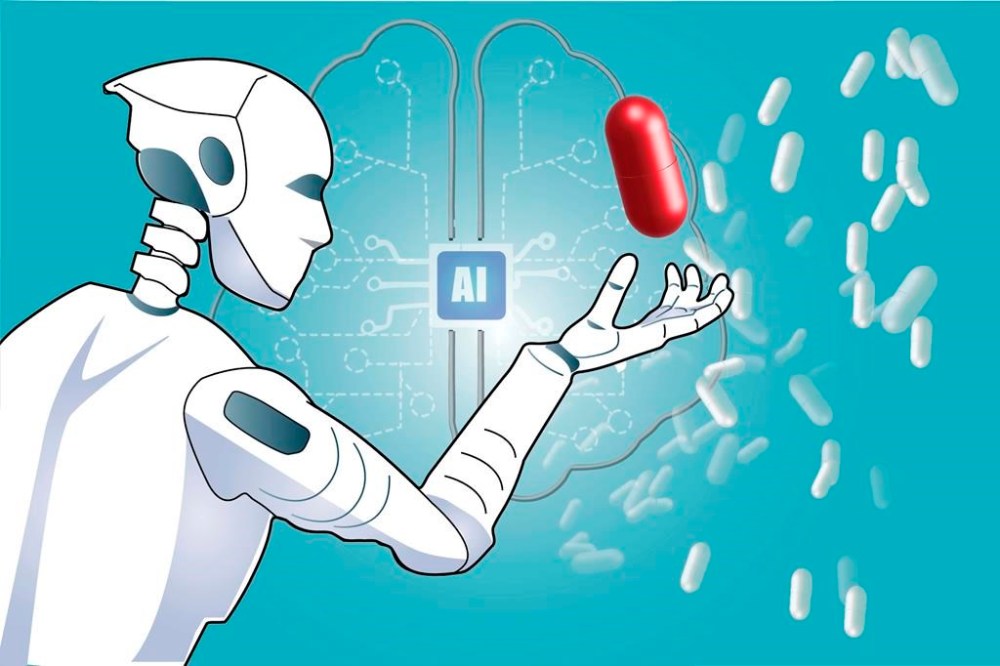
Founded in 2018, Insitro is part of a growing field of AI companies promising to accelerate drug discovery by using machine learning to analyze huge datasets of chemical and biological markers. The South San Francisco-based company has signed deals with drugmakers like Eli Lilly and Bristol Myers Squibb to help develop medicines for metabolic diseases, neurological conditions and degenerative disorders.
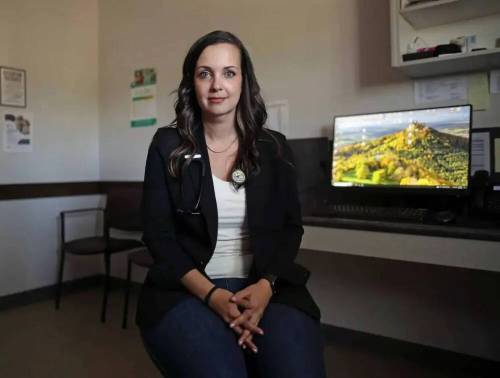
CEO and founder Daphne Koller spoke with the AP about what AI brings to the challenges of drug discovery. The conversation has been edited for length and clarity.
Q: Why is drug development so difficult?
A: I think the problem with drug discovery is that we are trying to intervene in a system that we only slightly understand. Many of the successes that we’ve seen in the last 15 to 20 years have been when we arrive at a sufficient understanding of the system so we can really design interventions to align with it.
So one of the things that we try to do at Insitro is unravel the underlying complexity of heterogeneous diseases and identify new intervention modes that could help, maybe not the entire population, but perhaps just a subset of it. That way we can really identify the right therapeutic hypothesis to intervene in a particular patient population. And that, I think, is the real crux of the industry’s lack of success.
Q: Companies like Eli Lilly employ thousands of medical scientists and researchers. What can your technology do that those experts can’t?
A: One of the things that has been happening in parallel to the AI revolution is a much quieter revolution in what I call quantitative biology, which is the ability to measure biological systems with unprecedented fidelity. You can measure systems like proteins and cells with increasingly better measurements and technology.
But if you give that data to a person, their eyes will just glaze over because there’s only so many cells someone can look at and only so many subtleties they can see in these images. People are just limited in their ability to perceive subtle differences.
So you end up with a very reductionist view of a very complex, multifaceted system which is really important to unraveling the distinctions between patients and uncovering where an intervention really can make a difference.
Q: How did you become interested in this field?
A: My PhD was in computer science. But I started to get into the field of machine learning in the service of biomedical problems back in 1998 or 1999.
At that time, the problems that machine learning was able to tackle were, frankly, uninspiring. How inspired can you get about classifying spam versus non-spam in a dataset of email messages?
I was looking for something that had more richness to it. And my first foray into this field was not because I was particularly interested in becoming a biologist, but because I was looking for more technically challenging questions. And then, as I started looking into it, I became interested in biology in its own right.
Q: Insitro employs both computer scientists and medical researchers. Was there any culture clash in getting those two groups to work together?
A: This is probably one of the most important things we’ve achieved as an organization.
You can take the most sophisticated, best meaning scientists from either side and put them in the same room together and they might as well be speaking Thai and Swahili to each other.
When you’re an engineer, you’re looking for the strongest, most consistent patterns that are going to allow you to make predictions about a majority of cells or individuals. When you’re a life scientist, oftentimes you’re actually looking for the exceptions because those are the threads that can lead to new discoveries.
So we’ve put in place a number of cultural elements and organizational elements to help people engage with each other openly, constructively and with respect.