

Human rights court rules against Venezuela in 2013 election case
Advertisement
Read this article for free:
or
Already have an account? Log in here »
To continue reading, please subscribe:
Digital Subscription
One year of digital access for only $1.44 a week*
- Enjoy unlimited reading on winnipegfreepress.com
- Read the E-Edition, our digital replica newspaper
- Access News Break, our award-winning app
- Play interactive puzzles
*Billed as $5.77 plus GST every four weeks. After 52 weeks, price increases to the regular rate of $19.95 plus GST every four weeks. Offer available to new and qualified returning subscribers only. Cancel any time.
To continue reading, please subscribe:
Add Free Press access to your Brandon Sun subscription for only an additional
$1 for the first 4 weeks*
- Enjoy unlimited reading on winnipegfreepress.com
- Read the E-Edition, our digital replica newspaper
- Access News Break, our award-winning app
- Play interactive puzzles
*Your next Brandon Sun subscription payment will increase by $1.00 and you will be charged $17.95 plus GST for four weeks. After four weeks, your payment will increase to $24.95 plus GST every four weeks.
Read unlimited articles for free today:
or
Already have an account? Log in here »
Hey there, time traveller!
This article was published 02/12/2024 (544 days ago), so information in it may no longer be current.
SAN JOSE, Costa Rica (AP) — The Inter-American Court of Human Rights ruled Monday that the Venezuelan government violated the political rights of former opposition presidential candidate Henrique Capriles.
The court, based in Costa Rica’s capital, said in a statement that the government violated his freedom of expression, his right to equality under the law and judicial protections.
Capriles, an upper-middle class lawyer, used his charisma and non-combative style to win the support of millions and become an electoral threat to the since deceased President Hugo Chávez in 2012.
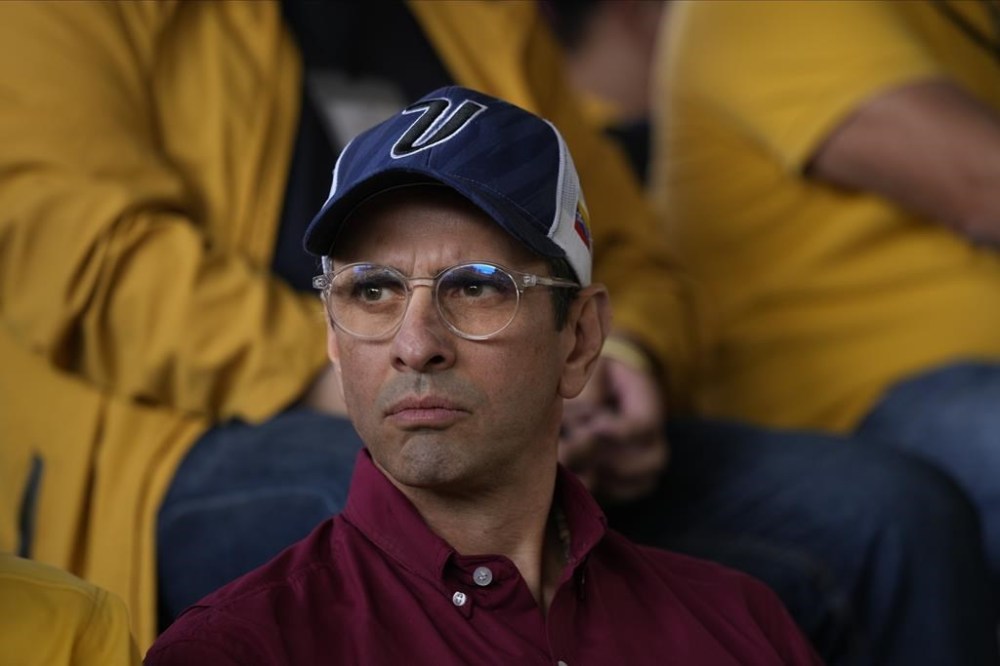
Capriles would lose that election, and another the following year after Chávez’s death, to current President Nicolás Maduro. It was during that second bid in 2013 that the court on Monday said the government violated Capriles’ rights and favored Maduro.
State resources were used to bolster Maduro’s candidacy, the court said. Even so, the result was exceedingly close.
The court ruled that Venezuela’s government undermined the integrity of the election and affected the right of Venezuelans to freely elect their leader.
In 2017, Maduro’s administration barred Capriles from running again for 15 years.
Capriles already had a ruling from the Inter-American Court of Human Rights in his favor. The court had ordered the Venezuelan government to lift the ban on his political participation, but it was ignored.
In January, the Supreme Justice Tribunal ratified Capriles’ ban until 2032.
In July, Maduro was declared the winner of an election full of irregularities for which tally sheets from poll places gathered by the opposition showed their candidate, Edmundo González, had defeated Maduro by a wide margin.
But Venezuela’s National Electoral Council, which is stacked with Maduro loyalists, declared him the election winner hours after polls closed.
____
Follow AP’s coverage of Latin America and the Caribbean at https://apnews.com/hub/latin-america