

Virginia man charged with murder 4 months after his wife’s disappearance
Advertisement
Read this article for free:
or
Already have an account? Log in here »
To continue reading, please subscribe:

Digital Subscription
One year of digital access for only $205*
- Enjoy unlimited reading on winnipegfreepress.com
- Read the E-Edition, our digital replica newspaper
- Access News Break, our award-winning app
- Play interactive puzzles
*First annual payment billed as $205.00 + GST for one year. This annual subscription will automatically renew at $233.00 + GST every 52 weeks (10% off the regular annual price of $259.35). Offer available to new and qualified returning subscribers only. Cancel any time.
To continue reading, please subscribe:
Add Free Press access to your Brandon Sun subscription for only an additional
$1 for the first 4 weeks*
- Enjoy unlimited reading on winnipegfreepress.com
- Read the E-Edition, our digital replica newspaper
- Access News Break, our award-winning app
- Play interactive puzzles
*Your next Brandon Sun subscription payment will increase by $1.00 and you will be charged $17.95 plus GST for four weeks. After four weeks, your payment will increase to $24.95 plus GST every four weeks.
Read unlimited articles for free today:
or
Already have an account? Log in here »
Hey there, time traveller!
This article was published 02/12/2024 (621 days ago), so information in it may no longer be current.
MANASSAS PARK, Va. (AP) — A Virginia man has been charged with murder more than four months after his wife disappeared and a substantial amount of blood was found in their suburban Washington home, authorities announced Monday.
Naresh Bhatt, 37, was indicted by a Prince William County grand jury and faces a charge of murder as well as a count of defiling a dead body, according to online court documents.
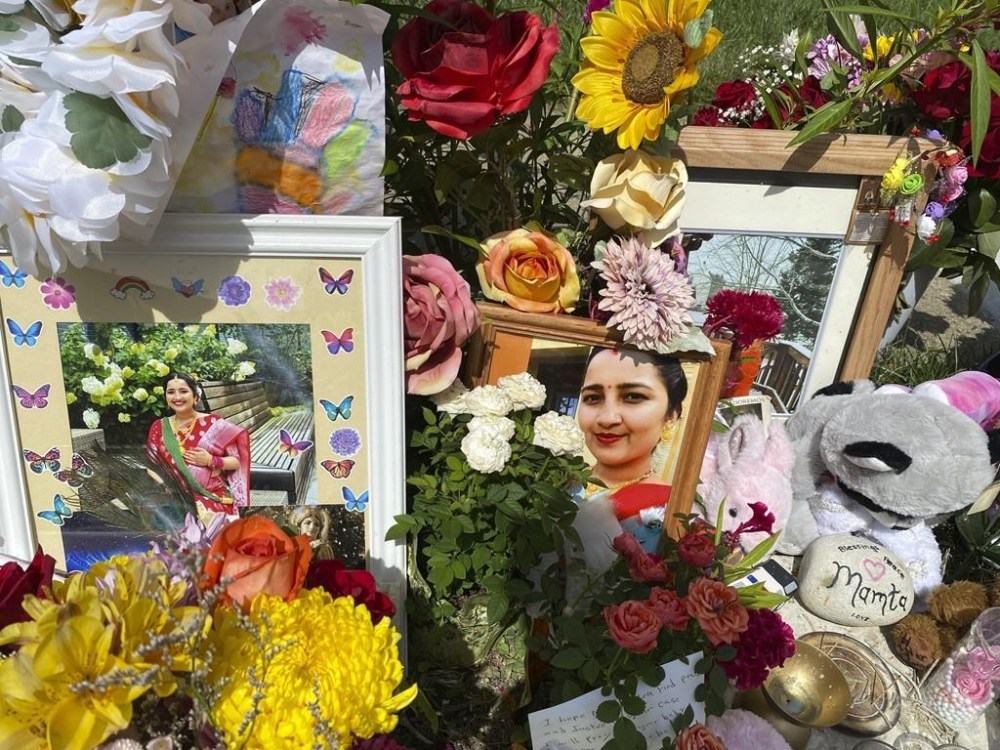
The body of Mamta Bhatt, 28, has not been found. But investigators linked her DNA to the blood found in the couple’s home, Manassas Park Police Chief Mario Lugo said Monday evening at a news conference.
“From the beginning, we believed that she was murdered,” Lugo told reporters.
Investigators conducted their first search warrant when Naresh Bhatt was home with the couple’s baby and discovered blood in the bedroom as well as the bathroom, Lugo said.
He added that evidence shows that Bhatt cut up his wife’s body, which prompted the defiling charge.
“I feel we have a strong case for not having the body,” Lugo said.
Chief Public Defender Tracey Lenox did not immediately respond to an email from The Associated Press seeking comment on the new charges against Bhatt, who is already in jail awaiting trial on separate charges in the case.
The investigation has drawn international attention to the small northern Virginia community, where homicide cases are rare. The disappearance of Mamta Bhatt, a pediatric nurse, spurred community members and her family in Nepal to band together to try to figure out what happened.
They posted on social media, hosted community events and held a rally. Within days, community members began to apply public pressure on her husband.
Three weeks after her disappearance in late July, Naresh Bhatt was charged with a felony count of concealing a dead body and placed in jail, where he remains. A prosecutor had said in court over the summer that the amount of blood found in the home indicated injuries that were not survivable.
The investigation continued in Mamta Bhatt’s death. But in September, Lenox, the public defender, argued that Naresh Bhatt was still entitled to a speedy trial on the count of concealing a dead body. The trial on that charge was scheduled for next week.
Bodiless murder cases are not unheard of, according to law enforcement experts. And while they can still be difficult to prosecute, they’ve become easier in recent years because of new types of evidence, such as DNA, cellphone location information and surveillance cameras.
Tad DiBiase is a former federal prosecutor and author of the 2014 book, “No-Body Homicide Cases: A Practical Guide to Investigating, Prosecuting and Winning Cases When the Victim is Missing.”
He keeps a tally of bodiless murder trials on his website. As of September 2, DiBiase noted that there was an 87% conviction rate after 604 trials across the U.S.