Quake prompts brief tsunami warning on the West Coast. Here’s what to know about tsunamis

Advertisement

Advertise with us

ANCHORAGE, Alaska (AP) — The powerful earthquake that struck in Northern California on Thursday prompted a brief tsunami warning affecting about 5 million people along a stretch of the West Coast — from Northern California to Oregon — before being canceled. Here are some things to know about tsunamis:

Read this article for free:


or

Already have an account? Log in here »

To continue reading, please subscribe:

Subscribe and receive a limited-edition Free Press branded hat or tote.

Digital Subscription

One year of digital access for only $205*

  • Enjoy unlimited reading on winnipegfreepress.com
  • Read the E-Edition, our digital replica newspaper
  • Access News Break, our award-winning app
  • Play interactive puzzles

*First annual payment billed as $205.00 + GST for one year. This annual subscription will automatically renew at $233.00 + GST every 52 weeks (10% off the regular annual price of $259.35). Offer available to new and qualified returning subscribers only. Cancel any time.

To continue reading, please subscribe:

Add Free Press access to your Brandon Sun subscription for only an additional

$1 for the first 4 weeks*

  • Enjoy unlimited reading on winnipegfreepress.com
  • Read the E-Edition, our digital replica newspaper
  • Access News Break, our award-winning app
  • Play interactive puzzles
Start now

*Your next Brandon Sun subscription payment will increase by $1.00 and you will be charged $17.95 plus GST for four weeks. After four weeks, your payment will increase to $24.95 plus GST every four weeks.

Hey there, time traveller!
This article was published 05/12/2024 (662 days ago), so information in it may no longer be current.

ANCHORAGE, Alaska (AP) — The powerful earthquake that struck in Northern California on Thursday prompted a brief tsunami warning affecting about 5 million people along a stretch of the West Coast — from Northern California to Oregon — before being canceled. Here are some things to know about tsunamis:

What is a tsunami?

A tsunami, a word that comes from the Japanese characters for harbor and wave, is a series of extremely long waves caused by the sudden displacement of the ocean, according to the National Weather Service.

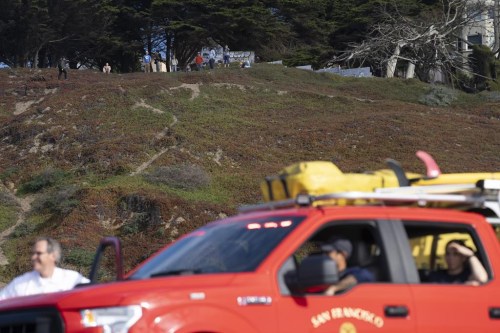
The Fire Department patrols at Ocean Beach in San Francisco while people watch the waves on higher ground during a tsunami warning on Thursday, Dec. 5, 2024. (AP Photo/Emily Steinberger)

“Most tsunamis, and the largest, result from earthquakes on reverse faults. These tsunami-generating earthquakes originate mainly in subduction zones, where tectonic plates collide and one is forced under the other,” the National Oceanic and Atmospheric Administration said.

If this is large enough and closer to the ocean floor, the energy from the earthquake can cause the ocean floor to suddenly rise or fall. “This sudden vertical displacement of the ocean floor is what typically sets a tsunami in motion,” NOAA said.

“Tsunamis radiate outward in all directions from the point of origin and can move across entire ocean basins,” the service says.

When the waves reach land, they can cause coastal flooding, and the powerful currents can last several hours or days.

The weather service calls a tsunami as “one of the most powerful and destructive natural forces.”

How often to they happen?

Tsunamis that cause damage or death near earthquakes occur about two times a year, according to the Global Historical Tsunami Database.

A tsunami racing across an ocean and causing damage or deaths more than 620 miles (1,000 kilometers) away happens about twice a decade.

Where do they occur?

People walk along the sand at Ocean Beach in San Francisco during a tsunami warning on Thursday, Dec. 5, 2024. (AP Photo/Emily Steinberger)

Tsunamis can occur in any ocean, sea or large body of water. But certain areas are prone to tsunamis because of their proximity to the source and other factors, such as depth and the shape of the ocean floor.

The database says between 1900 and 2015, there were 754 confirmed events. Of those, 78% were in the Pacific Ocean. According to the database, Japan has had the most tsunamis since 1900, followed by Russia and Indonesia.

A magnitude 9.2 temblor, the second most powerful earthquake ever recorded globally, caused widespread damage in the Anchorage area in 1964 and killed 131 people, including some in Oregon and California by the ensuing tsunami.

Most destructive tsunamis

In 2004, a magnitude 9.1 earthquake occurred off Sumatra, an Indonesian island in the Indian Ocean. It generated a tsunami that was as high as 167 feet (51 meters), causing an estimated 230,000 deaths.

Another magnitude 9.1 earthquake struck in Japan in 2011, creating a tsunami with waves reaching 127 feet (39 meters). The tsunami caused about 18,000 deaths and prompted a nuclear power plant accident.

Report Error Submit a Tip

More Stories

Special teams woes hurt Bombers in loss to Argos

Ken Wiebe 7 minute read Preview

Special teams woes hurt Bombers in loss to Argos

Ken Wiebe 7 minute read Yesterday at 8:06 PM CDT

THEY’VE been the most consistent of the three phases in the Winnipeg Blue Bombers arsenal this season.

A port in the proverbial storm, throughout this topsy-turvy campaign of ups-and-downs, the special-teams units have been supplying strength to a group that is still searching for consistency with only four games left in the regular season.

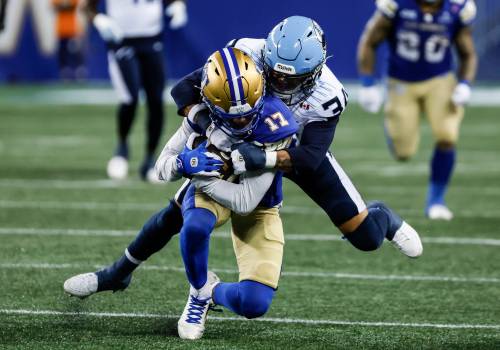
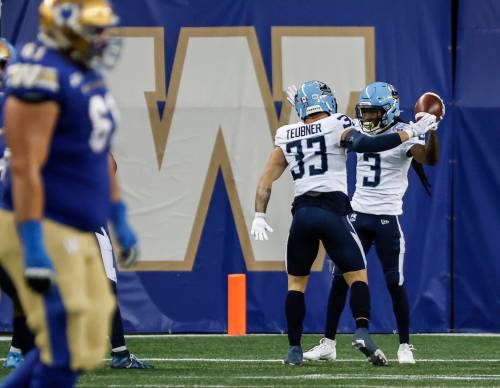
That’s what made this momentary lapse so costly in a 30-28 loss to the Toronto Argonauts on Friday at Princess Auto Stadium.

“We didn’t keep up our end of the bargain. And that hurts our football team, hurts our chances of winning games,” said Blue Bombers special teams ace Tanner Cadwallader. “And if we want to win close games. we’ve got to be a whole lot better than that. And we will. We’re going to come in (on Saturday for the film session) and go through it with a fine-tooth comb and just work a little bit harder.”

Read
Yesterday at 8:06 PM CDT

Jets’ brass warming up to El Nino?

Mike McIntyre 7 minute read Preview

Jets’ brass warming up to El Nino?

Mike McIntyre 7 minute read Friday, Sep. 25, 2026

Decisions, decisions.

The Winnipeg Jets held their final dress rehearsal Friday night before the curtain rises next week on the new NHL season.

Unlike their first three exhibitions, this one in Denver featured competitive lineups that looked an awful lot like what we’ll see when the games start counting, with plenty of star power and veteran presence on both sides.

So what are we to make of the Jets’ 5-2 loss to the mighty Colorado Avalanche, who captured the Presidents’ Trophy last year and are once again a legitimate Stanley Cup contender?

Read
Friday, Sep. 25, 2026

News briefs for Sunday, September 27, 2026

2 minute read Updated: 3:23 PM CDT

A collection of breaking news briefs filed on Sunday, September 27, 2026

No injuries reported in Smith Street high-rise fire

3:23 PM

No one was hurt in a downtown high-rise fire Saturday evening.

Gordon Bell students relish — ‘of all things’ — new pickleball courts

Maggie Macintosh 4 minute read Preview

Gordon Bell students relish — ‘of all things’ — new pickleball courts

Maggie Macintosh 4 minute read Yesterday at 6:00 AM CDT

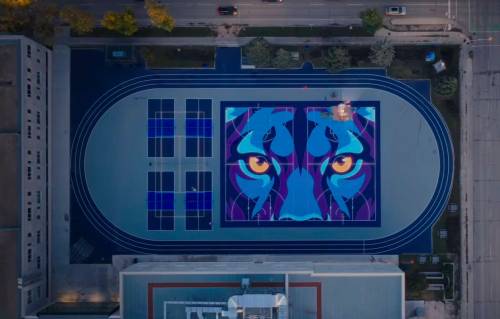
Manitoba’s newest public school sports facility is bringing the pickleball craze to an inner-city campus.

Gordon Bell High School unveiled four custom-made courts for the popular paddle sport this fall as part of a multi-faceted makeover.

Grade 12 student Matea Thiessen Unger called the courts “the cherry on top,” of a multi-year construction project that consumed much of her high school career.

“It was happening for so long — it felt like it was never going to end,” the 16-year-old said.

Read
Yesterday at 6:00 AM CDT

Blue Bombers whiff on their opportunities to put game away

Taylor Allen 7 minute read Preview

Blue Bombers whiff on their opportunities to put game away

Taylor Allen 7 minute read Friday, Sep. 25, 2026

In theory, Bryce Perkins has a simple job.

When it’s third and short, the Winnipeg Blue Bombers trot out the short-yardage quarterback, and all he has to do is plunge forward for a yard or two to make everyone on his sideline happy.

But on Friday night against the visiting Toronto Argonauts, he went above and beyond his job description.

The Bombers, down 24-21 with six minutes left, faced a third-and-one from their own end when Perkins found a hole and burst through it for a 76-yard touchdown to put the home team in front 28-24 late.

Read
Friday, Sep. 25, 2026

Quake prompts brief tsunami warning on the West Coast. Here’s what to know about tsunamis

Mark Thiessen, The Associated Press 3 minute read Preview

Quake prompts brief tsunami warning on the West Coast. Here’s what to know about tsunamis

Mark Thiessen, The Associated Press 3 minute read Thursday, Dec. 5, 2024

ANCHORAGE, Alaska (AP) — The powerful earthquake that struck in Northern California on Thursday prompted a brief tsunami warning affecting about 5 million people along a stretch of the West Coast — from Northern California to Oregon — before being canceled. Here are some things to know about tsunamis:

What is a tsunami?

A tsunami, a word that comes from the Japanese characters for harbor and wave, is a series of extremely long waves caused by the sudden displacement of the ocean, according to the National Weather Service.

“Most tsunamis, and the largest, result from earthquakes on reverse faults. These tsunami-generating earthquakes originate mainly in subduction zones, where tectonic plates collide and one is forced under the other,” the National Oceanic and Atmospheric Administration said.

Read
Thursday, Dec. 5, 2024