

Deadly chocolate factory explosion caused by faulty gas fitting, safety board finds
Advertisement
Read this article for free:
or
Already have an account? Log in here »
To continue reading, please subscribe:

Digital Subscription
One year of digital access for only $205*
- Enjoy unlimited reading on winnipegfreepress.com
- Read the E-Edition, our digital replica newspaper
- Access News Break, our award-winning app
- Play interactive puzzles
*First annual payment billed as $205.00 + GST for one year. This annual subscription will automatically renew at $233.00 + GST every 52 weeks (10% off the regular annual price of $259.35). Offer available to new and qualified returning subscribers only. Cancel any time.
To continue reading, please subscribe:
Add Free Press access to your Brandon Sun subscription for only an additional
$1 for the first 4 weeks*
- Enjoy unlimited reading on winnipegfreepress.com
- Read the E-Edition, our digital replica newspaper
- Access News Break, our award-winning app
- Play interactive puzzles
*Your next Brandon Sun subscription payment will increase by $1.00 and you will be charged $17.95 plus GST for four weeks. After four weeks, your payment will increase to $24.95 plus GST every four weeks.
Read unlimited articles for free today:
or
Already have an account? Log in here »
Hey there, time traveller!
This article was published 10/12/2024 (657 days ago), so information in it may no longer be current.
Cascading failures involving a corroded steam pipe and a defective natural gas fitting caused a powerful explosion in 2023 at a Pennsylvania chocolate factory, killing seven workers when the company failed to evacuate, a federal safety board said Tuesday.
About 70 production workers and 35 office staff at R.M. Palmer Co. were working in two adjacent buildings at the time of the blast. Employees in both buildings told federal investigators they could smell gas before the explosion. Workers at the plant have accused the company of ignoring warnings of a natural gas leak, saying the plant, in a small town 60 miles (96 kilometers) northwest of Philadelphia, should have been evacuated.
The National Transportation Safety Board said the factory failed to have natural gas emergency procedures in place that could have resulted in an immediate evacuation. The explosion leveled one building and heavily damaged another, sending flames more than 40 feet (21 meters) into the air and causing $42 million in property damage.
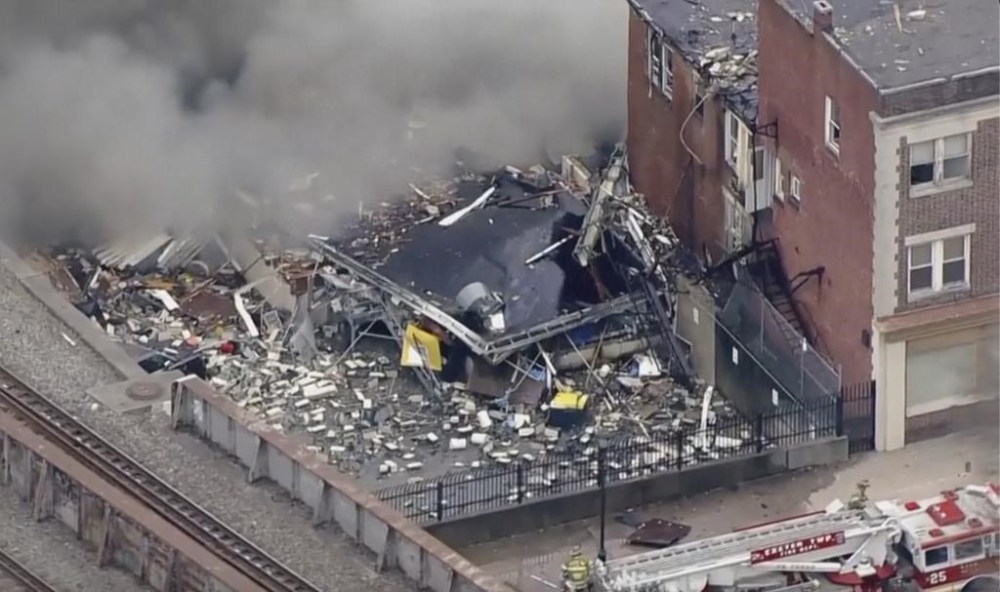
“Contributing to the accident’s severity was R.M. Palmer Company’s insufficient emergency response procedures and training of its employees, who did not understand the hazard and did not evacuate the buildings before the explosion,” the National Transportation Safety Board said in its statement of probable cause, approved Tuesday at the board’s meeting in Washington, D.C.
Palmer has since adopted a revised policy on evacuations, but Jennifer Homendy, the NTSB board chair, said it’s still insufficient because it advises staff to investigate and determine if evacuation is necessary.
“That’s exactly what they did in this scenario,” she said. “’No, you leave.’ Now, their response is they have other smells in their building because chocolate is being made. You know the difference between natural gas smell and chocolate. ‘Get out, immediately.’ So I think this actually provides significant confusion for their employees and they should change it.”
Palmer said in a statement that “not a day goes by that we do not remember and reflect on the heartbreaking loss of several colleagues and friends on that tragic day,” adding it “takes the health, safety and wellness of our employees very seriously” and will continue working with regulators.
The federal safety agency also described the role of UGI Corp., the gas utility that provided service to the candy factory in West Reading.
An old Palmer steam pipe that was already badly corroded finally cracked, allowing steam to escape and raising the temperature of UGI’s gas fitting — so much so that it, too, cracked, federal safety investigators found. Gas then migrated underground and made its way into the basement of Palmer’s second building, where it exploded. Investigators couldn’t determine the ignition source.
A UGI crew replacing gas lines in the area in 2021 — two years before the blast — was alerted to the presence of the steam pipe, but failed to notify the utility’s safety managers so the pipe could be assessed for its impact on the gas fitting that ultimately failed, the five-member safety board found.
“By not addressing the threat posed by the steam pipe, UGI Corporation’s distribution integrity management program was not effective in preventing the accident,” the safety board said in its findings. The board also said there was a delay in getting gas shut off after the blast because UGI did not properly mark its valves — and a critical valve had been paved over.
UGI said it is reviewing the findings.
“Safety remains our main priority in the communities we serve, where we work, and where we live. UGI continues to work with customers that also operate underground steam lines, to make sure their systems and our natural gas systems can operate safely together,” said John Mason, a company spokesperson. He said the company has “fully cooperated” with NTSB.
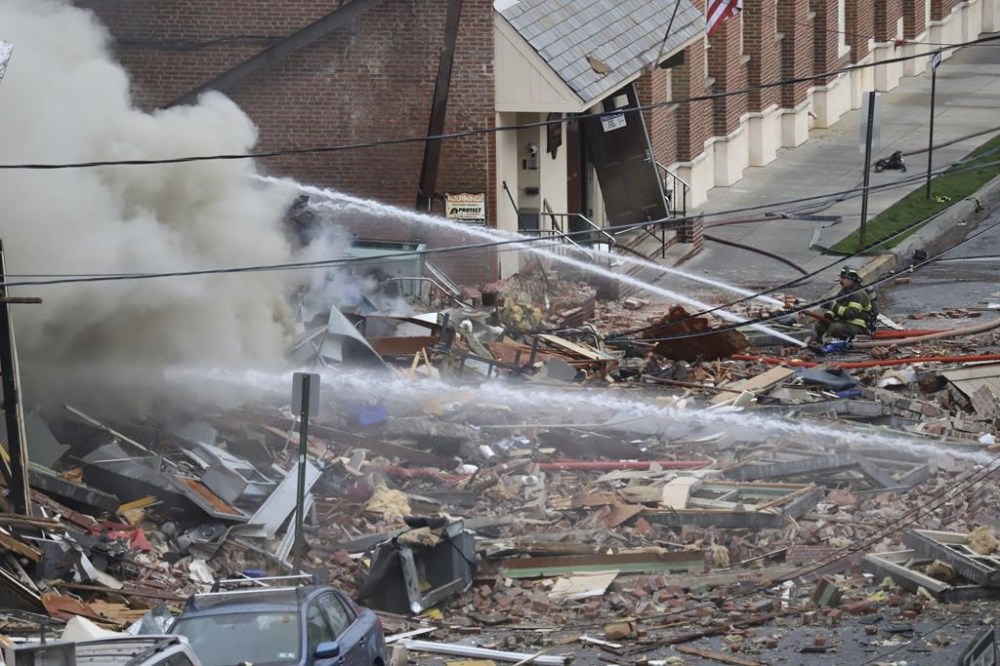
The service tee that failed was made by DuPont and has a known tendency to crack. The plastic piping is still in widespread use around the country, but the safety board said many utilities may not be aware of the locations where it is most vulnerable to failure from elevated temperatures.
UGI had a chance to remediate the faulty tee during the 2021 pipeline replacement project but did not do so, board investigators said.
“They knew that this was dangerous, brittle piping for decades. It should have been remediated,” said Andrew Duffy, an attorney representing explosion victims in a civil suit. “It’s a shocking failure in an industry whose sole responsibility is to transport gas through pipelines safely.”
Board member J. Todd Inman compared the Palmer explosion to a 1996 blast at a shoe store in San Juan, Puerto Rico, that killed 33, saying the NTSB raised many of the same issues then. Federal regulators have long said that much of the plastic pipe manufactured for natural gas service from the 1960s through the early 1980s was susceptible to cracking.
“Sometimes you think we can learn our lesson, or at least the operators can,” he said.
The NTSB issued a range of recommendations for UGI and other utilities, regulatory agencies, state governments and R.M Palmer itself. One recommendation: That businesses, homes, schools and other buildings served by natural gas install alarms that can detect a leak.