Global demand spurring Indonesia’s mining boom comes at a cost for many communities
Advertisement
Read this article for free:
or
Already have an account? Log in here »
To continue reading, please subscribe:

Digital Subscription
One year of digital access for only $205*
- Enjoy unlimited reading on winnipegfreepress.com
- Read the E-Edition, our digital replica newspaper
- Access News Break, our award-winning app
- Play interactive puzzles
*First annual payment billed as $205.00 + GST for one year. This annual subscription will automatically renew at $233.00 + GST every 52 weeks (10% off the regular annual price of $259.35). Offer available to new and qualified returning subscribers only. Cancel any time.
To continue reading, please subscribe:
Add Free Press access to your Brandon Sun subscription for only an additional
$1 for the first 4 weeks*
- Enjoy unlimited reading on winnipegfreepress.com
- Read the E-Edition, our digital replica newspaper
- Access News Break, our award-winning app
- Play interactive puzzles
*Your next Brandon Sun subscription payment will increase by $1.00 and you will be charged $17.95 plus GST for four weeks. After four weeks, your payment will increase to $24.95 plus GST every four weeks.
Read unlimited articles for free today:
or
Already have an account? Log in here »
Hey there, time traveller!
This article was published 17/12/2024 (664 days ago), so information in it may no longer be current.
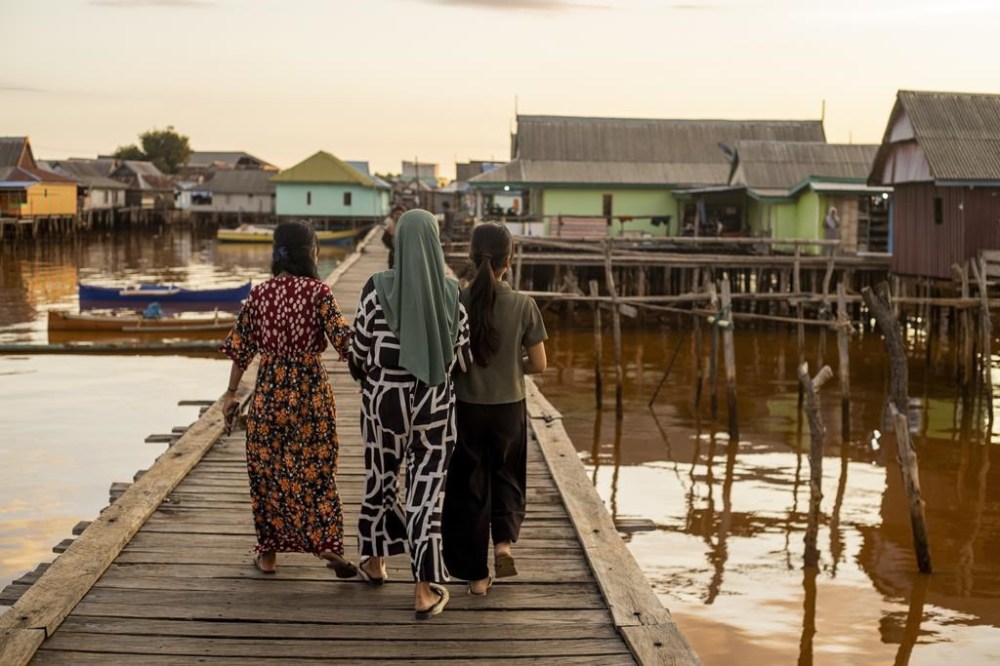
KABAENA, Indonesia (AP) — The crystal blue waters that once surrounded Kabaena are murky brown now, and the octopi and colorful fish that locals used to catch nearby to eat and sell have fled. The lush seaweed they used to harvest is gone. And parents who grew up swimming happily in the Flores Sea now warn their children to stay out of the water for fear of itchy rashes or skin lesions.
The people of Kabaena — including Indigenous Bajau, a group that has traditionally lived near and relied on the sea — are among what experts estimate are thousands of communities around Indonesia where traditional ways of life have been devastated by the impacts of a rapidly expanding mining industry. Most of the materials mined in Indonesia fuel the international supply chain for stainless steel, electric vehicle batteries and more.
“All residents here have felt the impact,” said Amiruddin, 53, a fisherman who like many Indonesians uses only one name.
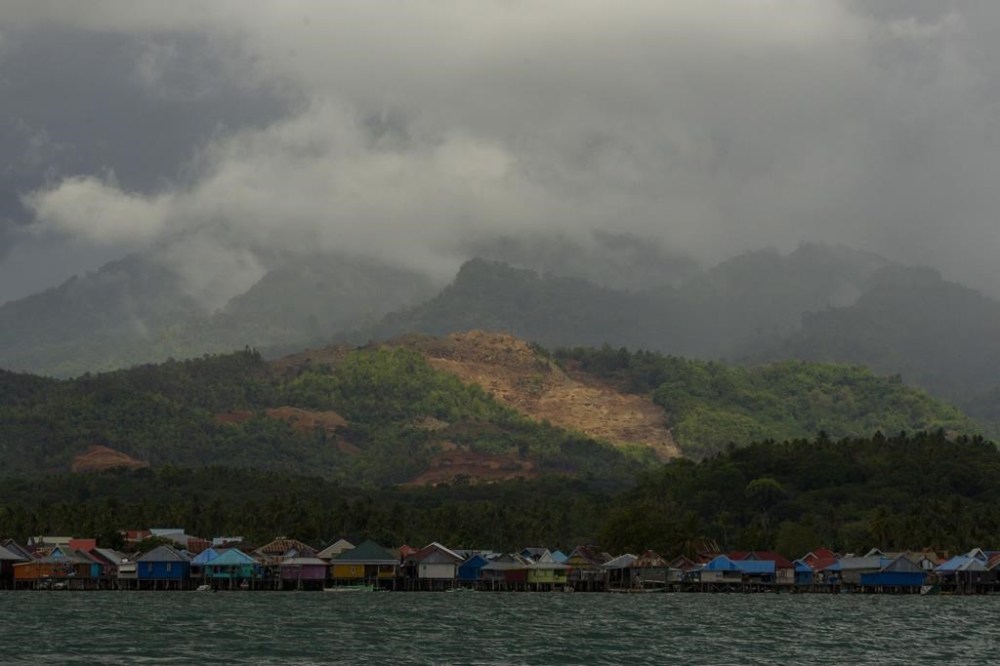
With the world’s largest known nickel reserves and rich deposits of cobalt, bauxite and other materials, Indonesia has been experiencing a mining boom on demand for stainless steel, electric vehicle batteries and more that are needed for the global energy transition. The island nation has sought to expand its mining and processing capabilities while facing backlash from international and local watchdogs for various environmental concerns.
Across Indonesia, nickel processing plants sometimes sprawl just a few minutes from the sea, and barges ready to carry away nickel ore often dot the water. Some mines operate near schools.
Local communities and the natural environments around these mines can bear the burden of this intense demand. From 2001 to 2020, the world lost nearly 1.4 million hectares (about 3.5 million acres) of trees due to mining, with Indonesia having the highest loss, according to an analysis by the World Resources Institute.
______
EDITOR’S NOTE: This is part of a series of on how tribes and Indigenous communities are coping with and combating climate change.
______
On Kabaena, over 3,700 hectares (9,140 acres) of forest — including protected forest — were cleared by mining companies between 2001 to 2023, according to data analysis by international environmental organization Mighty Earth. That deforestation has devastated the environment and livelihoods on Kabaena, said Amanda Hurowitz, a senior director at Mighty Earth.
Where fishers could once catch fish to sell or feed their families, the water is now filled with runoff sediment from mining activities and no fish are to be found. Fishers with boats must travel farther, using expensive petrol, and wind up with smaller catches that earn them less money. Those without boats often resort to eating the small shellfish they can find in the murky water around their homes.
“(I would) fish near there by setting a net,” Ilyas, 70, said while pointing in front of his home. “Now it’s far away before (fish) are found.”
Communities on land are experiencing the mines’ impact as well: Sugar cane, palm and clove trees cultivated for food and income don’t grow as well, with water sources used for crops tainted by mining activities, residents said.
“That’s the effect: The growth of the sugar palm trees will not be as good because of the influence of mining,” said Amal Susanto, 32, a palm sugar farmer in an area of Kabaena where exploration permits have been granted but mining has not yet begun. “I hope no mines around here, because our income will be impacted.”
Since the mines have opened, there’s been a spike in residents complaining of itchy skin, sore throats and other health issues. Villagers no longer want to bathe or wash clothes in the water; when they do, they get itchy skin and rashes said Nina, 33, an Indigenous Bajau resident of Kabaena.
Lab results from samples of rivers, sea water, dust and shellfish from Kabaena taken by Satya Bumi, a nonprofit environmental organization based in Indonesia, in July and November showed hazardous levels of nickel, lead and cadmium — common mining byproducts.
Exposure to these metals at the levels seen in the lab samples could lead to cancer, cardiovascular, kidney and other chronic diseases, said Kathrin Schilling, an assistant professor at Columbia University who researches molecular biology and reviewed the lab results.
“If people on this island are using the river water as drinking water — which has higher levels of the metals — and then if they are also eating the shellfish and breathe the air … you cannot escape basically any of the exposure to those toxic metals,” Schilling told AP.
The impact isn’t limited to Kabaena. Across the sea to the north, a nickel mine near the village of Torobulu pushes up against a tattered soccer field and nearby athletic courts.
The impacts and mining continue despite a March 2024 ruling by Indonesia’s constitutional court that small islands such as Kabaena require special protection from abnormally dangerous activities, including mining, as they threaten ecosystems in vulnerable areas.
But Indonesia’s government is still issuing mining permits for small islands, said Sayyidatiihayaa Afra, a researcher at Satya Bumi.
Since the constitutional court ruling, forest loss has continued on Kabaena, with 150 hectares (370 acres) cleared in areas approved for mining on the island since April 1, according to data analysis by Mighty Earth. Over half of the forest loss occurred in a concession owned by mining company Tonia Mitra Sejahtera.
Tonia Mitra Sejahtera did not respond to a request for interviews or comment. Mining company Anugrah Harisma Barakah — which caused the most deforestation on Kabaena, according to Satya Bumi — also did not answer the publicly listed phone number when AP made requests for interviews or comment.
Indonesia’s Ministry of Energy and Mineral Resources did not respond to a request for comment.
Meanwhile, people on Kabaena say they feel helpless.
“What else can we do if the water is like this?” said Nina. “We’re small people — we can’t do anything. We have to surrender.”
___
Milko reported from Jakarta.
___
The Associated Press’ climate and environmental coverage receives financial support from multiple private foundations. AP is solely responsible for all content. Find AP’s standards for working with philanthropies, a list of supporters and funded coverage areas at AP.org.