Alberta announces future coal mining policy plan, industry consults
Advertisement
Read this article for free:
or
Already have an account? Log in here »
To continue reading, please subscribe:

Digital Subscription
One year of digital access for only $205*
- Enjoy unlimited reading on winnipegfreepress.com
- Read the E-Edition, our digital replica newspaper
- Access News Break, our award-winning app
- Play interactive puzzles
*First annual payment billed as $205.00 + GST for one year. This annual subscription will automatically renew at $233.00 + GST every 52 weeks (10% off the regular annual price of $259.35). Offer available to new and qualified returning subscribers only. Cancel any time.
To continue reading, please subscribe:
Add Free Press access to your Brandon Sun subscription for only an additional
$1 for the first 4 weeks*
- Enjoy unlimited reading on winnipegfreepress.com
- Read the E-Edition, our digital replica newspaper
- Access News Break, our award-winning app
- Play interactive puzzles
*Your next Brandon Sun subscription payment will increase by $1.00 and you will be charged $17.95 plus GST for four weeks. After four weeks, your payment will increase to $24.95 plus GST every four weeks.
Read unlimited articles for free today:
or
Already have an account? Log in here »
Hey there, time traveller!
This article was published 20/12/2024 (635 days ago), so information in it may no longer be current.
EDMONTON – The Alberta government has announced plans to ban new mountaintop removal and open-pit coal developments on the eastern slopes of the Rocky Mountains, but the new rules wouldn’t apply to advanced projects like a contentious mine proposed for the Crowsnest Pass.
Energy and Minerals Minister Brian Jean announced Friday the new policies expected in late 2025, along with a round of consultations with industry players on how to implement them.
Jean said under the “long overdue” rule revamp, all coal mining projects would be held to the highest environmental standards.

“Our job will be to develop a policy that will attract investment and create jobs while respecting and protecting the air, land, water and wildlife,” he said.
Jean said royalty revenues are also to be “substantially increased,” with rates to be revised after the consultations.
“They’re too low. We’re going to bring them up,” he said of the province’s current rates.
Government officials said Friday that mountaintop removal coal mining has not occurred in Alberta.
The new bans wouldn’t apply to what are considered advanced proposals, including the proposed Grassy Mountain open-pit mine in the Crowsnest Pass, which has been fought by environmental groups and communities downstream.
Alberta Energy Regulator hearings into that project are to continue in January.
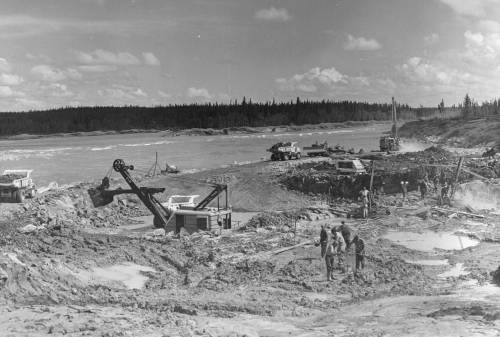
Jean said the Grassy Mountain project, which aims to reclaim a site that was mined over 60 years ago but was never properly restored, would be monitored closely if approved.
He said the province needs to find innovative ways to clean up those contaminated sites.
“I hope (Albertans) look at us and say, ‘Wow, that’s smart. What a smart government,'” he said.
Concerns over coal mining blew up in spring 2020, when the province announced it would remove rules that had protected the eastern slopes of the Rockies from open-pit coal mining since 1976.
Public reaction was swift and angry, and the United Conservative Party government reinstated the protections and stopped selling exploration leases.
Friday’s announcement also comes three years after the government received a report and recommendations on the issue, including public feedback ranging from environmental concerns to dissatisfaction with the regulatory process.
Jean said the COVID-19 pandemic, last year’s provincial election and fights with the federal government over resource jurisdiction led to the delay of the new initiative.
Katie Morrison, executive director of the Canadian Parks and Wilderness Society southern Alberta chapter, said the announcement provides little relief, and appears to open the door for more coal mines.
“On the surface, it looks like they are putting additional restrictions on coal mining, but they are really just creating loopholes,” she said.
She said there is no clear definition of what an open-pit mine is, and new projects could potentially be permitted through land-use planning changes.
Morrison said the lack of further public consultations is also problematic, because the government isn’t following through with what they’ve already heard.
“Previous public consultation was very clear that Albertans wanted no new coal mining,” she said.
Alberta NDP Leader Naheed Nenshi said the plan to collect more royalties represents a plan to increase production in Alberta, with no economic benefit and a lot of environmental risk.
“They may want to mess around with the rates, but what they really are trying to do is increase the amount of coal mining in the province,” he said.
He said the policy previously in place since 1976 was lifted for a brief period so the UCP could “sneak” a few projects through the regulatory process.
“It’s economically illiterate. It’s not going to create the jobs and the economic benefits that we need in Alberta,” Nenshi said.
Northback, the company proposing the Grassy Mountain project, said in a statement that it looks forward to working with the government on modernizing the coal policy.
“Today the Government of Alberta confirmed Northback’s Grassy Mountain Project as an opportunity to reclaim a formerly mined area and demonstrate modern, responsible mining practices for critical raw materials,” said spokesperson Rina Blacklaws.
Under the new rules, companies would be required to show they can prevent toxic selenium from leaching into watersheds.
Jean said new and developing technology would be used to keep it in check.
But NDP environment and protected areas critic Sarah Elmeligi said she’s skeptical.
“That technology doesn’t currently exist and, if it does, I would love to see it.”
Morrison added that monitoring is not mitigation, and many existing sites in Alberta continue to exceed water contamination limits, including selenium.
This report by The Canadian Press was first published Dec. 20, 2024.