WEATHER ALERT

Conviction and doubt

Lack of trust in institutions, addictionto certainty key to Kingwell’s musings

Advertisement

Advertise with us

Years ago, I saw a graffito declaring “Question Everything” spray painted on a wall. Underneath, someone had added, “Why?”— the second inscription querying not just the convictions of the first artist, but also posing a philosophical question of its own: what are the costs of doubting everything?

Read this article for free:

or

Already have an account? Log in here »

To continue reading, please subscribe:

Subscribe and receive a limited-edition Free Press branded hat or tote.

Digital Subscription

One year of digital access for only $205*

  • Enjoy unlimited reading on winnipegfreepress.com
  • Read the E-Edition, our digital replica newspaper
  • Access News Break, our award-winning app
  • Play interactive puzzles

*First annual payment billed as $205.00 + GST for one year. This annual subscription will automatically renew at $233.00 + GST every 52 weeks (10% off the regular annual price of $259.35). Offer available to new and qualified returning subscribers only. Cancel any time.

To continue reading, please subscribe:

Add Free Press access to your Brandon Sun subscription for only an additional

$1 for the first 4 weeks*

  • Enjoy unlimited reading on winnipegfreepress.com
  • Read the E-Edition, our digital replica newspaper
  • Access News Break, our award-winning app
  • Play interactive puzzles
Start now

*Your next Brandon Sun subscription payment will increase by $1.00 and you will be charged $17.95 plus GST for four weeks. After four weeks, your payment will increase to $24.95 plus GST every four weeks.

Hey there, time traveller!
This article was published 28/12/2024 (576 days ago), so information in it may no longer be current.

Years ago, I saw a graffito declaring “Question Everything” spray painted on a wall. Underneath, someone had added, “Why?”— the second inscription querying not just the convictions of the first artist, but also posing a philosophical question of its own: what are the costs of doubting everything?

These twin themes — conviction and doubt — are the subject of Question Authority by prolific Canadian philosopher Mark Kingwell. It delves into the nature of our crisis of knowledge in the 21st century, in which formerly trusted institutions — education, religion, journalism and governments — are no longer considered dependable or credible. Instead, individuals (and identity groups) are left unmoored, vulnerable to self-reinforced certainty about their own beliefs.

Kingwell refers to this addiction to righteous conviction in one’s own belief as “doxaholism” (in Greek doxa means belief). He likens this rewarding addiction and its temptations to actual substance abuse — something to which he admits considerable lived experience, having undergone two liver transplants owing to his alcoholism.
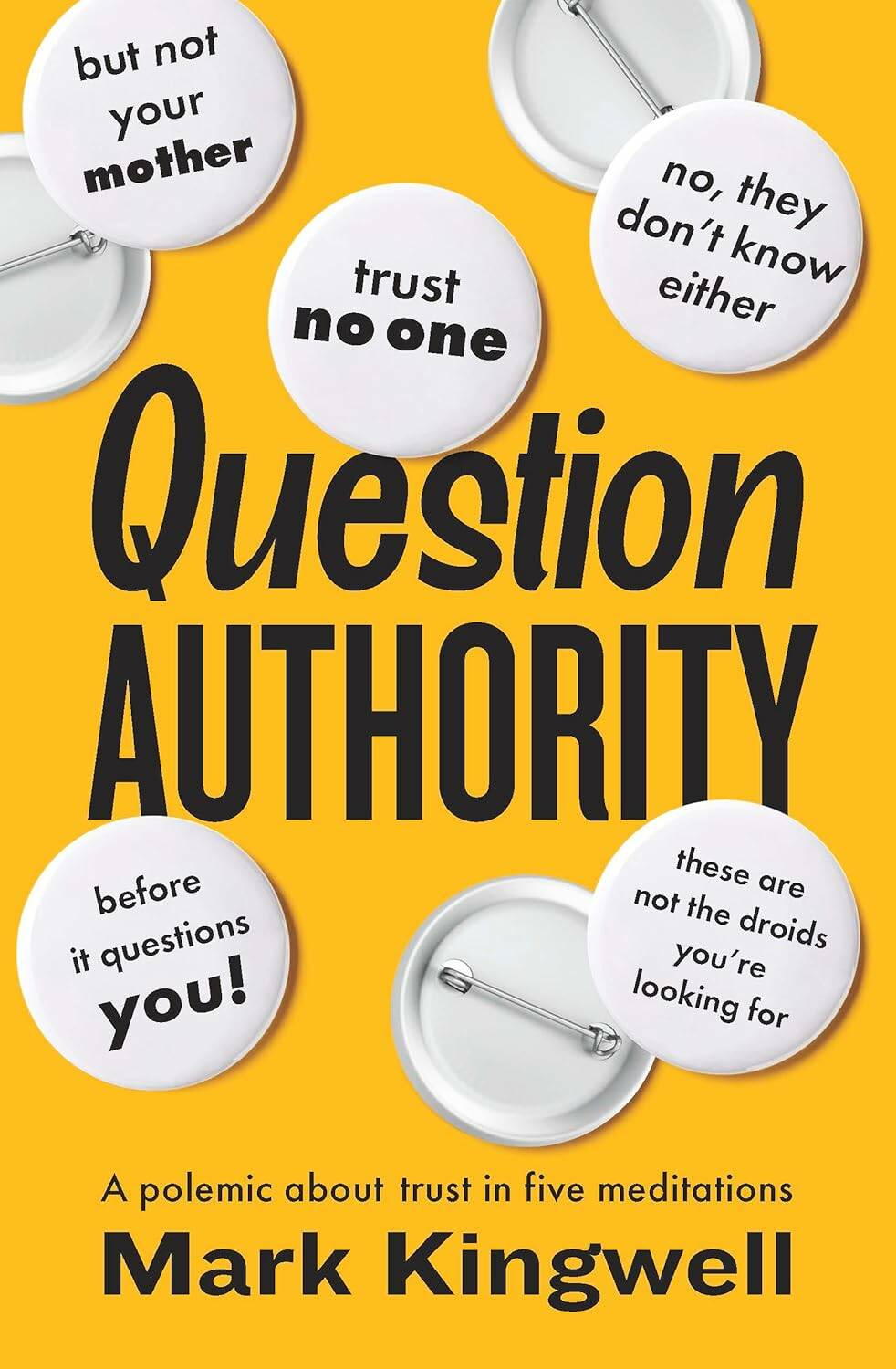
Question Authority

Question Authority

His own life story is a significant element of the book: interspersed between his philosophical musings regarding knowledge claims in contemporary society are reflections of his own youth growing up in Winnipeg, which will be of particular interest to readers of this newspaper.

The book is divided into five parts, or meditations. The first explores the dimensions of our doxaholism; the second the problem of loss of trust in institutions; the third, how that trust might be restored; the fourth examines our traditional sources of authority in terms of how we know what we think we know; while the fifth considers the particular problem of gaining knowledge in an age of political extremism, social media and artificial intelligence.

While touching on eternal themes and citing ancient philosophers, the book is also quite timely, referencing current events such as the Hamas-Israel war and the rhetorical excesses of the recently-concluded U.S. presidential election cycle, including fulminations over “childless cat ladies.”

Throughout, Kingwell weaves a delicate balance, levelling his critiques both at those who peddle reactionary right-wing fever dreams (e.g., QAnon and Pizzagate) and the identitarian obsessions of the “woke” left, who endlessly mine grievances while seeking to police thought and speech through online condemnation and cancellation.

For all his careful meditations, however, Kingwell falls into some surprising (for a philosopher) rhetorical lapses. He argues that hate speech, pseudoscience, falsehoods and nonsense do not constitute free speech. It’s an assertion which is neither morally nor legally true — at least not in the United States, where almost all speech (including hateful rhetoric) is given free reign by virtue of the First Amendment to the Constitution. It also flies in the face of John Stuart Mill’s admonitions in his 1859 essay On Liberty, which argued that falsehoods should not be suppressed in the interests of strengthening our ability to recognize truth.

Kingwell also makes casually dismissive references throughout to “conspiracy theories,” accusing all such skepticism as being equally baseless and toxic, when history teaches that conspiracies orchestrated by powerful interests happen all the time, i.e., Watergate, Iran-Contra, Enron, etc.. More discerning rhetoric is warranted.
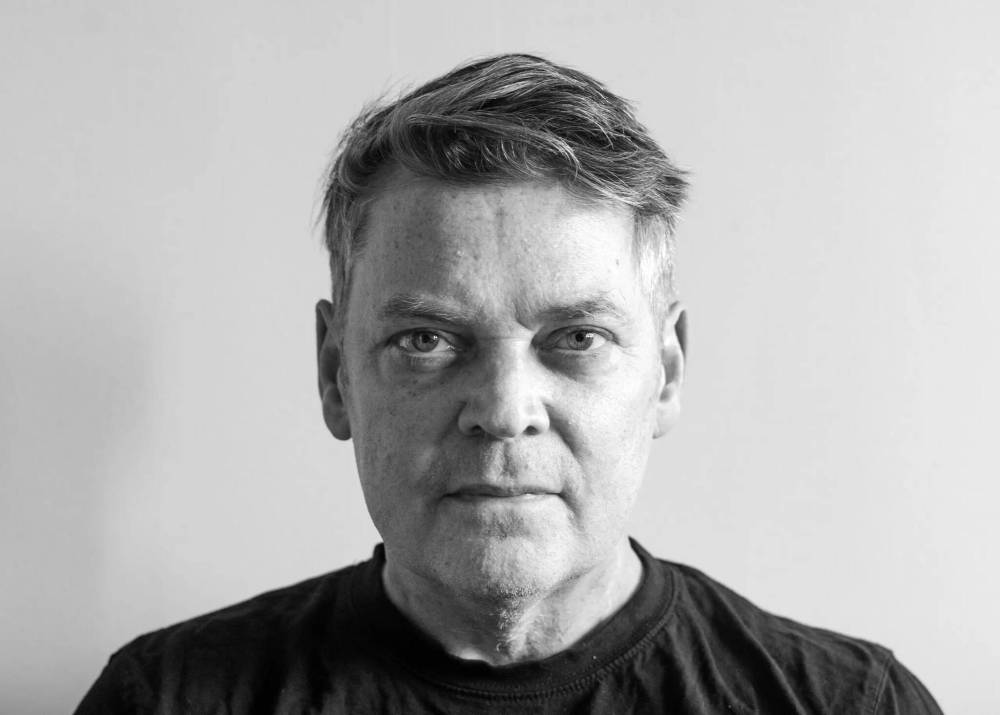
Claire Foran photo
                                Mark Kingwell touches on timeless themes while also referencing current events such as the ongoing Hamas-Israel war.

Claire Foran photo

Mark Kingwell touches on timeless themes while also referencing current events such as the ongoing Hamas-Israel war.

His arguments are further weakened somewhat by an occasional lack of consistency and conviction. He will, in one chapter, call out the authoritarian nature of identitarian left, then in another describe concern over cancel culture as a “moral panic” and “right wing bugaboo,” or else couch objections to leftist ideologies in the terms of their “wildest” or “harshest” critics, leaving the reader to wonder if he’s commenting on wokeness, or rather its critics.

In the closing pages, however, Kingwell articulates a thoughtful and pragmatic program for resolving our addiction to certainty, including making the study of philosophy mandatory for high school students. Question Authority would make an excellent introductory text.

Michael Dudley is a librarian at the University of Winnipeg.
Report Error Submit a Tip

More Stories

An eroding Winnipeg neighbourhood looks to new foundations

Ian Bickis, The Canadian Press 6 minute read Preview

An eroding Winnipeg neighbourhood looks to new foundations

Ian Bickis, The Canadian Press 6 minute read Updated: Yesterday at 8:32 PM CDT

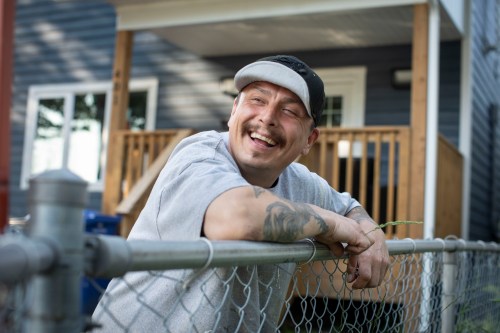
WINNIPEG - The lot Jesse Bettcher lives on in Winnipeg's north end used to be a pile of burnt rubble. Same with the one next door. And the one across the street.

But he's now the proud owner of a two-storey house with blue-grey siding and white trim, so new the orange construction fencing is still out front.

It's a dream home for Bettcher, and the latest hope for a city seeking to knock down, clean up and revitalize neighbourhoods that have seen hundreds of homes left vacant, leading to safety hazards and worries about the future.

He bought the house as part of a pilot project aimed at creating affordable home ownership. It let him and his family move out of a rental that he said was falling apart.

Read
Updated: Yesterday at 8:32 PM CDT

Today’s horoscope

Georgia Nicols 4 minute read Preview

Today’s horoscope

Georgia Nicols 4 minute read 2:00 AM CDT

MOON ALERT: There are no restrictions to shopping or important decisions. The moon is in Capricorn.

ARIES (March 21-April 19)

Parents should keep an eye on their kids. Surprise invitations and romantic encounters might make this an exciting day for you. Do not let your courageous impulses be dampened by parents, authority figures or critics. Believe in yourself.

TAURUS (April 20-May 20)

Read
2:00 AM CDT

For unique Menno-centric take on Free Press, satirist mines her jibes between the lines

David Sanderson 8 minute read Preview

For unique Menno-centric take on Free Press, satirist mines her jibes between the lines

David Sanderson 8 minute read Saturday, Jul. 25, 2026

Free Press readers of a certain vintage may remember when tuning into a local radio station to hear a pair of disc jockeys perusing a section of the Saturday edition was appointment listening.

On Sunday mornings from 1962 until the mid-1980s, CKRC 630 personalities Bob Washington and Tom Ashmore — better known as Wash and Ash — entertained Winnipeggers of all ages by impersonating the likes of Dennis the Menace, Beetle Bailey and Archie Andrews, as they lent their voices to that weekend’s multi-page, colour comic insert.

In a 1984 interview, Washington, who died in 2016 at the age of 82, attributed the weekly program’s longevity to audiences enjoying the antics of “two middle-aged guys in 24 dialects, giving their version of what Dagwood is saying to Blondie, or what Hägar the Horrible is bragging about.”

More than 40 years later, another Winnipegger is turning to the Free Press for her material. Only instead of reading the paper’s funnies, Lori Klassen, a mother of three and grandmother of two, is funnily reading the paper.

Read
Saturday, Jul. 25, 2026

Man, 20, faces charges in street-racing incident

1 minute read Updated: Yesterday at 11:37 PM CDT

Speeding drivers were racing through Elmwood at up to 200 km/h overnight, Winnipeg police say.

Around 2 a.m. July 26, police got reports of a Corvette and other vehicles racing along Disraeli Freeway. Using the Winnipeg Police Service's helicopter, officers monitored the vehicles and recorded speeds, including vehicles crossing the Nairn overpass at up to 200 km/hr.

Officers with the central traffic unit tried to pull over a Jeep and a Corvette at Lagimodiere Boulevard and Regent Avenue. The driver of the Corvette didn't stop and sped past police, eventually stopping in the 100 block of Johnson Avenue where the driver and passenger got out and ran.

The K9 unit tracked the suspects to the 100 block of Poplar Avenue. One of them was taken down by a police dog and received medical attention. Both were taken into custody.

Daycare grapples with five-year-old’s outbursts, choking incidents

Maggie Macintosh 4 minute read Preview

Daycare grapples with five-year-old’s outbursts, choking incidents

Maggie Macintosh 4 minute read Friday, Jul. 24, 2026

A Windsor Park child-care facility is weighing a five-year-old’s right to care versus the safety of other children who have been choked.

Little People’s Place expelled a pre-schooler in the spring in response to his aggressive behaviour toward other children and staff.

The child’s family has appealed to the province for him to be reinstated.

The case is raising concerns about inclusion support resources and measures to protect everyone at the Cottonwood Road daycare.

Read
Friday, Jul. 24, 2026

Take care of them; there is enough

David Driedger 5 minute read 2:01 AM CDT

THE PARABLE of the Good Samaritan is one of those stories that has endured far beyond its original context, far beyond religion itself. Someone is robbed, assaulted and left for dead.

The parable names names. The equivalent of political and community leaders, who should know better, pass by on the other side of the street. A Samaritan, someone of questionable standing in the community, stops and helps. The only person who isn’t identified is the one beaten. He could be any of us. It is a powerful call to compassion and not turning away.

Something that is rarely, if ever, mentioned is that the Samaritan brings the person along with him to an inn where they stay the night. In the morning, the Samaritan must be on his way and so says to the innkeeper, “Take care of him and when I come back, I will repay you whatever more you spend.”

I know many who try to live out the Samaritan ethic. We roll down our windows at an intersection with some spare change. We hand out water during a heat wave.