An eroding Winnipeg neighbourhood looks to new foundations

WINNIPEG - The lot Jesse Bettcher lives on in Winnipeg's North End used to be a pile of burnt rubble. Same with the one next door. And the one across the street.

Read this article for free:


or

Already have an account? Log in here »

To continue reading, please subscribe:

Subscribe and receive a limited-edition Free Press branded hat or tote.

Digital Subscription

One year of digital access for only $205*

  • Enjoy unlimited reading on winnipegfreepress.com
  • Read the E-Edition, our digital replica newspaper
  • Access News Break, our award-winning app
  • Play interactive puzzles

*First annual payment billed as $205.00 + GST for one year. This annual subscription will automatically renew at $233.00 + GST every 52 weeks (10% off the regular annual price of $259.35). Offer available to new and qualified returning subscribers only. Cancel any time.

To continue reading, please subscribe:

Add Free Press access to your Brandon Sun subscription for only an additional

$1 for the first 4 weeks*

  • Enjoy unlimited reading on winnipegfreepress.com
  • Read the E-Edition, our digital replica newspaper
  • Access News Break, our award-winning app
  • Play interactive puzzles
Start now

*Your next Brandon Sun subscription payment will increase by $1.00 and you will be charged $17.95 plus GST for four weeks. After four weeks, your payment will increase to $24.95 plus GST every four weeks.

WINNIPEG – The lot Jesse Bettcher lives on in Winnipeg’s North End used to be a pile of burnt rubble. Same with the one next door. And the one across the street.

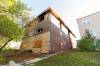
But he’s now the proud owner of a two-storey house with blue-grey siding and white trim, so new the orange construction fencing is still out front.

Jesse Bettcher stands in front of his new home in Winnipeg's North End neighbourhood near Pritchard Avenue, on Tuesday, July 21, 2026. Bettcher's home was infill built on the site of a vacant lot. THE CANADIAN PRESS/Colin Corneau

It’s a dream home for Bettcher, and the latest hope for a city seeking to knock down, clean up and revitalize neighbourhoods that have seen hundreds of homes left vacant, leading to safety hazards and worries about the future.
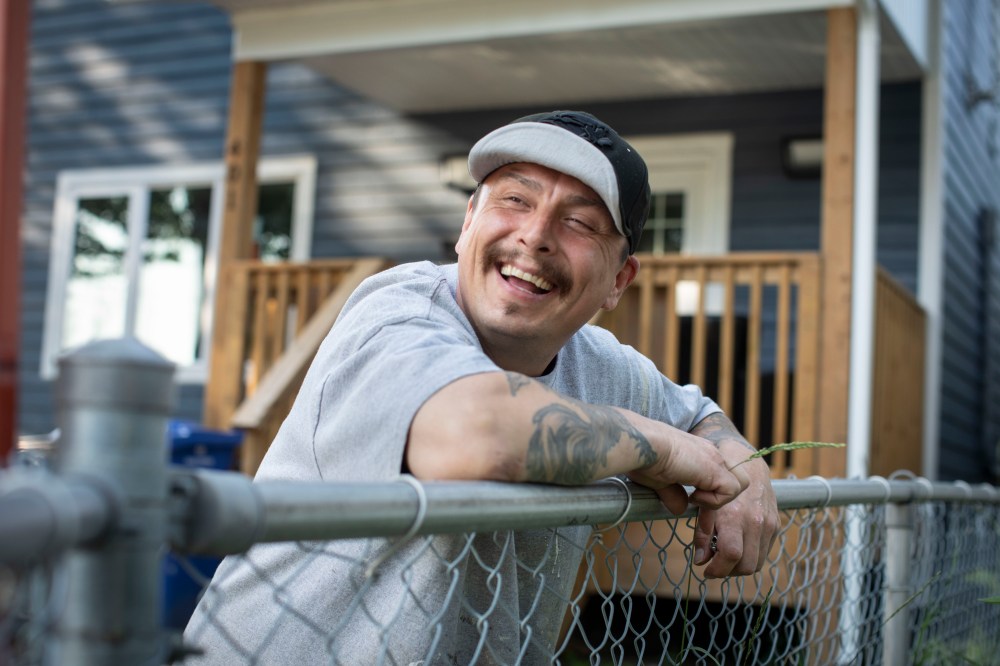
He bought the house as part of a pilot project aimed at creating affordable home ownership. It let him and his family move out of a rental that he said was falling apart.

“It’s surreal, it’s like an Airbnb almost,” said Bettcher, standing on the dirt of his front yard.

The head of a neighbourhood association in Winnipeg’s North End says a pilot project is aiming to help turn around a trend of rising vacant and abandoned houses. Darrell Warren, president of the William Whyte Neighbourhood Association, says the new house on what was a vacant lot is hopefully the first of many as part of an effort to show residents that change is possible.

He said that with a credit score below 500, he had a lot of help, including from a provincial credit union, to buy. What the family used to pay in rent, they now use for a mortgage, money effectively passed on to the next generation.

“It’s not for me,” he said. “It’s for the kids.”

Darrell Warren, president of the William Whyte Community Association walks through Winnipeg's North End neighbourhood near Pritchard Avenue, on Tuesday, July 21, 2026. THE CANADIAN PRESS/Colin Corneau

The city sold the lot to Purpose Construction for a dollar. One of the first projects was Bettcher’s house. Another is the one across the street from him, which has been cleared and getting ready for construction.

There has also been money from the province, and advocacy from local leaders such as Warren.

“If people see new houses built on these lots, they’ll notice the change, and that gives people living here hope,” said Warren, head of the William Whyte Neighbourhood Association.

He has been pushing for the program to reverse the growing number of derelict properties that risk making more people leave.

“If you just keep seeing boarded-up derelict property, you’re going to think ‘Well, I don’t want to live there,'” said Warren.

People in William Whyte do see a lot of those properties. The neighbourhood has about 300 boarded-up buildings or empty lots. That is up from 60 when Warren began working on the issue in 2017.

That makes for a little over one in 10 properties in the neighbourhood that spans six by nine blocks, and accounts for a sizable proportion of the 800-plus vacant buildings in Winnipeg.

Vacant buildings have been a growing concern in the city as a combination of a flight to the suburbs, aging inner-city housing and challenges with poverty and substance abuse make the problem worse, creating concerns for local residents.

“Where my mind goes — a lot — is to the kids,” said Tracy McKenzie, standing at the corner of the Pritchard playground, which was bustling with children one recent evening.

“If people see new houses built on these lots, they’ll notice the change, and that gives people living here hope.”

She said she worries about the young people who are tempted to explore the vacant houses. A house across the street from her was deemed a trap house before burning down with some animals dying inside.

“There’s so many things you have to be worried about happening within the houses, and all the fires that are happening,” she said.

Fires are not only dangerous, but costly. In 2024, the city says it spent $14.5 million fighting 232 fires in the William Whyte neighbourhood.

A few blocks from the park, past many manicured lawns, flower beds and a community garden in a vacant lot, stands what Warren calls his nightmare property.

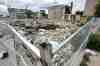
A thriving community garden is seen on a former vacant house lot in the William Whyte neighbourhood in the North End area of Winnipeg, on Tuesday, July 21, 2026. THE CANADIAN PRESS/Colin Corneau

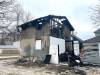
It’s a row of three houses, all owned by the same landlord, that have together seen 12 fires in the last three years. A few months ago, one of those fires also burned down the garage of a neighbouring house where a family lives, he said.

“There’s always a chance your house can go, right? What’s it gonna take, like maybe somebody’s life, before we actually act on this stuff?”

The growing issue has led the city to ramp up enforcement tools. It has hiked the tax on vacant properties, added more inspections and imposed stricter rules on boarding up homes.

Winnipeg has also begun seizing 48 properties without compensation from negligent landlords and has changed the rules to make the process faster.

Most recently, the city has begun taking applications for $35,000 grants to help renovate vacant buildings and turn them back into houses.

A row of three derelict houses, the site of repeated fires in recent months, is seen in the William Whyte neighbourhood in Winnipeg on Tuesday, July 21, 2026.THE CANADIAN PRESS/Colin Corneau

“We’re trying to … match the sticks with the carrots, or provide some incentives alongside enforcement,” said Emma Fineblit, the city’s co-ordinator for neighbourhood revitalization.

She said that while the city has been focusing on building new affordable housing, refurbishing old ones can add units at a lower cost. Reducing the number of vacant lots can also create broader social and safety benefits.

Warren is still holding out hope that the neighbourhood can be renewed. As someone who has spent all of his 65 years there, he remembers when people sat on their doorsteps, visited and watched out for one another.

“I remember how beautiful the neighbourhood was, and how viable the neighbourhood was and everything else,” he said.

“I believe we can get back there.”

This report by The Canadian Press was first published June 26, 2026.

Note to readers: This is a corrected story that supersedes an earlier version. An earlier version said a house was built by Purpose Construction along with Step Up Construction and Build Inc. It was built only by Purpose Construction.

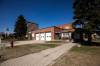
A vacant lot is seen in Winnipeg's North End neighbourhood near Pritchard Avenue, on Tuesday, July 21, 2026. THE CANADIAN PRESS/Colin Corneau
History

Updated on Monday, July 27, 2026 10:45 AM CDT: Adds photo, corrects references to North End

Report Error Submit a Tip

More Stories

Puzzles Palace

1 minute read Monday, Jul. 27, 2026

To solve our puzzles, please subscribe with this special offer: |

Premier tells grieving parents site of fatal collision under review

Chris Kitching 4 minute read Preview

Premier tells grieving parents site of fatal collision under review

Chris Kitching 4 minute read Wednesday, Sep. 9, 2026

Premier Wab Kinew promised to pursue safety improvements at an Interlake intersection when he spoke to parents of some of the four teens who died in a crash at the site on the Labour Day weekend.

The collision at Highway 8 and Provincial Road 229, just west of Winnipeg Beach, prompted a review by Manitoba Transportation and Infrastructure, which is standard after a fatal crash, while some of the victims’ families and community leaders publicly called for changes.

“When you see the loss of these beautiful young lives, any parent, any Manitoban feels a sense of loss. On behalf of the whole province, I send my condolences to these families,” Kinew said in Winnipeg Wednesday.

“I did so directly earlier today, and I heard some of the parents’ suggestions for how we could make this safer for everybody. I committed to them that we’re going to take those actions — both stuff we can do relatively quickly and some longer-term fixes, as well.”

Read
Wednesday, Sep. 9, 2026

Closure of Nomads field massive upset for north end

Joshua Frey-Sam 5 minute read Preview

Closure of Nomads field massive upset for north end

Joshua Frey-Sam 5 minute read Yesterday at 6:08 PM CDT

The North Winnipeg Nomads have a flag on the field.

The long-standing minor football club was recently informed that its field is unfit to host games and that it would need to find a new home for its five youth and adult teams until repairs are made to the playing surface.

“Our board has made every effort to address the condition of our home field,” the club wrote in a statement. “Unfortunately, following a professional assessment, the field has been determined to be unsafe and unstable for our athletes.”

All five of the club’s teams will play their 2026 season at Frank Whyte Field, part of the Northwood Community Centre, with no confirmed date for when they can play on their home field again.

Read
Yesterday at 6:08 PM CDT

U of M students call for ban on far-right group

Maggie Macintosh 4 minute read Preview

U of M students call for ban on far-right group

Maggie Macintosh 4 minute read Yesterday at 6:00 AM CDT

Some University of Manitoba students are calling on their school to ban a far-right group from campus after posters promoting mass deportations were found during the summer break.

More than 50 people rallied on Wednesday, the first day of classes, to make known their concerns about a group called the Dominion Society of Canada.

The protest was organized after a supporter of the self-described nationalist group posted a video over the Labour Day weekend that shows him putting up flyers in Fort Garry.

“Canada is a really beautiful country and I have been welcomed here by a lot of beautiful people and it’s been amazing, but when I see harmful rhetoric online and now, on campus, it gives me a lot of anxiety,” said Ela Ancheta, an arts major at U of M.

Read
Yesterday at 6:00 AM CDT

Artist’s inspired work brings Métis story back to Portage and Main

Conrad Sweatman 8 minute read Preview

Artist’s inspired work brings Métis story back to Portage and Main

Conrad Sweatman 8 minute read 6:00 AM CDT

Jennine Krauchi calls them the “grandmothers.”

“They speak to you very silently. You never hear a word, but they speak,” Krauchi says, referring to the antique pieces of Métis needlework she’s carefully studied for years — a craft passed down across generations, with the pieces themselves sometimes serving as the instructive elders.

But there’s few precedents for her latest art project: a 85-foot-wide by 32-foot-high chain curtain of Métis needlework — teeming with wild flowers, infinity symbols, berries and other motifs paying tribute to Métis heritage and renewal — that drapes over the historic Bank of Montreal’s neoclassical facade.

That building, at 335 Main St., will soon bear another title: Red River Métis National Heritage Centre or La Plas Taanshi kaa-Ishipamachihoyaahk, its Michif name.

Read
6:00 AM CDT

Assisted living could alleviate ‘bed block’

Jesse Hajer and Tom Simms 5 minute read 2:00 AM CDT

There is a severe shortage of public and non-profit rent-geared-to-income/services-geared-to-income assisted-living housing for older adults in Manitoba. Seniors assisted living is a form of housing that includes rent, food, laundry and cleaning services.

Presently, the provincial government almost exclusively relies on the private market to provide assisted-living housing for seniors. Monthly private-market assisted-living housing rent for seniors ranges from $3,000 to $6,000 per month. The total income for an individual older adult receiving old age security (OAS) and guaranteed income supplement (GIS) pensions is less than $2,000 per month.

It is clear that low- and fixed-income seniors are not able to afford private-market assisted-living housing, resulting in the premature entry of these older adults into long-term care homes because seniors assisted-living housing is not publicly subsidized, whereas long-term care facilities do provide income-based subsidies.

Low- and fixed-income seniors are also experiencing a food affordability crisis which is negatively impacting their health and well-being. An enhanced assisted-living housing program that includes congregate meals would play an important role in addressing this growing affordability problem, along with reducing social isolation and loneliness.