What changes to the CHIPS act could mean for AI growth and consumers
Advertisement
Read this article for free:
or
Already have an account? Log in here »
To continue reading, please subscribe:

Digital Subscription
One year of digital access for only $205*
- Enjoy unlimited reading on winnipegfreepress.com
- Read the E-Edition, our digital replica newspaper
- Access News Break, our award-winning app
- Play interactive puzzles
*First annual payment billed as $205.00 + GST for one year. This annual subscription will automatically renew at $233.00 + GST every 52 weeks (10% off the regular annual price of $259.35). Offer available to new and qualified returning subscribers only. Cancel any time.
To continue reading, please subscribe:
Add Free Press access to your Brandon Sun subscription for only an additional
$1 for the first 4 weeks*
- Enjoy unlimited reading on winnipegfreepress.com
- Read the E-Edition, our digital replica newspaper
- Access News Break, our award-winning app
- Play interactive puzzles
*Your next Brandon Sun subscription payment will increase by $1.00 and you will be charged $17.95 plus GST for four weeks. After four weeks, your payment will increase to $24.95 plus GST every four weeks.
Read unlimited articles for free today:
or
Already have an account? Log in here »
Hey there, time traveller!
This article was published 16/02/2025 (533 days ago), so information in it may no longer be current.
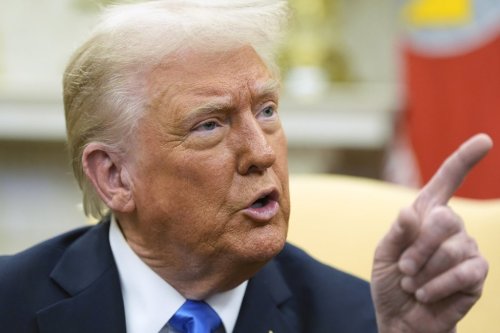
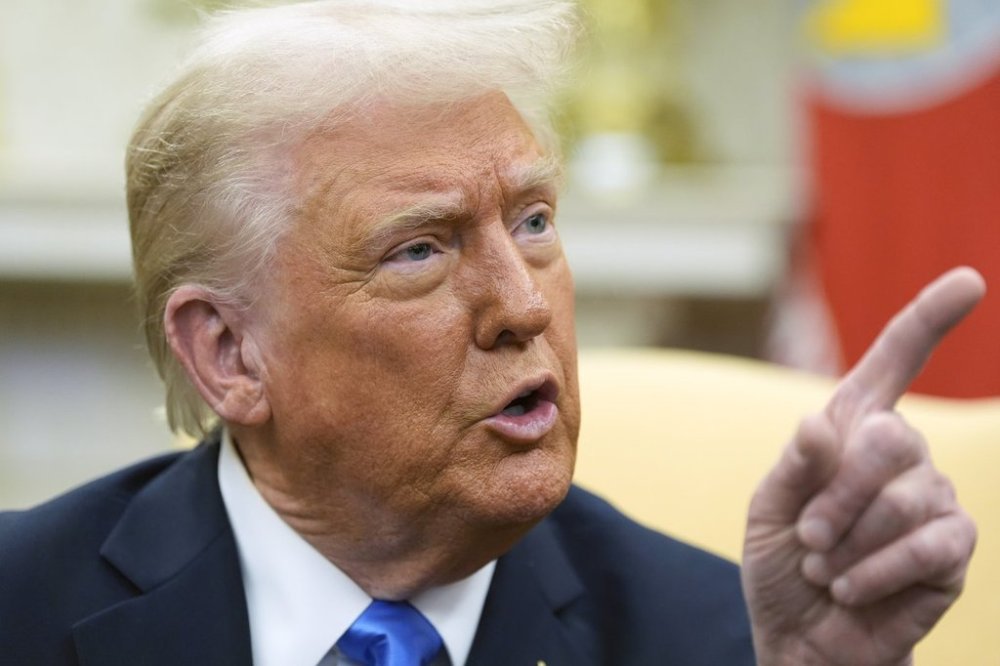
LOS ANGELES (AP) — Even as he’s vowed to push the United States ahead in artificial intelligence research, President Donald Trump’s threats to alter federal government contracts with chipmakers and slap new tariffs on the semiconductor industry may put new speed bumps in front of the tech industry.
Since taking office, Trump has said he would place tariffs on foreign production of computer chips and semiconductors in order to return chip manufacturing to the U.S. The president and Republican lawmakers have also threatened to end the CHIPS and Science Act, a sweeping Biden administration-era law that also sought to boost domestic production.
But economic experts have warned that Trump’s dual-pronged approach could slow, or potentially harm, the administration’s goal of ensuring that the U.S. maintains a competitive edge in artificial intelligence research.
Saikat Chaudhuri, an expert on corporate growth and innovation at U.C. Berkeley’s Haas School of Business, called Trump’s derision of the CHIPS Act surprising because one of the biggest bottlenecks for the advancement of AI has been chip production. Most countries, Chaudhuri said, are trying to encourage chip production and the import of chips at favorable rates.
“We have seen what the shortage has done in everything from AI to even cars,” he said. “In the pandemic, cars had to do with fewer or less powerful chips in order to just deal with the supply constraints.”
The Biden administration helped shepherd in the law following supply disruptions that occurred after the start of the COVID-19 pandemic — when a shortage of chips stalled factory assembly lines and fueled inflation — threatened to plunge the U.S. economy into recession. When pushing for the investment, lawmakers also said they were concerned about efforts by China to control Taiwan, which accounts for more than 90% of advanced computer chip production.
As of August 2024, the CHIPS and Science Act had provided $30 billion in support for 23 projects in 15 states that would add 115,000 manufacturing and construction jobs, according to the Commerce Department. That funding helped to draw in private capital and would enable the U.S. to produce 30% of the world’s most advanced computer chips, up from 0% when the Biden-Harris administration succeeded Trump’s first term.
The administration promised tens of billions of dollars to support the construction of U.S. chip foundries and reduce reliance on Asian suppliers, which Washington sees as a security weakness. In August, the Commerce Department pledged to provide up to $6.6 billion so that Taiwan Semiconductor Manufacturing Co. could expand the facilities it is already building in Arizona and better ensure that the most advanced microchips are produced domestically for the first time.
But Trump has said he believes that companies entering into those contracts with the federal government, such as TSMC, “didn’t need money” in order to prioritize chipmaking in the U.S.
“They needed an incentive. And the incentive is going to be they’re not going to want to pay at 25, 50 or even 100% tax,” Trump said.
TSMC held board meetings for the first time in the U.S. last week. Trump has signaled that if companies want to avoid tariffs they have to build their plants in the U.S. — without help from the government. Taiwan also dispatched two senior economic affairs officials to Washington to meet with the Trump administration in a bid to potentially fend off a 100% tariff Trump has threatened to impose on chips.
If the Trump administration does levy tariffs, Chaudhuri said, one immediate concern is that prices of goods that use semiconductors and chips will rise because the higher costs associated with tariffs are typically passed to consumers.
“Whether it’s your smartphone, whether it’s your gaming device, whether it’s your smart fridge — probably also your smart features of your car — anything and everything we use nowadays has a chip in it,” he said. “For consumers, it’s going to be rather painful. Manufacturers are not going to be able to absorb that.”
Even tech giants such as Nvidia will eventually feel the pain of tariffs, he said, despite their margins being high enough to absorb costs at the moment.
“They’re all going to be affected by this negatively,” he said. “I can’t see anybody benefiting from this except for those countries who jump on the bandwagon competitively and say, ‘You know what, we’re going to introduce something like the CHIPS Act.’”
Broadly based tariffs would be a shot in the foot of the U.S. economy, said Brett House, a professor of professional practice at Columbia Business School. Tariffs would not only raise the costs for businesses and households across the board, he said — for the U.S. AI sector, they would massively increase the costs of one of their most important inputs: high-powered chips from abroad.
“If you cut off, repeal or threaten the CHIPS Act at the same time as you’re putting in broadly based tariffs on imports of AI and other computer technology, you would be hamstringing the industry acutely,” House said.
Such tariffs would reduce the capacity to create a domestic chip building sector, sending a signal for future investments that the policy outlook is uncertain, he said. That would in turn put a chilling effect on new allocations of capital to the industry in the U.S. while making more expensive the existing flow of imported chips.
“American technological industrial leadership has always been supported by maintaining openness to global markets and to immigration and labor flows,” he said. “And shutting that openness down has never been a recipe for American success.”
___
Associated Press writers Josh Boak and Didi Tang in Washington contributed to this report.