

New York’s ethics watchdog ruled constitutional by state’s top court
Advertisement
Read this article for free:
or
Already have an account? Log in here »
To continue reading, please subscribe:

Digital Subscription
One year of digital access for only $205*
- Enjoy unlimited reading on winnipegfreepress.com
- Read the E-Edition, our digital replica newspaper
- Access News Break, our award-winning app
- Play interactive puzzles
*First annual payment billed as $205.00 + GST for one year. This annual subscription will automatically renew at $233.00 + GST every 52 weeks (10% off the regular annual price of $259.35). Offer available to new and qualified returning subscribers only. Cancel any time.
To continue reading, please subscribe:
Add Free Press access to your Brandon Sun subscription for only an additional
$1 for the first 4 weeks*
- Enjoy unlimited reading on winnipegfreepress.com
- Read the E-Edition, our digital replica newspaper
- Access News Break, our award-winning app
- Play interactive puzzles
*Your next Brandon Sun subscription payment will increase by $1.00 and you will be charged $17.95 plus GST for four weeks. After four weeks, your payment will increase to $24.95 plus GST every four weeks.
Read unlimited articles for free today:
or
Already have an account? Log in here »
Hey there, time traveller!
This article was published 18/02/2025 (579 days ago), so information in it may no longer be current.
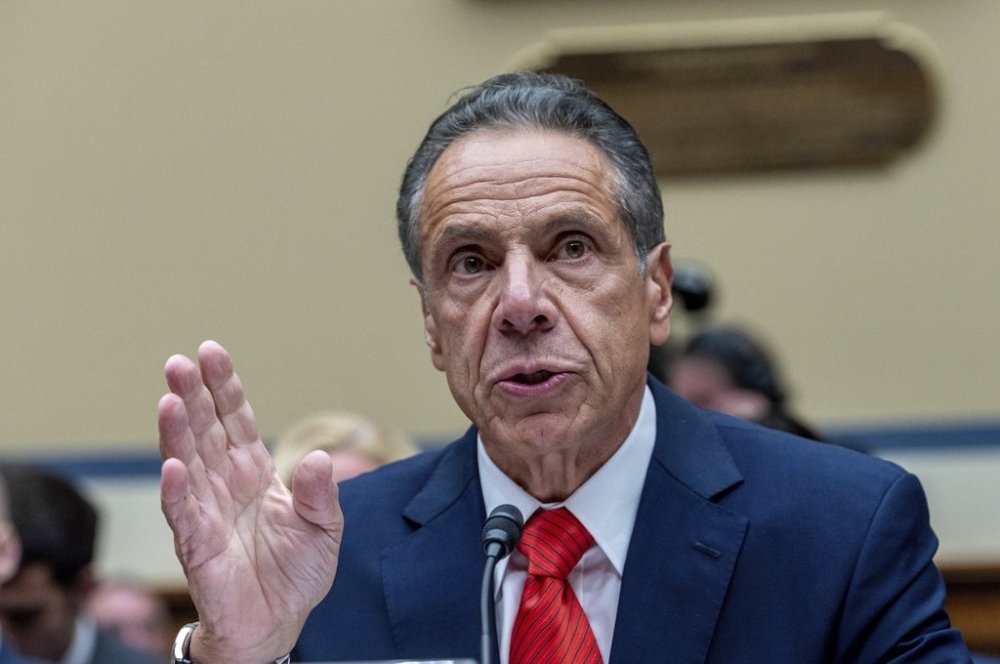
ALBANY, N.Y. (AP) — New York’s top court on Tuesday affirmed the constitutionality of an ethics watchdog created three years ago to stem public corruption, rejecting arguments from former Gov. Andrew Cuomo related to a $5 million book deal.
The Commission on Ethics and Lobbying in Government had been fighting for its survival after Cuomo’s lawyers persuaded lower courts that the panel was given unconstitutional enforcement powers. Cuomo contended that the law creating the agency violated the separation of powers mandated under the state constitution, since enforcing ethics laws is a power that belongs to the executive branch.
The Court of Appeals sided with the commission in a 4-3 vote, reversing lower court rulings.
Judge Jenny Rivera wrote in a majority opinion that the law creating the commission gives it narrow powers to avoid having top state officials regulating their own ethics.
“Trust in government is essential to democracy because its erosion leads to apathy, disaffection, and the breakdown of civic institutions,” Rivera wrote. “Given the danger of self-regulation, the Legislature and the Governor have determined that there is an urgent need for the robust, impartial enforcement of the State’s ethics and lobbying laws.”
The commission was formed by the Legislature and Gov. Kathy Hochul as a more independent alternative to a previous ethics panel widely criticized for being overly beholden to top government officials. It debuted in the wake of Cuomo’s 2021 resignation in a sexual harassment scandal.
Cuomo was fighting an attempt by the commission that could force him to forfeit $5 million he got for writing a book about his administration’s efforts during the COVID-19 pandemic. State officials claim Cuomo hadn’t kept a promise not to use any state resources on the book. Cuomo denies those allegations.
A trial court judge sided with Cuomo in 2023, noting that enforcing ethics laws is a power that belongs to the executive branch, yet the governor cannot control ethics commission members, force them to explain their actions or remove them for neglecting their duties, the judge wrote. A mid-level appeals court upheld the judge’s ruling in May.
The ruling Tuesday lifts a cloud of uncertainty that has been looming over the commission for more than a year and was cheered by good government advocates.
The commission’s leadership released a prepared statement saying the top court’s validation “is especially important now, when the need for an agency with our mission is as great as it has ever been.”
Judge Michael Garcia wrote in a dissent that the law forming the commission violated constitutional “bedrock principles” requiring a separation of powers. He accused the majority of focusing on the individual powers granted to the commission under the statute and pronouncing “each, in turn, not wolf. But step back — it’s not grandma; it’s a wolf.”
“We intend to file for reconsideration — as is our right,” Cuomo spokesperson Richard Azzopardi wrote in an email, “but it is disturbing that any judge of NY’s highest court would countenance flagrant violations of the constitution when it conflicts with what is most convenient to the political class.”
Cuomo resigned in August 2021 after the attorney general released the results of an investigation that concluded he had sexually harassed at least 11 women. Cuomo has denied those allegations.