AI pioneers who channeled ‘hedonistic’ machines win computer science’s top prize

Advertisement

Advertise with us

Teaching machines in the way that animal trainers mold the behavior of dogs or horses has been an important method for developing artificial intelligence and one that was recognized Wednesday with the top computer science award.

Read this article for free:


or

Already have an account? Log in here »

To continue reading, please subscribe:

Subscribe and receive a limited-edition Free Press branded hat or tote.

Digital Subscription

One year of digital access for only $205*

  • Enjoy unlimited reading on winnipegfreepress.com
  • Read the E-Edition, our digital replica newspaper
  • Access News Break, our award-winning app
  • Play interactive puzzles

*First annual payment billed as $205.00 + GST for one year. This annual subscription will automatically renew at $233.00 + GST every 52 weeks (10% off the regular annual price of $259.35). Offer available to new and qualified returning subscribers only. Cancel any time.

To continue reading, please subscribe:

Add Free Press access to your Brandon Sun subscription for only an additional

$1 for the first 4 weeks*

  • Enjoy unlimited reading on winnipegfreepress.com
  • Read the E-Edition, our digital replica newspaper
  • Access News Break, our award-winning app
  • Play interactive puzzles
Start now

*Your next Brandon Sun subscription payment will increase by $1.00 and you will be charged $17.95 plus GST for four weeks. After four weeks, your payment will increase to $24.95 plus GST every four weeks.

Hey there, time traveller!
This article was published 05/03/2025 (536 days ago), so information in it may no longer be current.

Teaching machines in the way that animal trainers mold the behavior of dogs or horses has been an important method for developing artificial intelligence and one that was recognized Wednesday with the top computer science award.

Two pioneers in the field of reinforcement learning, Andrew Barto and Richard Sutton, are the winners of this year’s A.M. Turing Award, the tech world’s equivalent of the Nobel Prize.

Research that Barto, 76, and Sutton, 67, began in the late 1970s paved the way for some of the past decade’s AI breakthroughs. At the heart of their work was channeling so-called “hedonistic” machines that could continuously adapt their behavior in response to positive signals.
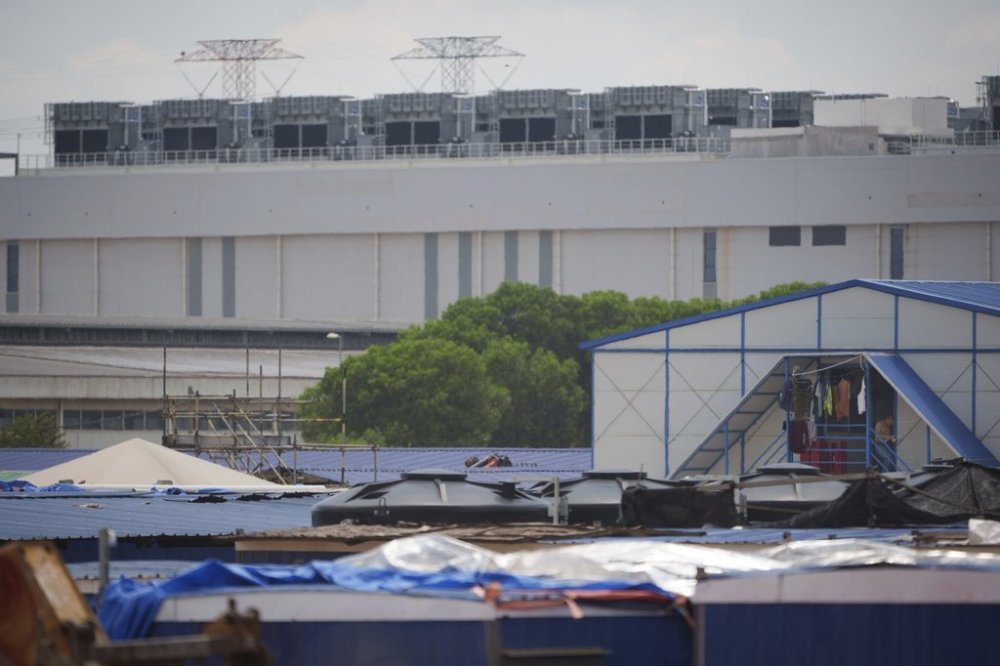
A lodging for construction workers is seen in front of a Data center in Sedenak Tech Park in Johor state of Malaysia, Friday, Sept. 27, 2024. (AP Photo/Vincent Thian)

Reinforcement learning is what led a Google computer program to beat the world’s best human players of the ancient Chinese board game Go in 2016 and 2017. It’s also been a key technique in improving popular AI tools like ChatGPT, optimizing financial trading and helping a robotic hand solve a Rubik’s Cube.

But Barto said the field was “not fashionable” when he and his doctoral student, Sutton, began crafting their theories and algorithms at the University of Massachusetts, Amherst.

“We were kind of in the wilderness,” Barto said in an interview with The Associated Press. “Which is why it’s so gratifying to receive this award, to see this becoming more recognized as something relevant and interesting. In the early days, it was not.”

Google sponsors the annual $1 million prize, which was announced Wednesday by the Association for Computing Machinery.

Barto, now retired from the University of Massachusetts, and Sutton, a longtime professor at Canada’s University of Alberta, aren’t the first AI pioneers to win the award named after British mathematician, codebreaker and early AI thinker Alan Turing. But their research has directly sought to answer Turing’s 1947 call for a machine that “can learn from experience” — which Sutton describes as “arguably the essential idea of reinforcement learning.”

In particular, they borrowed from ideas in psychology and neuroscience about the way that pleasure-seeking neurons respond to rewards or punishment. In one landmark paper published in the early 1980s, Barto and Sutton set their new approach on a specific task in a simulated world: balance a pole on a moving cart to keep it from falling. The two computer scientists later co-authored a widely used textbook on reinforcement learning.

“The tools they developed remain a central pillar of the AI boom and have rendered major advances, attracted legions of young researchers, and driven billions of dollars in investments,” said Google’s chief scientist Jeff Dean in a written statement.

In a joint interview with the AP, Barto and Sutton didn’t always agree on how to evaluate the risks of AI agents that are constantly seeking to improve themselves. They also distinguished their work from the branch of generative AI technology that is currently in fashion — the large language models behind chatbots made by OpenAI, Google and other tech giants that mimic human writing and other media.
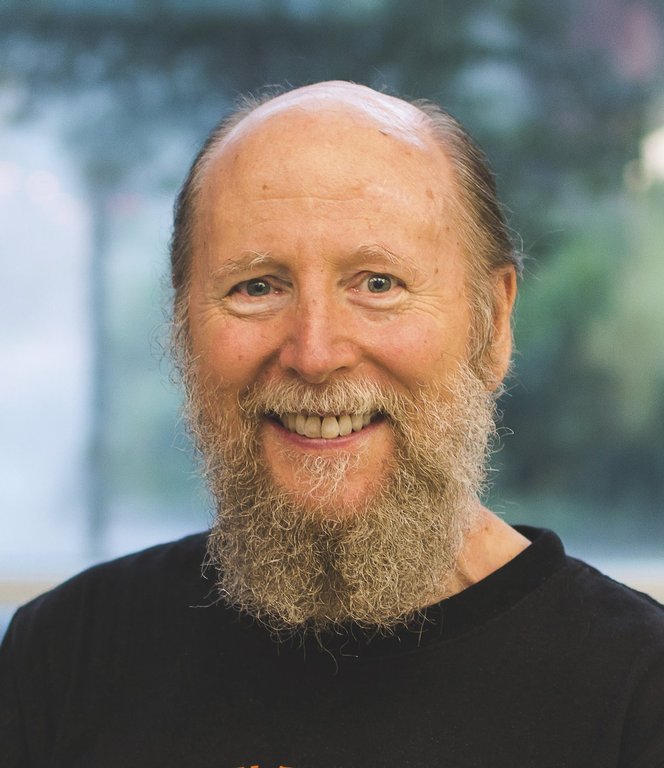
This undated photo provided by Dawn Graves shows Richard Sutton. (Dawn Graves via AP)

“The big choice is, do you try to learn from people’s data, or do you try to learn from an (AI) agent’s own life and its own experience?” Sutton said.

Sutton has dismissed what he describes as overblown concerns about AI’s threat to humanity, while Barto disagreed and said “You have to be cognizant of potential unexpected consequences.”

Barto, retired for 14 years, describes himself as a Luddite, while Sutton is embracing a future he expects to have beings of greater intelligence than current humans — an idea sometimes known as posthumanism.

“People are machines. They’re amazing, wonderful machines,” but they are also not the “end product” and could work better, Sutton said.

“It’s intrinsically a part of the AI enterprise,” Sutton said. “We’re trying to understand ourselves and, of course, to make things that can work even better. Maybe to become such things.”
Report Error Submit a Tip

More Stories

Bombers offence stalls in 22-19 loss to Elks

Joshua Frey-Sam 8 minute read Preview

Bombers offence stalls in 22-19 loss to Elks

Joshua Frey-Sam 8 minute read Updated: Yesterday at 8:19 AM CDT

It was a microcosm of the Winnipeg Blue Bombers’ season to this point: a first half that burned bright only to be doused in cold water.

The Bombers began the first leg of their mid-season gauntlet with a 22-19 loss to the Edmonton Elks at Commonwealth Stadium in the Alberta capital on Friday night.

Elks quarterback Cody Fajardo orchestrated an eight-play, 54-yard drive that set up a 40-yard game-winning field goal by Vincent Blanchard that snuck inside the left upright with zeros on the clock.

The drive, which was plagued by poor tackling by the Bombers defence, came after Bombers kicker Sergio Castillo tied the game at 19-19 on a 53-yard boot with 1:41 remaining in the contest.

Read
Updated: Yesterday at 8:19 AM CDT

‘Strong sense of unity’

By Melissa Martin 6 minute read Preview

‘Strong sense of unity’

By Melissa Martin 6 minute read Yesterday at 5:14 PM CDT

Manitoba government and business leaders are rallying behind Prime Minister Mark Carney’s plan to fight back, after a sudden collapse of trade talks between the U.S. and Canada sparked a new salvo of U.S. tariffs on some Canadian goods.

On Saturday, after Carney vowed to respond with retaliatory tariffs, Manitoba premier Wab Kinew said his government stood “100 per cent” behind the prime minister’s plan to respond to what Kinew called U.S. president Donald Trump’s “unjustified and immoral” tariffs.

“History will not be kind to Donald Trump, so we should never appease him,” Kinew said. “We should fight back, which is what Canada is doing today.”

Kinew met reporters for a brief news conference at the legislature on Saturday afternoon, about an hour after finishing a call with Carney and the other premiers. There was a “really strong sense of unity” on that call, Kinew said, and emphasized that he backs the federal decision to “walk away from what would have been a bad deal.”

Read
Yesterday at 5:14 PM CDT

Residents fear mailbox crime sprees

Morgan Modjeski 4 minute read Preview

Residents fear mailbox crime sprees

Morgan Modjeski 4 minute read Yesterday at 2:01 AM CDT

Some North End residents are concerned new community mailboxes will become a target for vandalism and crime after the base of one was recently lit ablaze — before it was even installed.

The community mailboxes started to show up on Andrews Street within the last two weeks. Some have been installed, while at other locations, only the concrete foundation is in place.

“They just dumped them on the boulevard,” said Stephen Giesbrecht, who lives beside one of the boxes in the St. John’s neighbourhood. “They dumped them on the corner and then they were gone.”

One of the concrete slabs has already played host to a fire and some of the hardware needed to install the mailbox melted.

Read
Yesterday at 2:01 AM CDT

City inundated with thousands of complaints after launch of new transit system

Morgan Modjeski 11 minute read Preview

City inundated with thousands of complaints after launch of new transit system

Morgan Modjeski 11 minute read Friday, Aug. 21, 2026

Despite complaints from thousands of dissatisfied users, Winnipeg hasn't hit the brakes on the rollout of its new primary transit network. And it appears that ignoring the public response cost Winnipeg Transit millions of dollars in lost revenue and ridership.

Read
Friday, Aug. 21, 2026

The good, bad and record setting performance in Bombers loss to Elks

Joshua Frey-Sam 8 minute read Preview

The good, bad and record setting performance in Bombers loss to Elks

Joshua Frey-Sam 8 minute read Yesterday at 6:50 PM CDT

The Winnipeg Blue Bombers’ 22-19 defeat at the hands of the Edmonton Elks at Commonwealth Stadium in Alberta on Friday was fitting for all the wrong reasons.

The Bombers looked reinvigorated as they jumped out to a 16-point lead in the first half. Then some bad habits reared their ugly head, as the Elks roared back with 19 straight points before kicker Vincent Blanchard walked it off with a 40-yard field goal.

A night that began with so much promise left many fans to wonder what the ceiling actually is for this team in 2026.

On offence, Zach Collaros completed 19 of 30 passes for 219 yards, one touchdown and an interception; Brady Oliveira amassed 118 yards on 16 carries and added a pair of catches for 11 yards; and Nic Demski secured five grabs for 80 yards.

Read
Yesterday at 6:50 PM CDT

Swede leads Manitoba Open, Winnipegger sits 33rd

Mike McIntyre 6 minute read Preview

Swede leads Manitoba Open, Winnipegger sits 33rd

Mike McIntyre 6 minute read Yesterday at 6:53 PM CDT

From Lars-Erik Sjoberg to Thomas Steen to Viggo Bjorck, there’s no shortage of Swedish athletes who have quickly become fan favourites here in Winnipeg.

Daniel Svard is hoping to add his name to the growing list.

Although he wields a golf club and not a hockey stick, the 23-year-old from Stockholm is opening plenty of eyes this week at Elmhurst. He carries a two-shot lead into Sunday’s final round of the Manitoba Open, looking to close out his first professional victory in his just his fourth career tournament.

Svard fired a six-under 66 on Saturday to move to 14-under through 54 holes of the PGA Tour Americas event.

Read
Yesterday at 6:53 PM CDT