Saskatchewan liquor stores selling leftover U.S. booze as government halts purchase
Advertisement
Read this article for free:
or
Already have an account? Log in here »
To continue reading, please subscribe:

Digital Subscription
One year of digital access for only $205*
- Enjoy unlimited reading on winnipegfreepress.com
- Read the E-Edition, our digital replica newspaper
- Access News Break, our award-winning app
- Play interactive puzzles
*First annual payment billed as $205.00 + GST for one year. This annual subscription will automatically renew at $233.00 + GST every 52 weeks (10% off the regular annual price of $259.35). Offer available to new and qualified returning subscribers only. Cancel any time.
To continue reading, please subscribe:
Add Free Press access to your Brandon Sun subscription for only an additional
$1 for the first 4 weeks*
- Enjoy unlimited reading on winnipegfreepress.com
- Read the E-Edition, our digital replica newspaper
- Access News Break, our award-winning app
- Play interactive puzzles
*Your next Brandon Sun subscription payment will increase by $1.00 and you will be charged $17.95 plus GST for four weeks. After four weeks, your payment will increase to $24.95 plus GST every four weeks.
Read unlimited articles for free today:
or
Already have an account? Log in here »
Hey there, time traveller!
This article was published 06/03/2025 (583 days ago), so information in it may no longer be current.
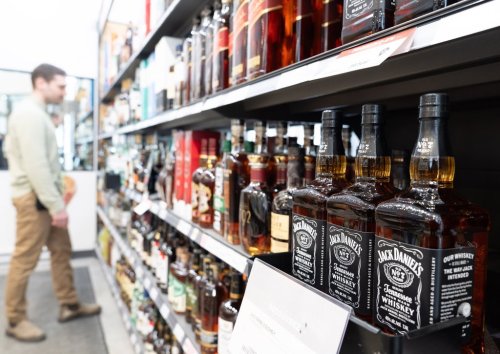
REGINA – Some Saskatchewan liquor stores are selling off their remaining bottles of American booze and restaurants are rethinking their menus, after the province said it would stop buying U.S. alcohol during the turbulent trade war with its neighbour.
Retailers say while many customers are looking to buy more Canadian products, some are making last-minute purchases of their favourite American brands, including bourbon, before they’re gone.
“I don’t want to call it panic buying, but I’ve had a couple customers where they’re really hell-bent on a certain product from the U.S.,” said Branelle Zenuk, an owner of the Melfort Liquor Loft in the town of nearly 6,000 people northeast of Saskatoon.

Zenuk said her store will continue to sell American liquor until it’s gone.
“We are a small, independent family-run business and all of our inventory in our store has been bought and fully paid for pre-tariffs,” she said. “We acquired it through no fault of our own.”
Robin Baerg, a manager with Fox Liquor Cellars in Saskatoon, said panic buying is possible, but most customers have been looking for Canadian products.
“They ask us what we’re doing. And frankly, we aren’t really doing a whole lot about it. We will be selling off our stuff that we do have on the shelves,” he said.
On Wednesday, Premier Scott Moe said the province would stop purchasing American booze and work to stop buying other U.S. goods. He said liquor retailers won’t be able to buy U.S. alcohol but can sell their remaining inventory.
His announcement came a day after U.S. President Donald Trump imposed 25 per cent tariffs on Canadian goods, along with a 10 per cent levy on Canadian energy. Canada responded with retaliatory tariffs on $30 billion in American goods the same day.
Trump said Thursday he would pause tariffs until next month on some Canadian imports that comply with the Canada-U.S.-Mexico Agreement. He said the levies on potash would be lowered to 10 per cent.
Federal Finance Minister Dominic LeBlanc soon announced that Canada would suspend a planned second wave of retaliatory tariffs on $125 billion of U.S. goods.
Saskatoon-based Nutrien Ltd., the world’s largest potash producer, declined to comment on Thursday’s change. The company has said it would continue to serve U.S. customers and that the costs of tariffs would be borne by American farmers.
Meanwhile, Moe’s office said the province’s liquor measures remained in effect.
“We are seeking clarification on the details of the pause announced today, specifically which export products are now exempt from tariffs and which will still have tariffs applied,” his office said in an email.
“While any easing of U.S. tariffs is welcome news, the ongoing uncertainty around the tariff situation is hurting businesses and consumers on both sides of the border.”
Rick Fernandes, vice-president of consumer products at Federated Co-operatives Ltd., Saskatchewan’s largest liquor retailer, said it’s up to local stores if they want to sell their remaining U.S. alcohol.
He said the company has been promoting Canadian products at all its locations, including grocery stores.
Jim Bence, CEO of Hospitality Saskatchewan, said he hasn’t heard complaints from liquor vendors about the province not purchasing U.S. alcohol.
“It’s all been something that they saw coming and I think in large part are supportive of,” Bence said. “Amongst colleagues, we’re all making very conscious choices about what we’re purchasing, and it’s very much around buying Canadian.”
Should tariffs continue, he said restaurant owners would adapt to higher costs while also tailoring their services to customer needs.
Anna Gardikiotis, owner of the Copper Kettle restaurant in Regina, said she plans to remove one American wine from her menu and use up bottles of U.S. alcohol that have already been opened.
Further changes are coming, she said.
“We try to support local where possible.”
Gardikiotis said interprovincial trade barriers should be knocked down to make it easier to buy from provinces she can’t access.
“There’s lots of times where we’ve researched different wines and products, and then it’s like, oh, we can’t get that here,” she said.
Canada’s premiers and the federal government agreed Thursday to reduce those barriers, with most premiers committing to improve the trade of alcohol between jurisdictions.
Saskatchewan says it’s reviewing remaining exceptions and has encouraged other provinces to do the same.
This report by The Canadian Press was first published March 6, 2025.
Related Articles
Trump’s tariff pause won’t get U.S. booze back on shelves, Kinew says



Advertisement Advertise With Us
Advertisement Advertise With Us