Why did Netanyahu end the Gaza ceasefire?
Advertisement
Read this article for free:
or
Already have an account? Log in here »
To continue reading, please subscribe:

Digital Subscription
One year of digital access for only $205*
- Enjoy unlimited reading on winnipegfreepress.com
- Read the E-Edition, our digital replica newspaper
- Access News Break, our award-winning app
- Play interactive puzzles
*First annual payment billed as $205.00 + GST for one year. This annual subscription will automatically renew at $233.00 + GST every 52 weeks (10% off the regular annual price of $259.35). Offer available to new and qualified returning subscribers only. Cancel any time.
To continue reading, please subscribe:
Add Free Press access to your Brandon Sun subscription for only an additional
$1 for the first 4 weeks*
- Enjoy unlimited reading on winnipegfreepress.com
- Read the E-Edition, our digital replica newspaper
- Access News Break, our award-winning app
- Play interactive puzzles
*Your next Brandon Sun subscription payment will increase by $1.00 and you will be charged $17.95 plus GST for four weeks. After four weeks, your payment will increase to $24.95 plus GST every four weeks.
Read unlimited articles for free today:
or
Already have an account? Log in here »
Hey there, time traveller!
This article was published 18/03/2025 (533 days ago), so information in it may no longer be current.
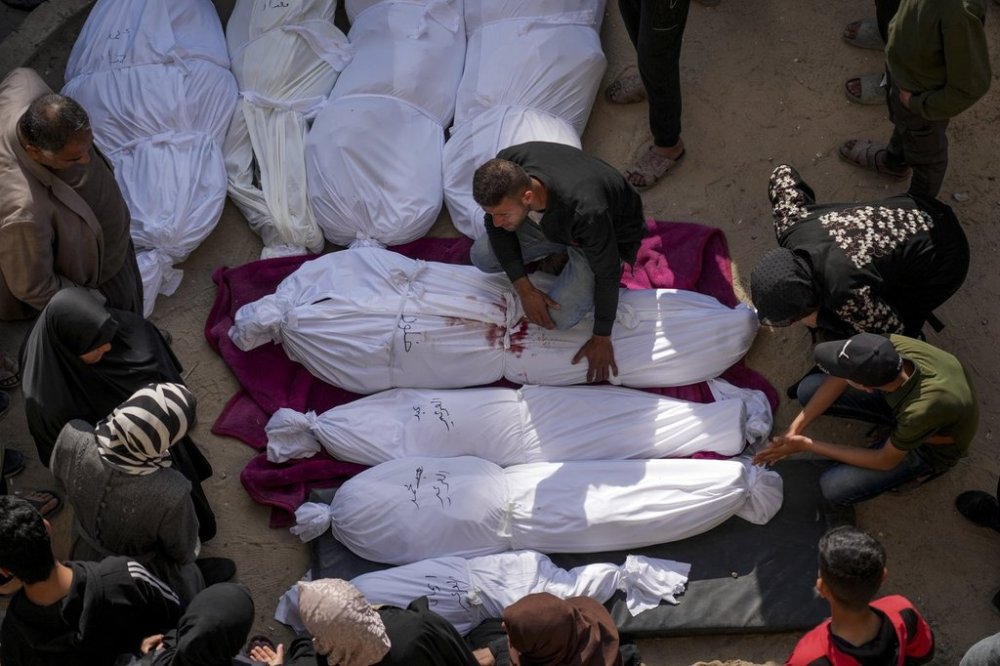
The wave of Israeli strikes that killed hundreds of Palestinians across the Gaza Strip early Tuesday was the culmination of Prime Minister Benjamin Netanyahu’s efforts to get out of the ceasefire with Hamas that he agreed to in January.
Since the start of the war, Netanyahu has faced dueling, possibly incompatible pressures: Families of the hostages want him to cut a deal with Hamas to free them, while his far-right coalition partners want to continue the war with the aim of annihilating the militant group.
On Tuesday, he appeared to cast his lot with the latter — and U.S. President Donald Trump’s administration has backed Netanyahu’s decision to unilaterally walk away from the ceasefire it took credit for brokering.
Both Israel and the United States blame the renewed hostilities on Hamas’ refusal to release more hostages before negotiations on ending the war proceed — which was not part of the ceasefire agreement. Israel has accused Hamas of preparing for new attacks, without providing evidence. The militant group has denied those allegations.
Hamas — which has yet to respond militarily to the Israeli strikes — has spent weeks calling for serious talks on the ceasefire agreement’s second phase, which calls for the release of the remaining living hostages in exchange for more Palestinian prisoners, a full Israeli withdrawal from Gaza and a lasting ceasefire.
Those talks were supposed to begin in early February. Now they may never happen.
What did the ceasefire agreement say?
The agreement reached in January, under pressure from the outgoing Biden administration and the incoming Trump one, called for a phased ceasefire aimed at freeing all the hostages abducted in Hamas’ Oct 7, 2023, attack and ending the war it caused.
Under the first phase, which ran from Jan. 19 to March 1, Hamas released 25 Israeli hostages and the bodies of eight others in return for nearly 1,800 Palestinian prisoners, including senior militants serving life sentences for deadly attacks. Israeli forces pulled back to a buffer zone, hundreds of thousands of Palestinians returned to what remained of their homes, and there was a surge of humanitarian aid.
Each side accused the other of violations, and Israeli strikes killed dozens of Palestinians the military accused of engaging in militant activities or entering no-go zones. But the truce held.
Still, the second phase was always seen as far more difficult.
Through months of negotiations, Netanyahu had repeatedly cast doubt on it, insisting Israel was committed to returning all the hostages and destroying Hamas’ military and governing capabilities — two war goals that many believe are irreconcilable.
In a TV interview last June, Netanyahu cast doubt on the possibility of a lasting ceasefire before Hamas is destroyed. “We are committed to continuing the war after a pause, in order to complete the goal of eliminating Hamas. I’m not willing to give up on that,” he said.
On Jan. 18, the eve of the ceasefire, he said “we reserve the right to return to war if necessary with the backing of the United States.”
Why did Netanyahu back out of the ceasefire?
Agreeing to a permanent ceasefire would almost certainly plunge Netanyahu into a political crisis that could end his nearly uninterrupted 15-year rule.
Far-right Finance Minister Bezalel Smotrich had threatened to leave the coalition if Netanyahu progressed to Phase 2 instead of restarting the offensive. Opposition parties have promised to support him in any agreement that brings back hostages, but his coalition would still be severely weakened, making early elections likely.
By resuming the fighting, Netanyahu ensured Smotrich’s continued support. After the strikes, the Israeli leader regained another far-right partner, Itamar Ben-Gvir, whose party had bolted in January over the ceasefire but returned to the coalition Tuesday.
Beyond the political jockeying, Netanyahu’s stated goal of annihilating Hamas would have almost certainly eluded him had he stuck with the ceasefire agreement.
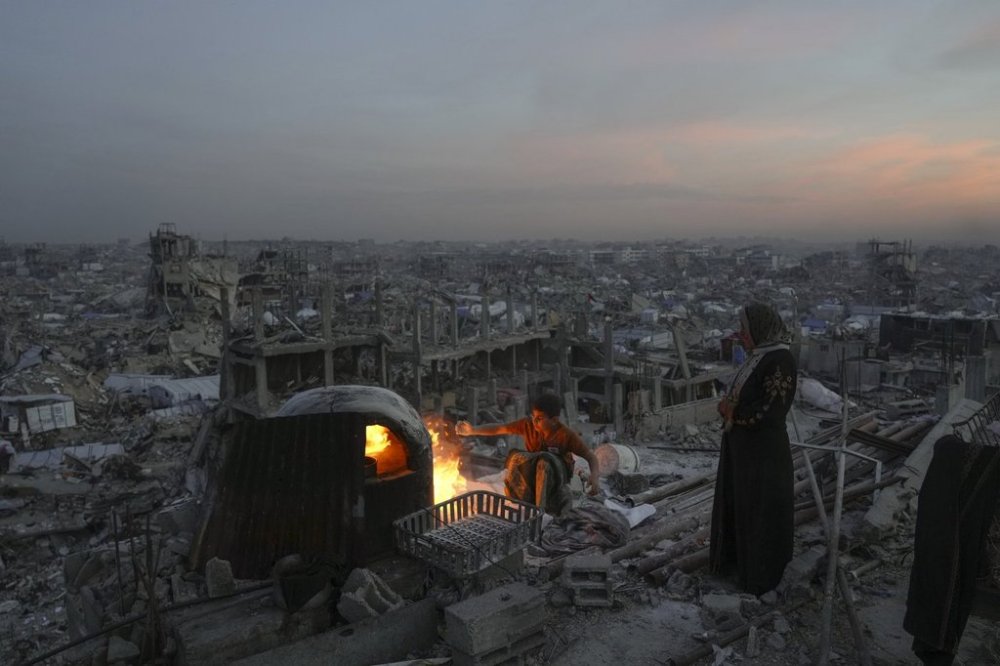
Hamas survived 15 months of Israeli bombardment and ground operations that killed over 48,000 Palestinians, according to local health officials, and destroyed much of Gaza. When the truce took hold, the militant group immediately reasserted its rule.
There’s no agreement on who should govern Gaza after the war, and even if the Western-backed Palestinian Authority were granted nominal control, Hamas would have strong influence on the ground and could rebuild its military capabilities.
For many Israelis, especially Netanyahu’s hawkish base and far-right allies, that would look like defeat. It would add to the criticism he already faces over security failures surrounding the Oct. 7 attack, in which Hamas-led militants killed some 1,200 people, mostly civilians, and abducted 251.
How did Netanyahu end the truce?
After the first phase ended, Netanyahu said Israel had agreed to what he described as a new U.S. proposal in which Hamas would release half the remaining hostages in return for a seven-week extension of the truce and a vague promise to launch negotiations over a lasting ceasefire.
Hamas refused, pointing out that the new proposal was different from the one they had agreed to in January and again called for the immediate launch of talks on Phase 2.
It even offered to return an America-Israeli and the bodies of four other hostages to get the talks back on track, an offer dismissed as “psychological warfare” by Israel. Trump’s Mideast envoy, Steve Witkoff, said Hamas was claiming flexibility in public while making “entirely impractical” demands.

In an attempt to impose the new arrangement on Hamas, Israel halted the import of all food, fuel and other humanitarian aid to Gaza. It later cut off electricity, affecting a vital desalination plant. Israel also said it would not withdraw from a strategic corridor on Gaza’s border with Egypt, as stipulated in the agreement.
In recent days, Israel stepped up strikes across Gaza, targeting people it said were planting explosives or engaging in other militant activities. On Tuesday, at around 2 a.m., it launched one of the deadliest waves of strikes since the start of the war.
What has Trump said about the ceasefire?

Trump took credit for brokering the ceasefire in January, but since then has appeared to sour on it. He has warned that “all hell” will break loose if Hamas does not immediately release the hostages, while saying that’s a decision for Israel to make.
Trump has also proposed that Gaza’s roughly 2 million Palestinians be permanently relocated so the U.S. can take ownership of Gaza and develop it as a tourist destination. Netanyahu has embraced the plan, which has been universally condemned by Palestinians, Arab countries and human rights experts, who say it would violate international law.
The White House said it was consulted ahead of Tuesday’s strikes and supported Israel’s decision.
___
Follow AP’s war coverage at https://apnews.com/hub/israel-hamas-war
The Free Press acknowledges the financial support it receives from members of the city’s faith community, which makes our coverage of religion possible.