Anti-overdose naloxone kits at transit stops could help save lives, study suggests

Advertisement

Advertise with us

VANCOUVER - Researcher Benjamin Leung carries a naloxone kit in his backpack in case of encountering an opioid overdose — but he admits that's about as practical as carrying a fire extinguisher in case of fire.

Read this article for free:


or

Already have an account? Log in here »

To continue reading, please subscribe:

Subscribe and receive a limited-edition Free Press branded hat or tote.

Digital Subscription

One year of digital access for only $205*

  • Enjoy unlimited reading on winnipegfreepress.com
  • Read the E-Edition, our digital replica newspaper
  • Access News Break, our award-winning app
  • Play interactive puzzles

*First annual payment billed as $205.00 + GST for one year. This annual subscription will automatically renew at $233.00 + GST every 52 weeks (10% off the regular annual price of $259.35). Offer available to new and qualified returning subscribers only. Cancel any time.

To continue reading, please subscribe:

Add Free Press access to your Brandon Sun subscription for only an additional

$1 for the first 4 weeks*

  • Enjoy unlimited reading on winnipegfreepress.com
  • Read the E-Edition, our digital replica newspaper
  • Access News Break, our award-winning app
  • Play interactive puzzles
Start now

*Your next Brandon Sun subscription payment will increase by $1.00 and you will be charged $17.95 plus GST for four weeks. After four weeks, your payment will increase to $24.95 plus GST every four weeks.

Hey there, time traveller!
This article was published 23/03/2025 (531 days ago), so information in it may no longer be current.

VANCOUVER – Researcher Benjamin Leung carries a naloxone kit in his backpack in case of encountering an opioid overdose — but he admits that’s about as practical as carrying a fire extinguisher in case of fire.

Instead Leung is now advocating a new tactic of placing the overdose-reversing kits at transit locations near where drug poisonings are known to occur, after co-authoring a study suggesting the benefits of the strategy.

“We just want to know, ‘Where can I go get one so that I can use it right away,'” said Leung.

Naloxone kits lie on the ground at a homeless encampment in Edmonton in this file photo from on Friday, December 29, 2023. THE CANADIAN PRESS/Jason Franson

The study, published in the Canadian Medical Association Journal on March 17, found that naloxone kits placed at public transit locations had the “greatest coverage” and efficiency for potentially reversing drug overdoses.

It compared the locations of 14,089 opioid poisonings in Metro Vancouver from 2014 to 2020 with 647 locations supplying take-home naloxone.

Those locations “covered” about 35 per cent of poisonings, meaning they were within a three-minute walk.

By comparison, placing naloxone at just 10 particular transit stops resulted in coverage of more than 20 per cent, while 1,000 kit locations at transit stops would have resulted in coverage of more than 53 per cent.

While “blanket placement” of kits at take-home naloxone locations meant coverage of a “substantial portion” of poisonings, “optimized placement … at transit locations was most effective at improving public accessibility of naloxone,” the study says.

Placing kits at pharmacies meanwhile resulted in coverage of about 22 per cent, while placement at fast-food restaurants was 16.5 per cent.

Leung, a research fellow at Duke University in North Carolina and a recent PhD graduate at the University of Toronto in health systems engineering, said the current program raised the question: “How often are we carrying the naloxone kits with us?”

Leung said he has a kit in his backpack, but doesn’t always carry his backpack around — just as we don’t always carry a fire extinguisher.

The study led by Leung identified more than 8,900 public transit stops across Metro Vancouver as candidate locations for the placement of public naloxone kits.

However, Leung said that while opioid poisoning could occur anywhere, it would not be cost-effective to place naloxone kits at every transit stop.

Naloxone kits cost between $30 and $50 each, and distribution fees and putting them in a container for public access raised the cost to between $150 and $200 per kit, said Leung.

“We’re not necessarily saying we should put one on every bus stop, but in high-risk areas,” said Leung.

Leung said public transit stops are “easily recognizable.”

“We already do this strategy with defibrillators … and we can use this same kind of strategy to inform us of where these naloxone kits should be placed,” he said.

He added that downtown Vancouver, Surrey, and New Westminster are overdose “hot spots” based on the research.

Leung said downtown Vancouver, north of False Creek, is “well-served” by the current take-home naloxone programs, but coverage of other areas needs to be improved.

“We can strike a balance of between having them consistently available in places that are easy to remember but also in high-risk areas or areas experiencing high rates of opioid poisoning where we can best allocate our resources.”

The study said researchers hope the findings will inform policy-makers to maximize naloxone accessibility and prevent overdose deaths.

More than 16,000 people have died of toxic drug overdoses in B.C. since the province declared a public health emergency in 2016.

The BC Coroners Service recently announced that 152 people died of toxic drug overdoses in January. That was down more than 30 per cent from January 2024, part of a broad decline in overdose fatalities across Canada and the United States.

This report by The Canadian Press was first published Mar. 23, 2025.

Report Error Submit a Tip

More Stories

For newcomer pizza purveyors, it’s all about crafting solid foundations

David Sanderson 7 minute read Preview

For newcomer pizza purveyors, it’s all about crafting solid foundations

David Sanderson 7 minute read 2:00 AM CDT

A recent poll conducted by an Internet-based market-research firm determined that close to 20 per cent of people eschew their leftover pizza crust.

Some argued that the residual crust lacks flavour. Others submitted that it’s too hard or crunchy to enjoy sans toppings. Given that information, what are we to make of Crusty Craft Pizza, a five-month-old takeout spot whose owners are so confident in their European-style pizza crust that they’ve chosen to highlight it in their business moniker?

Whenever somebody informs them they don’t like pizza crust, their response is, well, they haven’t tried theirs, says Oleksii Samokvhal, who together with his wife, Iryna Mehedyn, opened Crusty Craft Pizza in early April, at 1311 Day St. in Transcona.

“It’s thin in the middle, with raised edges we hand-form ourselves,” says Mehedyn, a native of Ukraine who, like her Kyiv-born husband, relocated to Winnipeg to escape the conflict in their home country.

Read
2:00 AM CDT

Billboard evangelism may look outdated but group says it’s effective

John Longhurst 5 minute read Preview

Billboard evangelism may look outdated but group says it’s effective

John Longhurst 5 minute read 2:01 AM CDT

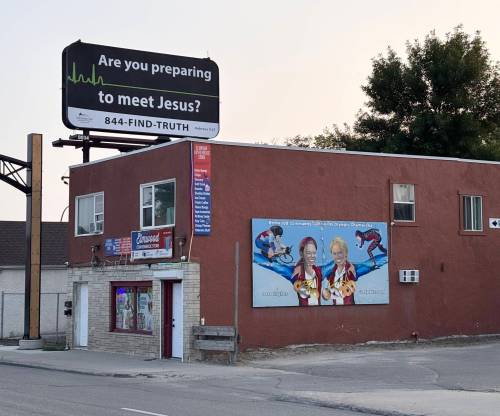
Maybe you’ve seen them in Winnipeg — billboards that say things like: “Jesus is alive!” “Are you prepared to meet Jesus?” “After you die, you will meet God.” They include a phone number to call: 844-FIND-TRUTH.

There are two billboards in Winnipeg. One is on Henderson Highway in Elmwood. The other is on Balmoral Street, by Cumberland.

Have you ever wondered who is behind them, and why they do it?

You might be surprised to learn they are created and sponsored by an Amish/Mennonite organization called Christian Aid Ministries (CAM). Based in rural Ontario, the group is funded by Amish and some conservative Mennonite denominations and individuals.

Read
2:01 AM CDT

Brewers question province’s plan for trade missions to open markets

Gabrielle Piché 5 minute read Preview

Brewers question province’s plan for trade missions to open markets

Gabrielle Piché 5 minute read 2:01 AM CDT

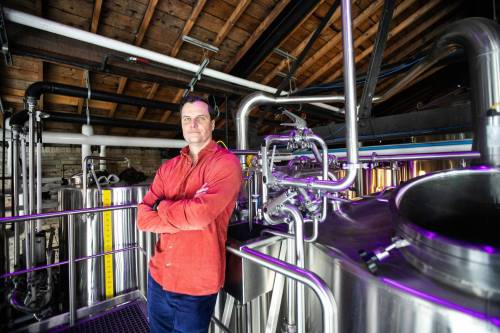
INSTEAD of a travel itch, confusion and frustration have emerged among some Manitoba brewers while the province plans interprovincial trade missions for the sector.

The government has slated $500,000 for its initiative.

Work is just beginning. The Manitoba Chambers of Commerce and Manitoba Liquor and Lotteries have been tapped to assist.

Delegations may land in Saskatchewan, Alberta, British Columbia or Ontario, a government spokesperson said.

Read
2:01 AM CDT

NDP minister needs lesson in political civility

Dan Lett 5 minute read Preview

NDP minister needs lesson in political civility

Dan Lett 5 minute read Yesterday at 2:40 PM CDT

Families Minister Nahanni Fontaine’s decision to intercede in Winnipeg’s mayoral election may be surprising to some political observers. To others, however, it is entirely on brand.

On Tuesday, Fontaine posted a video on social media in which she expressed concern that former city councillor and Progressive Conservative cabinet minister Kevin Klein was entering the race to challenge incumbent Mayor Scott Gillingham.

The caption on the video was blunt: “I mean, really, who chooses to work for Count Dracula?”

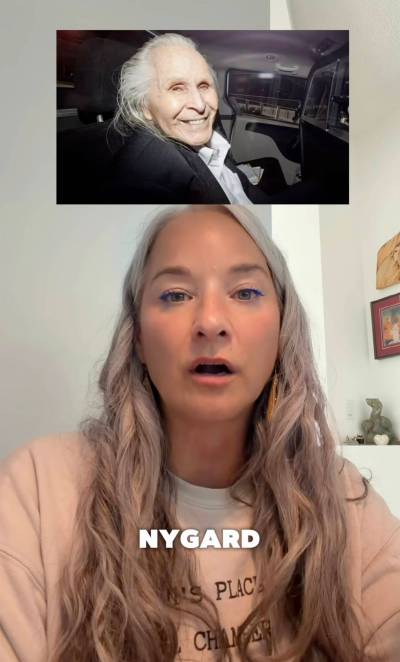
“Kevin Klein once worked for Peter Nygard. Peter Nygard is Canada’s equivalent to (American sex offender) Jeffrey Epstein — had his own little island, did unspeakable, disgusting things to women and girls … anyways, I just thought that Winnipeggers would want to know that Kevin Klein, at one point, worked for Peter Nygard,” she says in the video.

Read
Yesterday at 2:40 PM CDT

Smith’s pretzel logic confuses

Editorial 4 minute read Preview

Smith’s pretzel logic confuses

Editorial 4 minute read 2:01 AM CDT

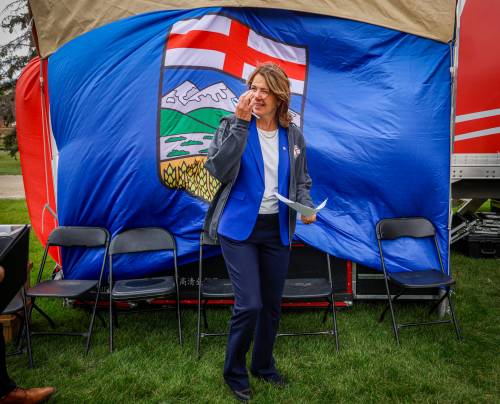
Alberta Premier Danielle Smith had both sides of her mouth working overtime on Aug. 30, when she spoke at an event in Calgary to commemorate Alberta Day, the annual celebration of the province’s entry into Confederation in 1905 (officially Sept. 1, it was celebrated on the weekend).

Smith’s comments — and the things she did not say — revealed a lot about the political tightrope the premier is trying to walk over the challenges currently faced by her province. At the top of that list of challenges is a persistent campaign to separate Alberta from the aforementioned Confederation. A campaign that Smith appears to both support and oppose, depending on which day of the week it is.

Her Alberta Day remarks were an excellent case in point.

Smith has decided that on Oct. 19, Albertans will vote on a series of non-binding propositions in a province referendum. One of those questions will ask Albertans whether they want to hold a referendum on separation, thus making this fall’s vote a “referendum on whether to hold a referendum,” as some observers have dubbed it.

Read
2:01 AM CDT

MPI restricts loan program to winter tires only

Nicole Buffie 5 minute read Preview

MPI restricts loan program to winter tires only

Nicole Buffie 5 minute read Thursday, Sep. 3, 2026

Manitoba Public Insurance is getting strict about its winter tire program after years in which customers used it to buy other types of tires.

As of Oct. 1, only tires that are “designed and marketed solely for winter driving conditions, including snow and ice,” will be eligible for financing through the public insurer.

Currently, all-weather, all-season, four-season and year-round tires are included in the program, which allows MPI clients to pay the cost in monthly installments. The program, established in 2014, offers financing for up to $2,000, plus interest.

In an email to retailers, MPI says the program is being changed so it “helps ensure customers receive the full winter-driving safety benefits associated with dedicated winter tires.”

Read
Thursday, Sep. 3, 2026