

UK police struggled to counter online falsehoods that fueled summer violence, lawmakers say
Advertisement
Read this article for free:
or
Already have an account? Log in here »
To continue reading, please subscribe:

Digital Subscription
One year of digital access for only $205*
- Enjoy unlimited reading on winnipegfreepress.com
- Read the E-Edition, our digital replica newspaper
- Access News Break, our award-winning app
- Play interactive puzzles
*First annual payment billed as $205.00 + GST for one year. This annual subscription will automatically renew at $233.00 + GST every 52 weeks (10% off the regular annual price of $259.35). Offer available to new and qualified returning subscribers only. Cancel any time.
To continue reading, please subscribe:
Add Free Press access to your Brandon Sun subscription for only an additional
$1 for the first 4 weeks*
- Enjoy unlimited reading on winnipegfreepress.com
- Read the E-Edition, our digital replica newspaper
- Access News Break, our award-winning app
- Play interactive puzzles
*Your next Brandon Sun subscription payment will increase by $1.00 and you will be charged $17.95 plus GST for four weeks. After four weeks, your payment will increase to $24.95 plus GST every four weeks.
Read unlimited articles for free today:
or
Already have an account? Log in here »
Hey there, time traveller!
This article was published 14/04/2025 (506 days ago), so information in it may no longer be current.
LONDON (AP) — Outdated laws unfit for the social media age hampered police from countering false claims that helped fuel anti-immigrant violence in Britain last summer, an investigation by lawmakers said Monday.
Parliament’s Home Affairs Committee said limits on disclosing details of criminal investigations “created an information vacuum that allowed disinformation to flourish” after three children were stabbed to death at a summer dance party in July.
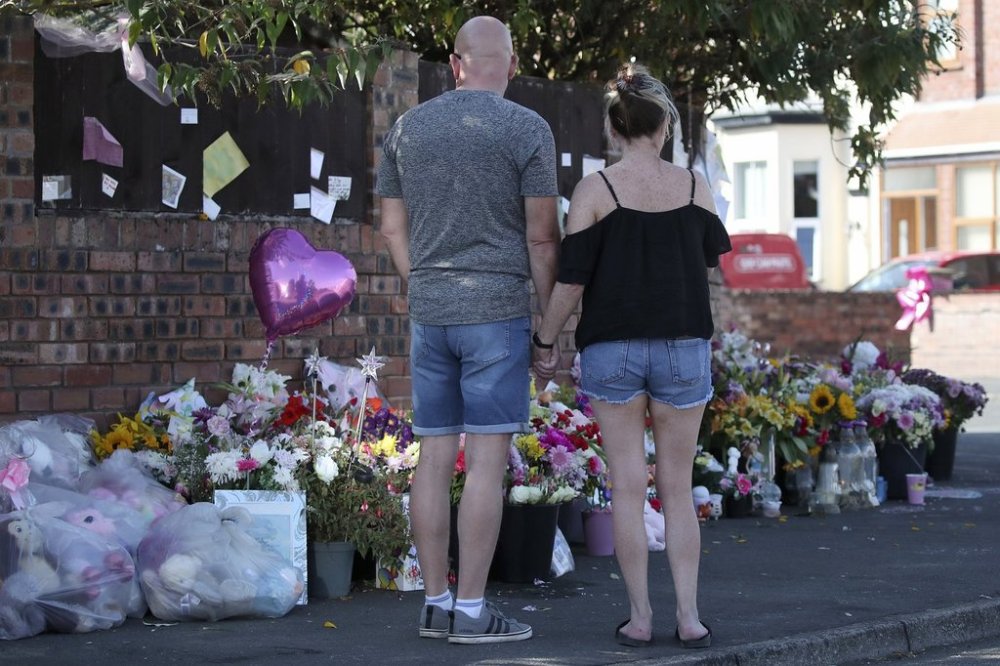
The attack in the northwest England town of Southport shocked the country and triggered days of disorder after far-right activists seized on incorrect reports that the attacker was a Muslim migrant who had recently arrived in the U.K.
Over several nights, crowds attacked housing for asylum-seekers, as well as mosques, libraries and community centers, in the worst street violence Britain had seen since riots in 2011.
Attacker Axel Rudakubana, who was 17 when he carried out the rampage at a Taylor Swift-themed dance class, is the British-born son of Rwandan Christian parents. He is serving a life sentence with no chance of parole for 52 years for killing Alice Da Silva Aguiar, 9, Elsie Dot Stancombe, 7, and Bebe King, 6, and wounding eight other children and two adults.
Longstanding contempt-of-court rules, intended to ensure fair trials, hampered police in correcting online misinformation, and a ban on naming suspects under 18 meant the attacker’s identity was withheld from the public for several days.
A tweet falsely identifying the attacker, posted on the day of the stabbings, was retweeted thousands of times and viewed by millions of people, the lawmakers said. Police did not state that the information was false until the next day, and even then did not release the attacker’s name.
Conservative lawmaker Karen Bradley, who heads the Home Affairs Committee, said “bad actors sought to exploit the unspeakable tragedy that unfolded in Southport.”
“By failing to disclose information to the public, false claims filled the gap and flourished online, further undermining confidence in the police and public authorities,” she said. “The criminal justice system will need to ensure its approach to communication is fit for the social media age.”
The committee of lawmakers from both government and opposition parties also said police struggled to monitor the sheer volume of content on social media. It called for government support “to monitor and respond to social media at a national level.”
The government said it agreed that “social media has put well-established principles around how we communicate after attacks like this under strain, and we must be able to tackle misinformation head on.” It has asked the Law Commission to carry out a review into contempt of court rules.
The government also has set up a public inquiry into how the system failed to stop the killer, who had been referred to the authorities multiple times over his obsession with violence.
The lawmakers’ committee, which heard from police, prosecutors and experts during its inquiry, also said there was no evidence to support allegations of “two-tier policing” in Britain. Politicians and activists on the political right have argued that those arrested over the summer disorder were treated more harshly than climate change activists or Black Lives Matter protesters.
More than 1,000 people have faced criminal charges over the violence, which saw 69 police officers treated in hospitals.
“Those participating in disorder were not policed more strongly because of their supposed political views but because they were throwing missiles, assaulting police officers and committing arson,” the lawmakers said. “It was disgraceful to see the police officers who bore the brunt of this violence being undermined by baseless claims of ‘two-tier policing.’”