

Cocaine is killing more people in Newfoundland and Labrador than fentanyl, police say
Advertisement
Read this article for free:
or
Already have an account? Log in here »
To continue reading, please subscribe:

Digital Subscription
One year of digital access for only $205*
- Enjoy unlimited reading on winnipegfreepress.com
- Read the E-Edition, our digital replica newspaper
- Access News Break, our award-winning app
- Play interactive puzzles
*First annual payment billed as $205.00 + GST for one year. This annual subscription will automatically renew at $233.00 + GST every 52 weeks (10% off the regular annual price of $259.35). Offer available to new and qualified returning subscribers only. Cancel any time.
To continue reading, please subscribe:
Add Free Press access to your Brandon Sun subscription for only an additional
$1 for the first 4 weeks*
- Enjoy unlimited reading on winnipegfreepress.com
- Read the E-Edition, our digital replica newspaper
- Access News Break, our award-winning app
- Play interactive puzzles
*Your next Brandon Sun subscription payment will increase by $1.00 and you will be charged $17.95 plus GST for four weeks. After four weeks, your payment will increase to $24.95 plus GST every four weeks.
Read unlimited articles for free today:
or
Already have an account? Log in here »
Hey there, time traveller!
This article was published 16/04/2025 (527 days ago), so information in it may no longer be current.
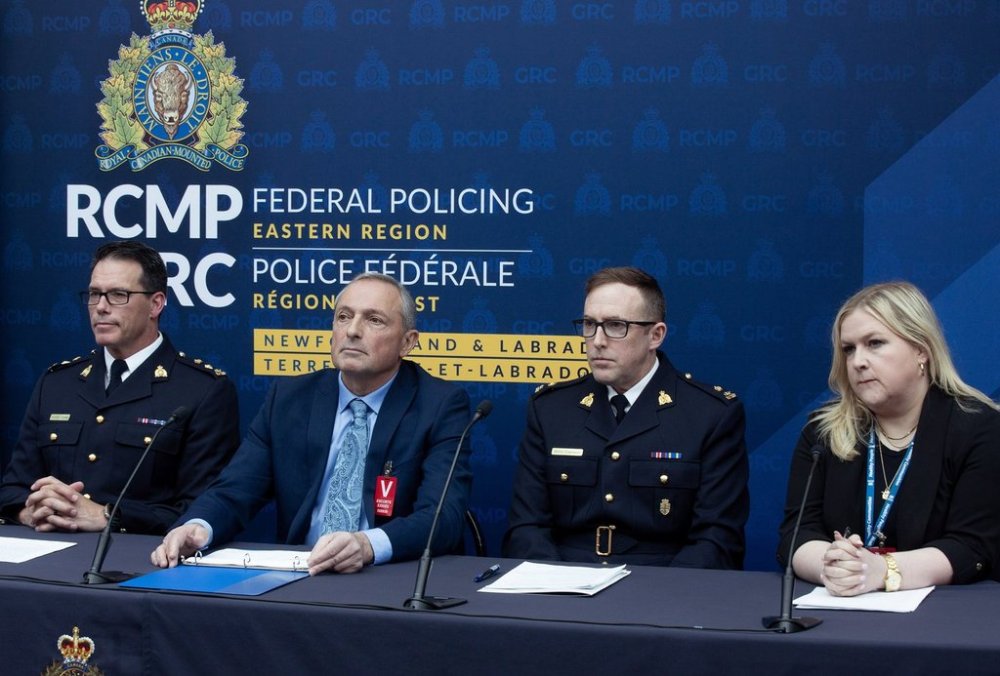
ST JOHN’S NL – Highly potent cocaine is circulating in Newfoundland and Labrador, and police said Wednesday the drug is killing more people than fentanyl.
Cocaine seized recently by the RCMP was found to have “purity levels that we have never seen before,” reaching 90 per cent or higher, Insp. David Emberley told a news conference in St. John’s.
“This is alarming and highly toxic for human consumption,” he said.
Figures supplied to reporters Wednesday by the province’s chief medical examiner’s office show steep climbs in cocaine and fentanyl toxicity deaths from 2022 to 2024, compared with the previous four years.
However, the cocaine deaths outpace those from fentanyl: last year, cocaine killed 43 people in the province, compared with 20 who died from fentanyl. Eight people died from a combination of both substances.
The majority of the deaths were accidental, and those most affected were men and people in their 30s, the data said.
“Individuals … usually die within minutes,” said Dr. Nash Denic, the province’s chief medical examiner. “After 30 seconds, it can produce cardiac arrhythmia, leading to death in less than a couple of minutes. It’s very scary.”
Three teenagers have also died accidentally from drug toxicity so far this year in confirmed or suspected cases of Xanax or Dilaudid contaminated with protonitazene, a synthetic opioid, Denic said. The youngest was 14, he said, adding that a fourth teenager who overdosed is still in hospital.
Cocaine found in central Labrador last year, including in the Innu community of Sheshatshiu, was found to have potencies of between 94 and 96 per cent, Emberley said. In St. John’s and surrounding eastern Newfoundland, samples have recently tested at 90 per cent.
Typically, cocaine that pure is sold by the kilogram and diluted with other substances before it is consumed, he said. Until two or three years ago, purity rates for street-level cocaine in the province were regularly between 15 and 20 per cent.
“They don’t want to cut it anymore,” Denic said. “Because you have a market and you’re going to sell it as soon as possible. So there’s no reason anymore to dissolve the cocaine in various benign substances.”
The amount of cocaine in the province has also increased dramatically. When Emberley began policing in 2009, officers carrying out cocaine busts would often find a kilogram of the drug, he said. In November, Mounties seized 20.5 kilograms as part of an investigation into organized crime in St. John’s. It was the largest cocaine seizure in the province’s history.
Emberley said the increase in cocaine on the streets has come with an increase in violent and organized crime.
Provincial harm reduction consultant Jane Henderson urged people who use drugs to have naloxone on hand, although it cannot counter a cocaine overdose. She also said people should know the signs of an overdose and never use alone.
“There is no safe dosage right now,” she said. “It’s just a toxic supply, and it’s Russian roulette in a lot of ways.”
This report by The Canadian Press was first published April 16, 2025.