The US has a single rare earths mine. Chinese export limits are energizing a push for more
Advertisement
Read this article for free:
or
Already have an account? Log in here »
To continue reading, please subscribe:

Digital Subscription
One year of digital access for only $205*
- Enjoy unlimited reading on winnipegfreepress.com
- Read the E-Edition, our digital replica newspaper
- Access News Break, our award-winning app
- Play interactive puzzles
*First annual payment billed as $205.00 + GST for one year. This annual subscription will automatically renew at $233.00 + GST every 52 weeks (10% off the regular annual price of $259.35). Offer available to new and qualified returning subscribers only. Cancel any time.
To continue reading, please subscribe:
Add Free Press access to your Brandon Sun subscription for only an additional
$1 for the first 4 weeks*
- Enjoy unlimited reading on winnipegfreepress.com
- Read the E-Edition, our digital replica newspaper
- Access News Break, our award-winning app
- Play interactive puzzles
*Your next Brandon Sun subscription payment will increase by $1.00 and you will be charged $17.95 plus GST for four weeks. After four weeks, your payment will increase to $24.95 plus GST every four weeks.
Read unlimited articles for free today:
or
Already have an account? Log in here »
Hey there, time traveller!
This article was published 17/04/2025 (493 days ago), so information in it may no longer be current.
OMAHA, Neb. (AP) — America’s only rare earths mine heard from anxious companies soon after China responded to President Donald Trump’s tariffs this month by limiting exports of those minerals used for military applications and in many high-tech devices.
“Based on the number of phone calls we’re receiving, the effects have been immediate,” said Matt Sloustcher, a spokesperson for MP Materials, the company that runs the Mountain Pass mine in California’s Mojave Desert.
The trade war between the world’s two biggest economies could lead to a critical shortage of rare earth elements if China maintains its export controls long-term or expands them to seek an advantage in any trade negotiations. The California mine can’t meet all of the U.S. demand for rare earths, which is why Trump is trying to clear the way for new mines.
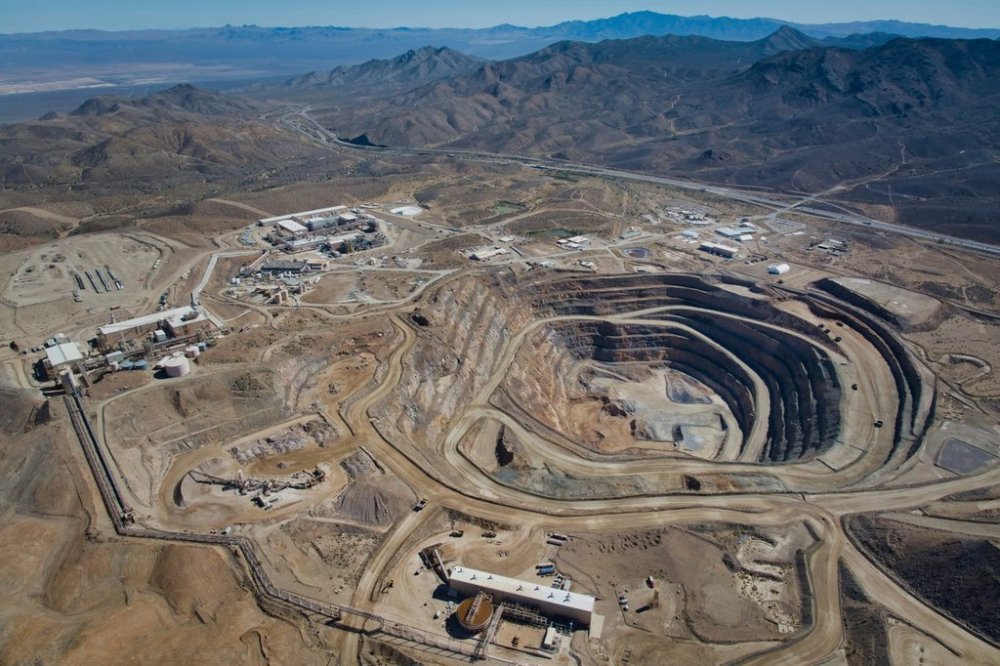
Rare earth elements are important ingredients in electric vehicles, powerful magnets, advanced fighter jets, submarines, smartphones, television screens and many other products. Despite their name, the 17 elements aren’t actually rare, but it’s hard to find them in a high enough concentration to make a mine worth the investment.
Tariffs will impact ore supply and costs
MP Materials, which acquired the idle Mountain Pass site in 2017, said Thursday it would stop sending its ore to China for processing because of the export restrictions and 125% tariffs on U.S. imports China imposed. The company said it would continue processing nearly half of what it mines on site and store the rest while it works to expand its processing capability.
“Selling our valuable critical minerals under 125% tariffs is neither commercially rational nor aligned with America’s national interests,” MP Materials said in a statement.
Experts say the manufacturers that rely on rare earth elements and other critical minerals will see price increases, but there is likely enough of a global supply available to keep factories operating for now.
The California mine yields neodymium and praseodymium, the light rare earths that are the main components of the permanent rare earth magnets in EVs and wind turbines. But small amounts of some of the heavy rare earths that China has restricted, such as terbium and dysprosium are key to helping the magnets withstand high temperatures.
Already, the price of terbium has jumped 24% since the end of March to reach $933 per kilogram.
“Our estimate suggests that there is enough stockpile in the market to sustain demand for now,” Benchmark Mineral Intelligence rare earths analyst Neha Mukherjee said, adding that shortages may emerge later this year.
China holds power over the market
China has tremendous power over the rare earths market. The country has the biggest mines, producing 270,000 metric tons (297,624 tons) of minerals last year compared to the 45,000 tons (40,823 metric tons) mined in the U.S. China supplies nearly 90% of the world’s rare earths because it also is home to most of the processing capacity.
The restrictions Beijing put in place on April 4 require Chinese exporters of seven heavy rare earths and some magnets to obtain special licenses. The retaliatory controls reinforced what the Trump administration and manufacturers see as a dire need to build additional U.S. mines and reduce the nation’s dependence on China.
Trump has tried, so far unsuccessfully, to strong-arm Greenland and Ukraine into providing more of their rare earths and other critical materials to the United States. Last month, he signed an executive order calling for the federal government to streamline permit approvals for new mines and encourage investments in the projects.
Two companies are trying to develop mines in Nebraska and Montana. Officials at NioCorp and U.S. Critical Materials said they hoped the push from the White House would help them raise money and obtain the necessary approvals to start digging. NioCorp has worked for years to raise $1.1 billion to build a mine in southeast Nebraska.
“As I sit and I think about how can we deal with this enormous leverage that China has over these minerals that nobody even knows how to pronounce for the most part, we have to deal with this leverage situation,” NioCorp CEO Mark Smith said. “And the best way, I think, is that we need to make our own heavy rare earths here in the United States. And we can do that.”
MP Materials is working to quickly expand its processing capability, partly with the help of some $45 million the company received coming out of the first Trump administration. But after investing nearly $1 billion since 2020, the company doesn’t currently have the ability to process the heavy rare earths that China is restricting. MP Materials said it was working expeditiously to change that, and it is building a factory in Texas to produce rare earth magnets for electric vehicles and other products domestically and chip away at China’s dominance in that market..
Big U.S. automakers declined to comment about how dependent they are on rare earths and the impact of China’s export curbs. Major defense contractors like Boeing and Lockheed Martin, which were specifically targeted in China’s restrictions along with more than a dozen other defense and aerospace companies, also remained circumspect.
Military technology is a smaller but important user of rare earths. Trump issued an executive order on Tuesday calling for an investigation into the national security implications of being so reliant on China for the elements.
A spokesperson for Lockheed, which makes the F-22 fighter jet, said the company continuously assesses “the global rare earth supply chain to ensure access to critical materials that support our customers’ missions.”
Manufacturers prepare for price increases
Some battery makers could start to run short of key elements within weeks, according to Steve Christensen, executive director of the Responsible Battery Coalition, an association representing battery and automakers and battery sellers.
Already, manufacturers have seen the price of antimony, an element used to extend the life of traditional lead-acid batteries, more than double since China restricted exports of it last year. The element isn’t one of the 17 rare earths but is among the critical minerals that Trump wants to see produced domestically.
Initially, automakers will likely try to absorb any increase in the cost of their batteries without raising vehicle prices, but that may not be sustainable if China’s restrictions remain in place, Christensen said. A 25% tariff Trump put on all imported automobiles and auto parts cars already was expected to increase costs, although the president hinted this week that he might give the industry a temporary reprieve.
The U.S. fulfilled its rare earths needs with domestic sources until the late 1990s. Production largely ended after low-cost Chinese ores flooded global markets. Robots, drones and other new technologies have rapidly increased demand for the raw materials.

NioCorp recently signed a contract to do more exploratory drilling on its site this summer to help prove to the Export-Import Bank that enough rare earth minerals rest underground near Elk Creek, Nebraska, to justify an $800 million loan to help finance the project.
But a new rare earths mine is years away from operating in the U.S. NioCorp estimates if all goes well with its fundraising, the site where it hopes to mine and process niobium, scandium, titanium and an assortment of rare earths possibly might be running by the end of Trump’s presidency.
U.S. Critical Materials plans to dig up several tons of ore in Montana this summer so it can test out processing methods it has been developing. The Sheep Creek project isn’t as far along as the Nebraska project, but U.S. Critical Materials Director Harvey Kaye said the site has promising ore deposits with high concentrations of rare earths.
___
This story corrects the name of U.S. Critical Materials company. Updates Media.