

A deadly attack on tourists preceded India’s strikes on Pakistan. Here’s where the rivals stand
Advertisement
Read this article for free:
or
Already have an account? Log in here »
To continue reading, please subscribe:

Digital Subscription
One year of digital access for only $205*
- Enjoy unlimited reading on winnipegfreepress.com
- Read the E-Edition, our digital replica newspaper
- Access News Break, our award-winning app
- Play interactive puzzles
*First annual payment billed as $205.00 + GST for one year. This annual subscription will automatically renew at $233.00 + GST every 52 weeks (10% off the regular annual price of $259.35). Offer available to new and qualified returning subscribers only. Cancel any time.
To continue reading, please subscribe:
Add Free Press access to your Brandon Sun subscription for only an additional
$1 for the first 4 weeks*
- Enjoy unlimited reading on winnipegfreepress.com
- Read the E-Edition, our digital replica newspaper
- Access News Break, our award-winning app
- Play interactive puzzles
*Your next Brandon Sun subscription payment will increase by $1.00 and you will be charged $17.95 plus GST for four weeks. After four weeks, your payment will increase to $24.95 plus GST every four weeks.
Read unlimited articles for free today:
or
Already have an account? Log in here »
Hey there, time traveller!
This article was published 05/05/2025 (496 days ago), so information in it may no longer be current.
NEW DELHI (AP) — India and Pakistan have been scrambling resources both military and diplomatic to respond to a crisis triggered by a massacre in Indian-controlled Kashmir that for days have raised fears of a conflict between the nuclear-armed rivals.
On Wednesday, Pakistani officials said India fired missiles that struck at least three locations inside Pakistani-controlled territory. India said it was striking infrastructure used by militants.
India blames Pakistan for backing the gunmen behind the April 22 killing of 26 people, most of them Indian Hindu tourists, and has described it as a terror attack. Islamabad denies the charge.
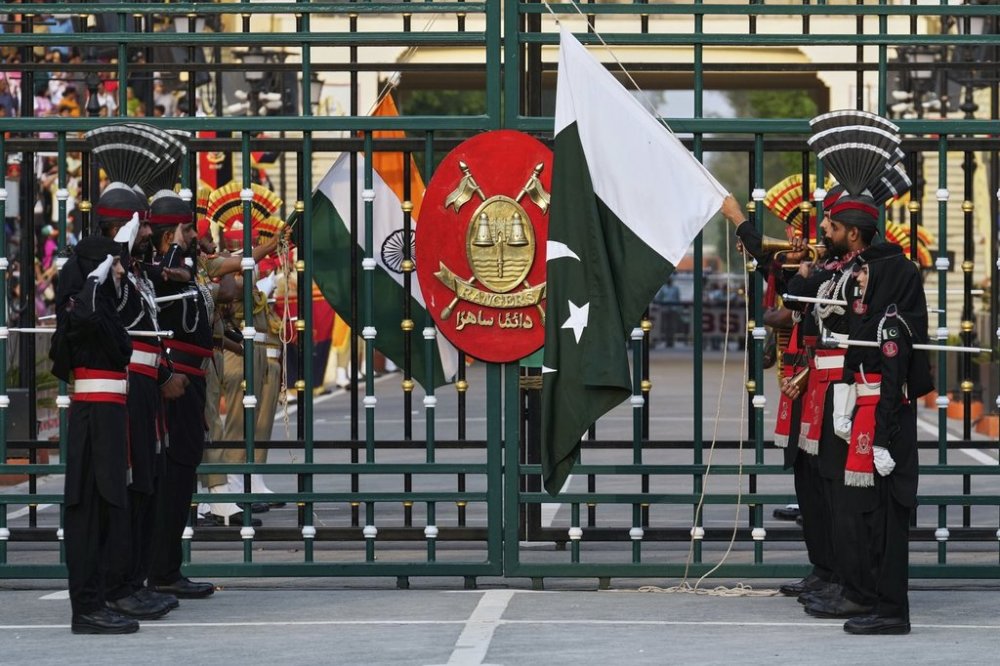
Both countries have expelled each other’s diplomats and nationals, as well as closed their borders and shuttered airspace. India has also suspended a critical water-sharing treaty with Pakistan.
Here’s where the situation stands since the April attack:
World leaders urge de-escalation
After an initial wave of condemnations of the attack on tourists, world leaders have called for both sides to avoid escalation.
International pressure has been piling on both New Delhi and Islamabad — which fought two of their three wars over disputed Kashmir — to ease tensions. Senior officials from the U.S., China, Russia and Saudi Arabia have urged both sides to exercise restraint. Iran has offered to mediate.
Meanwhile, both nations have launched an aggressive diplomatic campaign to shore up support for their positions.
India has made efforts to highlight what it called the “cross-border link” to the attack by briefing diplomats of dozens of countries.
“The diplomatic outreach this time has been quite extensive and the idea for India would be to showcase whatever evidence it has to its partners and to make a case that whatever actions might be coming from its side has the support of its partners and allies,” said Harsh Pant, foreign policy head at the Observer Research Foundation think tank in New Delhi.
Pakistan has offered to cooperate with an international investigation into the attack and reached out to dozens of foreign diplomats. Islamabad, however, said that it will match or exceed any military action by India.
Tensions on the border, fears in Kashmir
The Indian army has said its troops have exchanged gunfire with Pakistani soldiers along the de facto border, the Line of Control, in Kashmir, blaming the neighbour for unprovoked firing for 10 straight nights. Islamabad, meanwhile, has accused India of violating a ceasefire.
In Kashmir, Indian forces have launched a huge operation to hunt the April 22 attackers. At least 2,000 people have been detained and questioned. Some have been arrested under anti-terrorism laws that allow authorities to detain people without formal charges. Indian forces also blew off at least nine family homes of suspected rebels, who have been fighting for independence or merger with Pakistan.
The crackdown has led to fear and anxiety in Kashmir, stirring traumatic memories of the region’s decades-long insurgency and India’s brutal response.
Praveen Donthi, senior analyst with the International Crisis Group, said “Kashmiris are always the first to bear the brunt of any political or military tensions between India and Pakistan.”
“The collective punishment imposed on Kashmiris and the state violence unleashed against them further inflames the conflict,” Donthi said.
India and Pakistan are flexing military might
On Monday, Pakistan’s military test-fired a short-range missile, the second test launch since a medium-range ballistic missile on Saturday.
India’s navy also test-fired missiles last week.
In 2019, a skirmish between the two countries almost spiralled out of control, before U.S. intervention eased tensions.
___
Associated Press writers Aijaz Hussain in Srinagar, India and Rajesh Roy in New Delhi contributed to this report.