How cruise ship passengers can stay safe from the latest version of norovirus
Advertisement
Read this article for free:
or
Already have an account? Log in here »
To continue reading, please subscribe:

Digital Subscription
One year of digital access for only $205*
- Enjoy unlimited reading on winnipegfreepress.com
- Read the E-Edition, our digital replica newspaper
- Access News Break, our award-winning app
- Play interactive puzzles
*First annual payment billed as $205.00 + GST for one year. This annual subscription will automatically renew at $233.00 + GST every 52 weeks (10% off the regular annual price of $259.35). Offer available to new and qualified returning subscribers only. Cancel any time.
To continue reading, please subscribe:
Add Free Press access to your Brandon Sun subscription for only an additional
$1 for the first 4 weeks*
- Enjoy unlimited reading on winnipegfreepress.com
- Read the E-Edition, our digital replica newspaper
- Access News Break, our award-winning app
- Play interactive puzzles
*Your next Brandon Sun subscription payment will increase by $1.00 and you will be charged $17.95 plus GST for four weeks. After four weeks, your payment will increase to $24.95 plus GST every four weeks.
Read unlimited articles for free today:
or
Already have an account? Log in here »
Hey there, time traveller!
This article was published 05/05/2025 (507 days ago), so information in it may no longer be current.
For Americans planning cruise ship vacations this spring or summer, there could be reason to worry about more than rough seas, experts say.
Recent government cuts included top staff at the Vessel Sanitation Program, which is run by the U.S. Centers for Disease Control and Prevention and conducts inspections and investigates illnesses.
The reductions, part of larger Trump administration cuts, come amid a surge in cruise ship outbreaks fueled by a new strain of norovirus.
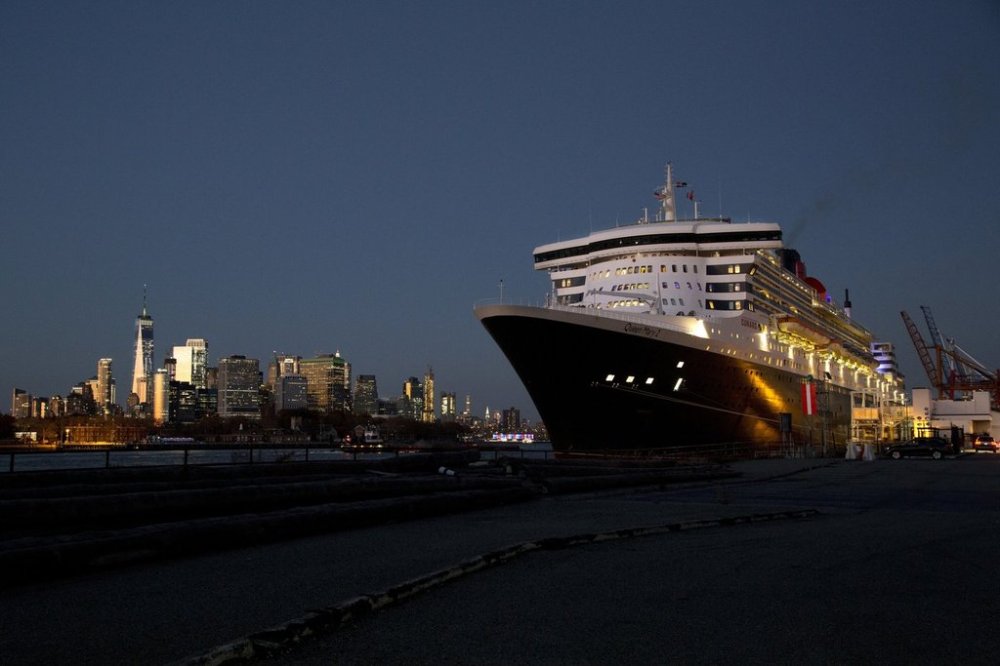
So far this year, there have been 16 illness outbreaks reported on cruise ships in the CDC’s jurisdiction, mostly from norovirus, compared with 18 outbreaks in all of 2024 and 14 in 2023, VSP reports show. U.S. officials conducted nearly 200 inspections of 150 ships last year.
“Certainly it’s something that would be on my mind if was getting ready to get on that cruise ship,” said Donald Schaffner, a food science expert at Rutgers University.
Here’s what you need to know about staying safe on board:
What happened to the CDC’s Vessel Sanitation Program?
U.S. Health Secretary Robert F. Kennedy Jr. launched a broad restructuring of the nation’s health agencies in April. The move eliminated the CDC’s Division of Environmental Health Science and Practice, which housed the cruise ship vessel program, along with others focused on asthma, air quality, lead exposure in children and other issues.
Four full-time CDC staff, including scientists, were dismissed, said Erik Svendsen, the division’s fired former director. The program also employed 12 U.S. Public Health Service commissioned officers, who remain.
The officers, however, lack the expertise of the scientists who were let go, Svendsen said. In addition, the program was already understaffed, he said.
“It’s going to put them back many months before they’re really functional again,” he said.
A CDC spokesperson said in a statement that the VSP work “has not stopped.”
“Critical programs in the CDC will continue under Secretary Kennedy’s vision to streamline HHS to better serve Americans,” the statement said.
How often do cruise passengers get sick?
About 18 million people board cruises in North America each year, part of nearly 32 million passengers worldwide, according to the Cruise Lines International Association, an industry trade group. Cruise industry officials say the chance of contracting a gastrointestinal illness is far greater on land than on a ship.
Norovirus is the most common ailment tracked on ships, though other outbreaks do occur.
Of the 19 million to 21 million norovirus illnesses that occur each year in the U.S., less than 1% are tied to cruises, said Lee-Ann Jaykus, a North Carolina State University food microbiologist and virologist who has studied norovirus.
But even that fraction of cases can mean misery for many hundreds of people on ships who come down with symptoms that include sudden onset of vomiting, diarrhea and stomach pain that can last three days, according to the CDC.
Norovirus is highly contagious, often spread by food or on surfaces, particularly in crowded conditions. It is a short-lived illness for many people, but it can be dangerous for people with underlying health conditions, young children and those aged 65 and older.
What about this new strain of norovirus?
There are many different types of norovirus, but typically one dominant strain causes illness outbreaks, Jaykus said.
This year, a new epidemic strain has emerged, called GII.17. This version has circulated at low levels for years, but it was behind a surge in U.S. norovirus outbreaks this past winter.
Between Aug. 1 and April 9, more than 2,400 suspected or confirmed norovirus outbreaks were reported to a CDC monitoring system, roughly double for the same period a year earlier. The GII.17 strain has been responsible for nearly 80% of them, the CDC reported.
“It’s new to the population,” Jaykus said, which means most people don’t have immunity to the germ, so it can spread more widely.
I booked a cruise! How can I keep from getting sick?
People infected with norovirus typically shed “literally billions of viral particles,” said Schaffner, the food safety expert. And it only takes a few viral particles to make someone sick.
The first rule should be for sick people to stay home, he said. That’s not possible on a cruise.
If people get sick on a cruise ship, they’re required to report the illness and isolate themselves, but many fail to do so.
“You spent all this money for a fancy cruise and you’re feeling a little bit under the weather, so you tough it out,” Schaffner said. “But in the meantime, now you spread the virus.”
Passengers should be alert for signs of illness, even in other travelers. Vomit, for instance, can spread norovirus particles into the air, Schaffner noted.
“If you’re in a situation where you see someone vomit, immediately walk away from them, ideally into the wind,” he said.
Washing hands frequently is key, especially after using the bathroom or before eating and drinking. Using soap and water is best; wash for at least 20 seconds, scrubbing well. Hand sanitizer alone doesn’t work well against norovirus, the CDC notes.

Cruise lines have extensive sanitation protocols in place that are monitored through the CDC’s vessel program, which is paid for by industry through inspection and other fees that total tens of thousands of dollars per ship per year.
It remains to be seen how cuts to the program will affect inspections and outbreak investigations in the future, Schaffner said.
“If you want to have no disease outbreaks, all you have to do is fire all the epidemiologists,” he said. “And there’ll be no one there to investigate.”
___
The Associated Press Health and Science Department receives support from the Howard Hughes Medical Institute’s Science and Educational Media Group and the Robert Wood Johnson Foundation. The AP is solely responsible for all content.