What to know about the conclave to elect the next pope
Advertisement
Read this article for free:
or
Already have an account? Log in here »
To continue reading, please subscribe:

Digital Subscription
One year of digital access for only $205*
- Enjoy unlimited reading on winnipegfreepress.com
- Read the E-Edition, our digital replica newspaper
- Access News Break, our award-winning app
- Play interactive puzzles
*First annual payment billed as $205.00 + GST for one year. This annual subscription will automatically renew at $233.00 + GST every 52 weeks (10% off the regular annual price of $259.35). Offer available to new and qualified returning subscribers only. Cancel any time.
To continue reading, please subscribe:
Add Free Press access to your Brandon Sun subscription for only an additional
$1 for the first 4 weeks*
- Enjoy unlimited reading on winnipegfreepress.com
- Read the E-Edition, our digital replica newspaper
- Access News Break, our award-winning app
- Play interactive puzzles
*Your next Brandon Sun subscription payment will increase by $1.00 and you will be charged $17.95 plus GST for four weeks. After four weeks, your payment will increase to $24.95 plus GST every four weeks.
Read unlimited articles for free today:
or
Already have an account? Log in here »
Hey there, time traveller!
This article was published 07/05/2025 (521 days ago), so information in it may no longer be current.
VATICAN CITY (AP) — One hundred and thirty-three cardinals sequestered themselves behind the Vatican’s medieval walls for a conclave to elect a successor to Pope Francis. Here are some things to know about the election of the 267th pontiff of the Catholic Church, which has 1.4 billion faithful across the world.
Why is the conclave being held now?
The conclave was called after Francis died on April 21 at age 88. There was a delay between his death and the conclave to allow time for a funeral, burial and a period of mourning. It was also necessary to give cardinals time to arrive in Rome from all corners of the Earth, and to let them get acquainted before entering the conclave, an ancient ritual steeped in mystery and ritual.
What happens in a conclave?
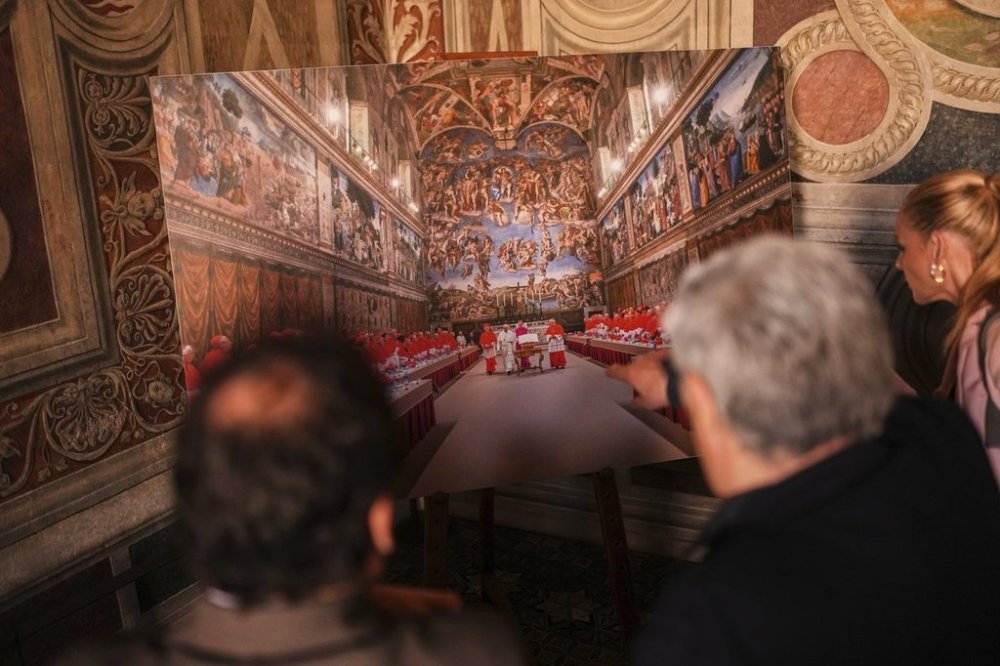
A solemn day began with a Mass in St. Peter’s Basilica. The cardinals walked in procession into the frescoed Sistine Chapel, chanting the meditative “Litany of the Saints” and the Latin hymn “Veni Creator,” imploring the saints and the Holy Spirit to help them pick a pope.
The cardinals are cut off from the world at the Vatican, between residences and the Sistine Chapel, where they vote in secret — and in silence — beneath Michelangelo’s famed ceiling fresco of the Creation and his monumental “Last Judgment.”
The process — fictionalized in the 2024 political thriller “Conclave” — is said to be guided by the Holy Spirit, and is designed to be both contemplative and free from outside interference.
Taking no chances, the Vatican is asking cardinals to hand over their phones for the duration of the conclave and is deactivating cell phone coverage at the Vatican. It is using signal jammers around the Sistine Chapel and the Domus Santa Marta hotel and adjacent residence where the cardinals will sleep, to prevent surveillance and communication with the outside world.
White or black smoke signals?
The electors cast paper ballots, and voting continues until one candidate receives a two-thirds majority, or 89 votes. After voting, ballots are burned in a special stove — black smoke signals no decision, while white smoke means a new pope has been chosen.
Electors must be under 80 years old, and are more geographically diverse than ever. They represent Catholicism’s growing presence in Africa, Asia, and Latin America, as well as its traditional power base in Europe.
How long does it take?
The longest conclave in history lasted nearly three years, but it’s reasonable to assume that this conclave will be much, much shorter.
Cardinals this week said they expect a short conclave, though it will likely take at least a few rounds of voting.
A first round produced darks dark smoke that rose into Wednesday’s night sky, sending a disappointed crowd to disperse in all directions.
For most of the past century, it has taken between three and eight ballots to find a pope. John Paul I — the pope who reigned for 33 days — was elected on the third ballot in 1978. His successor, St. John Paul II, needed eight. Francis was elected on the fifth in 2013.
Who are the contenders?
There are no official candidates for the papacy, but some cardinals are considered “papabile,” or possessing the characteristics necessary to become pope.
After John Paul II broke the Italian hold on the papacy in 1978, the field has broadened considerably, such that cardinals from far-flung countries are now seen as contenders.
Of the 133 cardinals expected to vote at the conclave, 108 were appointed by Francis. They may feel a loyalty to continuing his legacy — even though the late pontiff didn’t choose cardinals based on ideology, but rather for their pastoral priorities and geographical diversity.
What happens after a new pope is chosen?
Once a candidate receives the necessary votes and accepts, he chooses a papal name and enters the “Room of Tears” — named for the emotional weight of the responsibility ahead — to don his papal vestments.
Minutes later, he is introduced to the world from the balcony of St. Peter’s Basilica with the proclamation in Latin: “Annuntio vobis gaudium magnum: Habemus Papam!” (“I bring you tidings of great joy: We have a pope!”)
That will be immediately followed by the revelation of his baptismal name, in Latin, followed by the papal name he has chosen.
A line that stretches back to St. Peter and Jesus
Every new pope is seen as a successor to St. Peter, the apostle believed by Catholics to have been appointed by Jesus as the head of the church. In the Gospel of Matthew, Jesus tells him, “You are Peter, and on this rock I will build my church,” a verse that forms the biblical basis for the papacy.
According to tradition, Peter traveled to Rome to spread the Christian message and was martyred there during the reign of the Emperor Nero, around 64 A.D., as Christians were being persecuted. He was said to be crucified upside down at his own request, considering himself unworthy to die in the same manner as Jesus.
St. Peter’s Basilica now stands over what is believed to be his tomb.
Why does the pope matter beyond the Catholic Church?
Though the pope leads a religious institution, his influence extends far beyond it. Pope John Paul II played a pivotal role in supporting the Solidarity movement in his native Poland and encouraging resistance to Soviet domination in Eastern Europe. His moral leadership was credited by many with helping to hasten the end of the Cold War.
Pope Francis, the first pontiff from Latin America, became a prominent voice on global issues from climate change to migration and economic inequality. He called for compassion toward refugees, warned against the dangers of nationalism, and urged action to protect the planet — stances that resonated well beyond church walls, and at times put him at odds with political leaders.

A name to signal a papal direction
The first sign of the new pope’s priorities will come in the name he chooses.
A Francis II might signal a new pope’s embrace of Francis’ legacy of prioritizing the poor and marginalized; a Pius would hint at a traditionalist restoration.
____
Associated Press religion coverage receives support through the AP’s collaboration with The Conversation US, with funding from Lilly Endowment Inc. The AP is solely responsible for this content.
Related Articles
Conclave’s cardinals could vote for change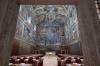
Advertisement Advertise With Us
Advertisement Advertise With Us
The Free Press acknowledges the financial support it receives from members of the city’s faith community, which makes our coverage of religion possible.