Nova Scotia to speed up environmental reviews for clean energy projects
Advertisement
Read this article for free:
or
Already have an account? Log in here »
To continue reading, please subscribe:

Digital Subscription
One year of digital access for only $205*
- Enjoy unlimited reading on winnipegfreepress.com
- Read the E-Edition, our digital replica newspaper
- Access News Break, our award-winning app
- Play interactive puzzles
*First annual payment billed as $205.00 + GST for one year. This annual subscription will automatically renew at $233.00 + GST every 52 weeks (10% off the regular annual price of $259.35). Offer available to new and qualified returning subscribers only. Cancel any time.
To continue reading, please subscribe:
Add Free Press access to your Brandon Sun subscription for only an additional
$1 for the first 4 weeks*
- Enjoy unlimited reading on winnipegfreepress.com
- Read the E-Edition, our digital replica newspaper
- Access News Break, our award-winning app
- Play interactive puzzles
*Your next Brandon Sun subscription payment will increase by $1.00 and you will be charged $17.95 plus GST for four weeks. After four weeks, your payment will increase to $24.95 plus GST every four weeks.
Read unlimited articles for free today:
or
Already have an account? Log in here »
Hey there, time traveller!
This article was published 08/05/2025 (520 days ago), so information in it may no longer be current.
HALIFAX – The Nova Scotia government is accelerating the environmental review process for a number of clean energy projects to meet its climate goals and get off coal by 2030.
Under changes announced Thursday, large biomass, biogas and clean fuel projects have been changed to Class 1 from Class 2, meaning they can be approved within 50 days. The more rigorous Class 2 assessment, which can take more than two years, is now reserved for projects such as pulp mills, cement plants, incinerators and large energy plants.
The government is also classifying small modular reactor projects, previously not covered by regulations, as Class 1, a designation that had previously been reserved for renewable projects involving wind, tidal and solar energy, as well as for biofuels, mines, quarries and alterations to large wetlands.
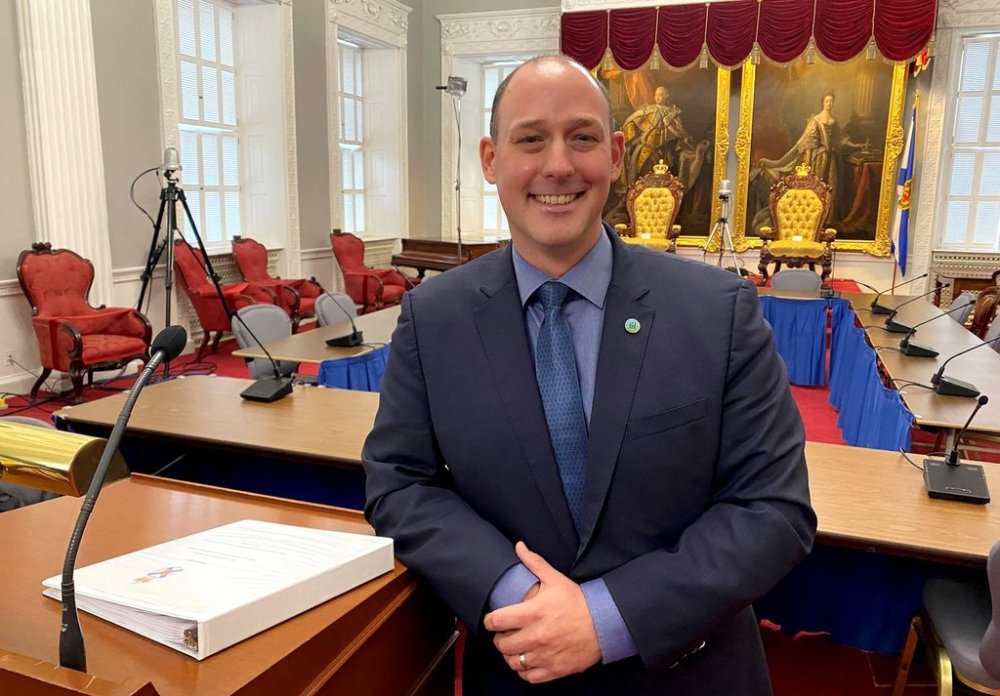
Environment Minister Tim Halman says the province has committed to reaching net zero greenhouse gas emissions by 2050.
“Without the ability to build faster we will not be able to meet our climate change and energy security commitments,” said Halman. “These changes are intended to speed up our transition to clean energy, fight global climate change and support sustainable development.”
Under the changes, small wood biomass projects will now be exempt from the environmental review process and will be managed through the Environment Department’s industrial approval process.
Meanwhile, the province is extending the Class 1 consultation period for members of the public and Mi’kmaq communities by 10 days, for a total of 40 days, while the entire assessment period remains at 50 days.
As well, companies will also have to provide a “plain language” summary of a proposed project’s benefits and impacts, and the government will include new “plain language” guidance for companies on the environmental review process, which will include climate change as a factor to be considered before a minister approves a project.
“It’s a clarified Class 1 system,” said Halman. “A clear process that will protect the environment and build up the economy.”
The changes come after Premier Tim Houston signalled his intent earlier this year to increase the potential of the province’s natural resources. In March, his government passed legislation to lift a moratorium on fracking and a ban on uranium mining and exploration.
Officials on Thursday did not say whether potential shale gas fracking projects would be assessed under a Class 1 or Class 2 process. In a followup email, the Environment department said companies interested in such drilling would need to get permission from the Department of Energy and then approval through the province’s industrial review process.
The new classifications were welcomed by Todd Burgess, executive director of the industry group Forest Nova Scotia. “Simplifying regulation is going to be very good for the forest sector, it will help us grow and create more jobs long term in rural Nova Scotia,” Burgess told reporters.
However, Karen McKendry, senior wilderness outreach co-ordinator for the Halifax-based Ecology Action Centre, said that while more cleaner energy projects are needed, the changes to the review process “aren’t meaningfully helpful in getting us there.”
“One of the major problems with the process already that they didn’t change today was around transparency,” said McKendry, who noted that the government held consultations in 2023 on changes needed to environment reviews.
She said many participants in the consultations called on the government to take public comment seriously and for the minister to provide a rationale for environmental approval decisions. McKendry said that simply adding 10 days to the Class 1 consultation period will do little.
“I think for communities that will be 10 more days of shouting into the void,” she said.
This report by The Canadian Press was first published May 8, 2025.