See a penny, pick it up? In the future, probably not as often – and, some say, that matters
Advertisement
Read this article for free:
or
Already have an account? Log in here »
To continue reading, please subscribe:

Digital Subscription
One year of digital access for only $205*
- Enjoy unlimited reading on winnipegfreepress.com
- Read the E-Edition, our digital replica newspaper
- Access News Break, our award-winning app
- Play interactive puzzles
*First annual payment billed as $205.00 + GST for one year. This annual subscription will automatically renew at $233.00 + GST every 52 weeks (10% off the regular annual price of $259.35). Offer available to new and qualified returning subscribers only. Cancel any time.
To continue reading, please subscribe:
Add Free Press access to your Brandon Sun subscription for only an additional
$1 for the first 4 weeks*
- Enjoy unlimited reading on winnipegfreepress.com
- Read the E-Edition, our digital replica newspaper
- Access News Break, our award-winning app
- Play interactive puzzles
*Your next Brandon Sun subscription payment will increase by $1.00 and you will be charged $17.95 plus GST for four weeks. After four weeks, your payment will increase to $24.95 plus GST every four weeks.
Read unlimited articles for free today:
or
Already have an account? Log in here »
Hey there, time traveller!
This article was published 23/05/2025 (480 days ago), so information in it may no longer be current.
NEW YORK (AP) — Ask someone for their thoughts: Could it now cost you a nickel? If you want to call somebody stingy, would you say they’re a quarter-pincher? And if they spend money unwisely, are they now dime-wise but pound-foolish?
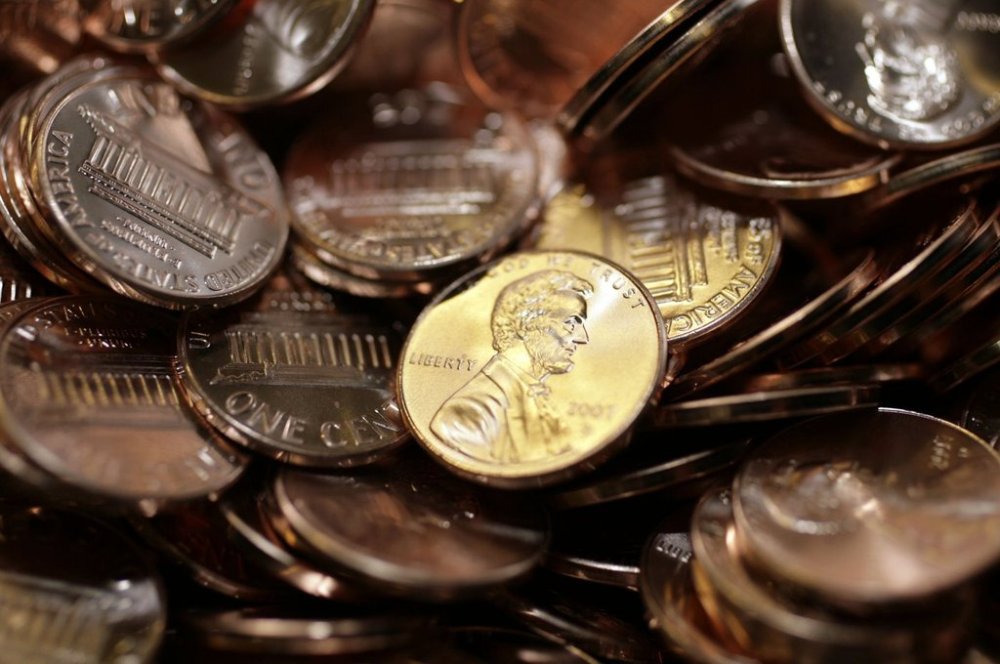
OK, maybe those are some minor, small-stakes, dare we say penny-ante concerns in the wake of the U.S. Treasury confirming Thursday that it will stop making shiny new penny coins after the current production run is complete.
But it is the end of an era in the United States. While there will still be over a billion already existing pennies in circulation, rattling around in jars, gathering dust under the sofa cushions and waiting to be picked up from sidewalks, no new cents will be joining their ranks for the first time in more than two centuries.
Answering advocates’ demands to abandon the coin
The Trump administration made the call as a cost-saving measure – it costs almost four cents to make a penny (which, by the way, are now primarily made up of zinc with a copper coating). They’re not as financially useful as they were in other times as prices have gone up, and digital technologies have overall reduced the use of physical bills and coins for many people. Advocates have been calling for the penny to drop for decades.
But will no one think of the archeologists?
“Since 1793, we have continuously seeded the archeological record with datable pennies, and now we’re going to stop doing that,” laments Frank Holt, an emeritus professor at the University of Houston who has studied the history of coins in his work.
“In 2,000 years, there are going to be archeologists pulling out what hair they have left saying, ‘What am I going to do now that I don’t have these datable objects there?’”
And for something with such a small face value, the copper-colored coin has punched above its denomination in the culture, Holt says.
“It’s not just an economic argument, because pennies and all coins are embedded in our culture. They reflect our politics, our religion, our art, our sense of ourselves, our ideals, our aspirations,” he says. “We put mottos on them and self-identifiers and we decide — in the case of the United States — which dead persons are most important to us and should be commemorated.”
Holt points to traditions of putting pennies in loafers, of rhymes like “See a penny, pick it up, all the day you’ll have good luck,” of people who think an unexpected penny sighting could be a sign from a loved one who’s passed on.
A larger conversation is happening behind it all
When it does come to economics, the discussion of whether or not there should be pennies is actually part of a larger conversation, says Ursula Dalinghaus, an assistant professor of anthropology at Ripon College in Wisconsin who studies the anthropology of money.
For example, a bedrock of American culture is the price tag ending in $.99, somehow trying to convince buyers that the 1-cent difference keeping the cost from the next dollar makes it a good deal, she points out. What happens to that price now?
Also, while many people have switched over to digital forms of payments and couldn’t even tell you the last time they carried a coin around or had a bill in their wallets, there are many people who still use all kinds of physical currency — yes, even pennies.
“Cash is very important for a lot of people to budget, to keep control of costs. Even just donating a penny to someone asking for small change, it does add up,” she says. “I feel like we’re far too quick to only look at what is the cost of minting it or distributing it and we’re not really willing to look at the everyday experiences and interactions people have. So maybe if we don’t use small change, we don’t think about it. But other people do.”
In a final irony, news of the penny’s fate came out on the eve of Lucky Penny Day, no less! (Yes, there is such a thing, on May 23rd.)
“We don’t have a lucky nickel day. We don’t have a lucky dime day, lucky quarter day, we only have a Lucky Penny Day,” Holt says. “And why is that? It’s more than money. It is more than an economic tool. We’ve endowed the penny with almost mystical, magical powers to bring us luck, to change our fortunes.”