Churches are helping provide affordable housing

Advertisement
Read this article for free:
or
Already have an account? Log in here »
To continue reading, please subscribe:

Digital Subscription
One year of digital access for only $205*
- Enjoy unlimited reading on winnipegfreepress.com
- Read the E-Edition, our digital replica newspaper
- Access News Break, our award-winning app
- Play interactive puzzles
*First annual payment billed as $205.00 + GST for one year. This annual subscription will automatically renew at $233.00 + GST every 52 weeks (10% off the regular annual price of $259.35). Offer available to new and qualified returning subscribers only. Cancel any time.
To continue reading, please subscribe:
Add Free Press access to your Brandon Sun subscription for only an additional
$1 for the first 4 weeks*
- Enjoy unlimited reading on winnipegfreepress.com
- Read the E-Edition, our digital replica newspaper
- Access News Break, our award-winning app
- Play interactive puzzles
*Your next Brandon Sun subscription payment will increase by $1.00 and you will be charged $17.95 plus GST for four weeks. After four weeks, your payment will increase to $24.95 plus GST every four weeks.
Read unlimited articles for free today:
or
Already have an account? Log in here »
Hey there, time traveller!
This article was published 24/05/2025 (481 days ago), so information in it may no longer be current.
One thing all federal party leaders agreed on during this election is that Canada faces an affordable housing crisis. And here in Winnipeg, the provincial and local governments are trying to address the challenge of homelessness. It’s a big challenge. What can be done?
Earlier this year, I had a chance to talk with some Lutheran church leaders in Ontario who are taking the challenge into their own hands by turning their buildings into housing.
One of those churches is St. Peter’s in Kitchener, Ont. The wake-up call for that congregation came in 2018 when a family of three was discovered living in a below-ground air vent behind the church.
“It galvanized us as a community and as people of faith,” said pastor Mark Ehlebracht of the downtown congregation, which is part of the Evangelical Lutheran Church in Canada (ELCIC). “It was a defining moment in our journey.”
What made the experience even more poignant was realizing the church’s altar was directly behind the wall between the sanctuary and the family’s home.
“On the one side was us, the clergy were all dressed in our finery and the congregation singing, praying and praising around God’s table, and they were living in an air vent behind us,” he said. “It broke our hearts.”
That discovery set the church on a mission to respond to housing needs in that southwestern Ontario city of over 280,000 people where over 2,000 are homeless and living in encampments and there is a long waiting list of people needing affordable housing.
“As people of faith, we couldn’t be idle,” Ehlebracht said. “We decided to do something about it.”
What they did was strike up a partnership with Indwell, an Ontario-based Christian organization that builds, manages and provides supportive housing in that province.
Together, they came up with a plan to build 41 apartments over what used to be the church’s education wing. The total cost is about $14 million, with funding coming from regional, provincial and federal governments. The project should be completed this summer.
Helping churches use their buildings to address the housing crisis is the mission of Indwell. Founded in 1974, today it provides housing for 1,300 people in seven Ontario communities through 30 supportive housing projects — many of them converted from former churches.
While St. Peter’s is providing the space, Indwell’s role is to manage the units and provide wrap-around support to the tenants. “We have a resource in our property and we can do something about this need,” Ehlebracht said, adding “we want to find new ways for our building to live.”
Another church in Ontario that worked with Indwell was Faith Lutheran in Hamilton. The church, also part of the ELCIC, was closed due to low numbers. The remaining members of the congregation joined with three other Lutheran churches in the city to form Trinity Lutheran Church.
Rather than sell the property for the highest amount to a developer, in 2024 the congregation sold the 65-year-old 9,000-square-foot building and land to Indwell for about $1.2 million, or about half the market value. The organization plans to build affordable and supportive housing on the site.
“We discerned as a congregation that affordable housing was an important issue for us to address,” said Jordan Smith, a pastor at Trinity.
Jennifer Hoover is the congregational redevelopment advisor for the Eastern Synod of the ELCIC. For her, stories like St. Peter’s and Faith Lutheran are inspiring.
By selling or redeveloping places of worship to provide affordable housing, churches can continue to faithfully serve their communities in a way that is consistent with what churches were built for in the first place, she said.
“Churches have always been a place of gathering,” Hoover said, adding that churches were always community centres for members and others in addition to hosting worship services. “This is just bringing that vision forward in a new way.”
It’s also a way to tell a new story about church closings.

“We need to reframe that narrative, away from one of having failed,” she said, explaining that it is a chance for congregations “to think about what new thing is possible, about new ways they can use the building in ways that are consistent with their mission, vision and values.”
By responding to the need for housing in Canada in this way, churches can also change the way society views Christianity, Hoover said.
“It tells the wider society that we still have a role to play,” she said, noting many Canadians today think religion is irrelevant. “Churches still have vital roles to play in their communities. The church is relevant.”
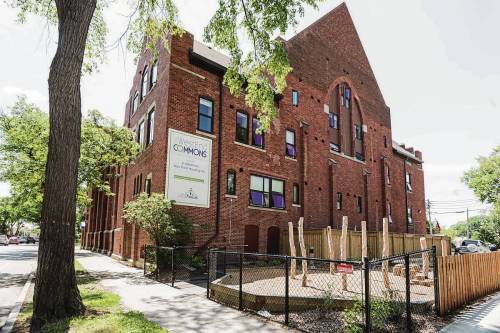
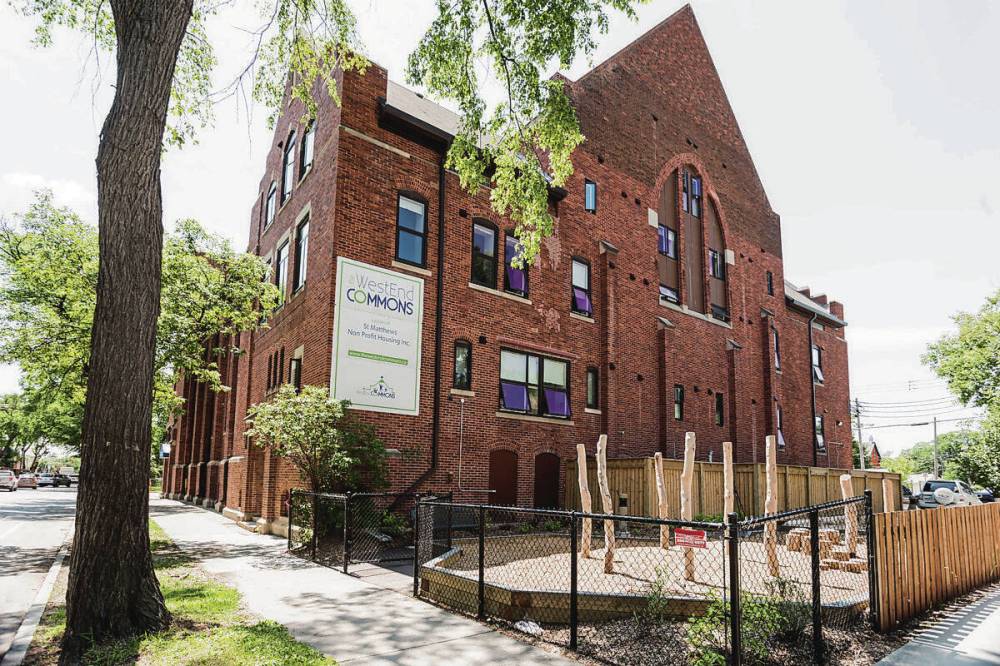
Here in Winnipeg, St. Matthews Anglican Church turned its large building into affordable housing through WestEnd Commons. And at least one United Church in the city is considering doing something similar. Are others thinking about it, too? Tackling this crisis will require all of our best efforts — and maybe our buildings, too.
faith@freepress.mb.ca
The Free Press is committed to covering faith in Manitoba through our Religion in the News project. This reporting continues because readers like you step forward to fund it.
Donate now to support our reporting on religion.
Your donation is eligible for a charitable tax receipt.
BECOME A FAITH JOURNALISM SUPPORTER
Our newsroom depends on a growing audience of readers to power our journalism. If you are not a paid reader, please consider becoming a subscriber.
Our newsroom depends on its audience of readers to power our journalism. Thank you for your support.
The Free Press is committed to covering faith in Manitoba through our Religion in the News project. This reporting continues because readers like you step forward to fund it.
Donate now to support our reporting on religion.
Your donation is eligible for a charitable tax receipt.
BECOME A FAITH JOURNALISM SUPPORTER
Our newsroom depends on a growing audience of readers to power our journalism. If you are not a paid reader, please consider becoming a subscriber.
Our newsroom depends on its audience of readers to power our journalism. Thank you for your support.

Advertisement Advertise With Us
Advertisement Advertise With Us
The Free Press acknowledges the financial support it receives from members of the city’s faith community, which makes our coverage of religion possible.