

Taiwan pledges to buy more American goods as a 32% tariff looms
Advertisement
Read this article for free:
or
Already have an account? Log in here »
To continue reading, please subscribe:

Digital Subscription
One year of digital access for only $205*
- Enjoy unlimited reading on winnipegfreepress.com
- Read the E-Edition, our digital replica newspaper
- Access News Break, our award-winning app
- Play interactive puzzles
*First annual payment billed as $205.00 + GST for one year. This annual subscription will automatically renew at $233.00 + GST every 52 weeks (10% off the regular annual price of $259.35). Offer available to new and qualified returning subscribers only. Cancel any time.
To continue reading, please subscribe:
Add Free Press access to your Brandon Sun subscription for only an additional
$1 for the first 4 weeks*
- Enjoy unlimited reading on winnipegfreepress.com
- Read the E-Edition, our digital replica newspaper
- Access News Break, our award-winning app
- Play interactive puzzles
*Your next Brandon Sun subscription payment will increase by $1.00 and you will be charged $17.95 plus GST for four weeks. After four weeks, your payment will increase to $24.95 plus GST every four weeks.
Read unlimited articles for free today:
or
Already have an account? Log in here »
Hey there, time traveller!
This article was published 27/05/2025 (480 days ago), so information in it may no longer be current.
TAIPEI (AP) — Taiwan’s president on Tuesday pledged to buy more American goods, including natural gas and oil, as the self-governing island seeks closer ties with the U.S. while threatened with a 32% tariff from the Trump administration.
By purchasing more U.S. products that also include weapons and agricultural goods, Taiwan would not only create “more balanced bilateral trade” with the U.S. but also boost its energy autonomy and resilience, said Lai Ching-te, the island’s leader, while hosting a U.S. congressional delegation.
Lai also said the island would be willing to participate in U.S. efforts to reindustrialize and to lead the world in artificial intelligence.
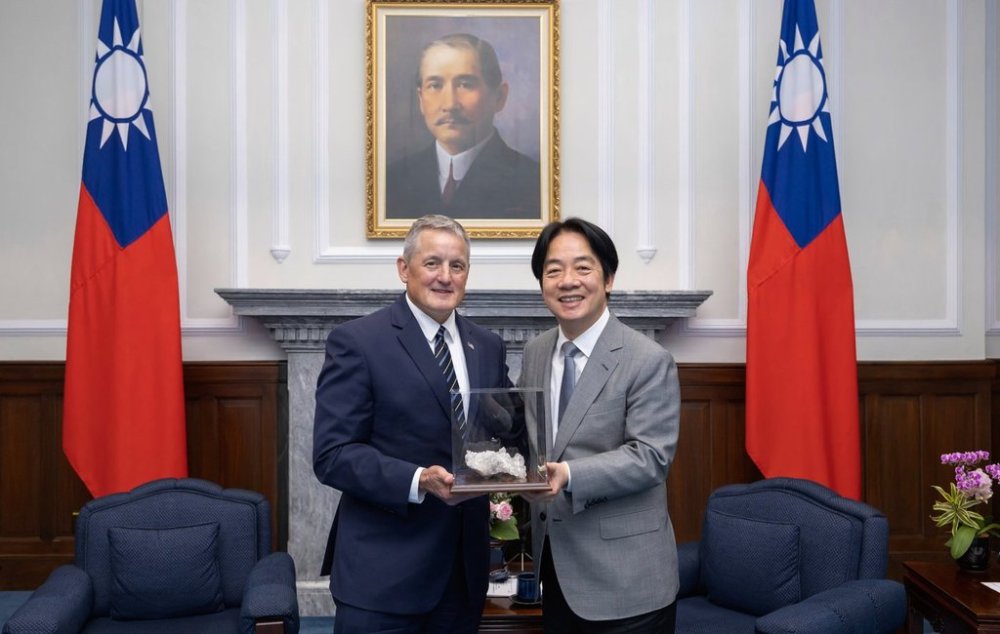
Rep. Bruce Westerman, chair of the House Natural Resources Committee, told Lai that the U.S. produces a lot of food and fiber and is “always looking for more friends to share that with.”
Trade and economic ties between Taiwan and the U.S. have grown closer in recent years. The island faces rising pressure from China, which sees the island as part of Chinese territory and vows to annex it, by force if necessary.
Washington is bound by its own laws to provide Taipei with the means to defend itself, and politicians — both Republicans and Democrats — have come to believe it is in the U.S. interest to deter Beijing from attacking Taiwan.
Many policymakers and analysts have argued that arming Taiwan includes not only weapons sales but closer economic and trade ties so the island is less vulnerable to economic coercion from the mainland.
The U.S. is now the top destination for Taiwan’s foreign investments, including $165 billion by Taiwan’s semiconductor giant TSMC to build factories in Arizona to make advanced chips. The island also is the 7th largest market for U.S. agricultural exports, Lai said.
However, the U.S. buys far more from Taiwan and had a trade deficit of $116.3 billion in 2024, according to the Office of the U.S. Trade Representative.
The 32% tariff, as proposed by President Donald Trump as part of his sweeping tariff plan, is on hold except a 10% baseline duty. Earlier this month, Lai downplayed the trade tensions between the U.S. and Taiwan as “frictions between friends.”
The congressional delegation stopped in Taipei as part of the group’s larger visit to the Indo-Pacific region through Thursday, according to American Institute in Taiwan, the de facto U.S. diplomatic mission on the island.