Quebec language office pressed transit agency for months before Habs playoff run

Advertisement

Advertise with us

MONTREAL - Quebec's language watchdog contacted the Montreal transit agency at least six times in the wake of a complaint about using the word "go" on city buses to cheer on a local soccer team.

Read this article for free:


or

Already have an account? Log in here »

To continue reading, please subscribe:

Subscribe and receive a limited-edition Free Press branded hat or tote.

Digital Subscription

One year of digital access for only $205*

  • Enjoy unlimited reading on winnipegfreepress.com
  • Read the E-Edition, our digital replica newspaper
  • Access News Break, our award-winning app
  • Play interactive puzzles

*First annual payment billed as $205.00 + GST for one year. This annual subscription will automatically renew at $233.00 + GST every 52 weeks (10% off the regular annual price of $259.35). Offer available to new and qualified returning subscribers only. Cancel any time.

To continue reading, please subscribe:

Add Free Press access to your Brandon Sun subscription for only an additional

$1 for the first 4 weeks*

  • Enjoy unlimited reading on winnipegfreepress.com
  • Read the E-Edition, our digital replica newspaper
  • Access News Break, our award-winning app
  • Play interactive puzzles
Start now

*Your next Brandon Sun subscription payment will increase by $1.00 and you will be charged $17.95 plus GST for four weeks. After four weeks, your payment will increase to $24.95 plus GST every four weeks.

Hey there, time traveller!
This article was published 30/05/2025 (470 days ago), so information in it may no longer be current.

MONTREAL – Quebec’s language watchdog contacted the Montreal transit agency at least six times in the wake of a complaint about using the word “go” on city buses to cheer on a local soccer team.

The watchdog — the Office québécois de la langue française — asked for multiple updates on the agency’s efforts to remove the word, and kept the complaint open for nine months until “go” had been scrubbed from more than 1,000 city buses in Montreal, according to emails obtained by The Canadian Press.

The correspondence contrasts with the office’s public comments responding to an April report in the Montreal Gazette that revealed how the transit agency had replaced the expression “Go! Canadiens Go!” on its buses with “Allez! Canadiens Allez!” to appease the watchdog.
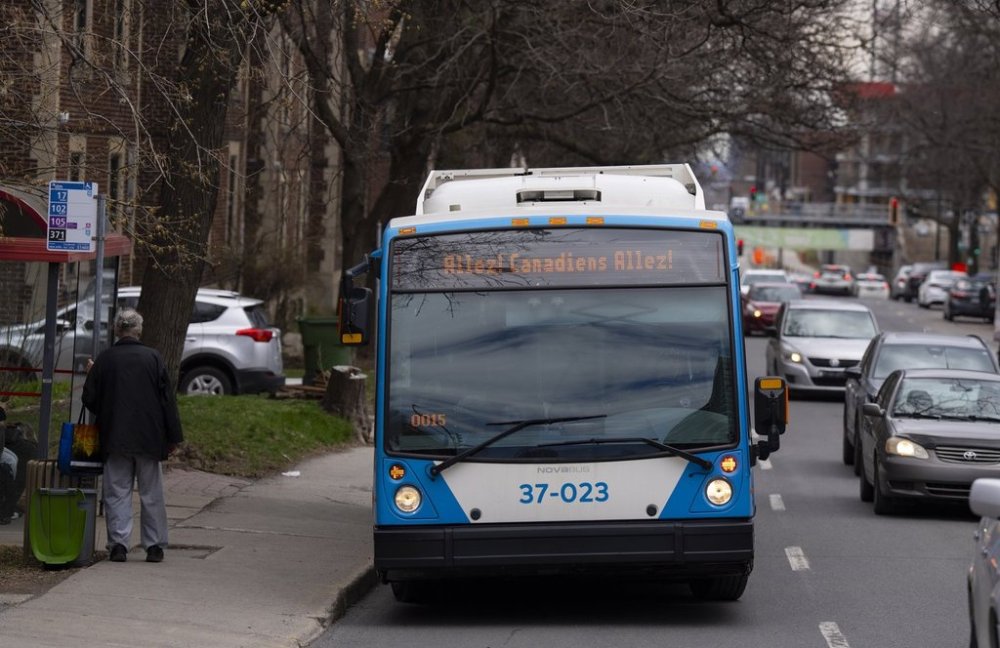
A bus is seen with the expression
A bus is seen with the expression "Allez! Canadiens Allez!" in Montreal on Thursday, April 24, 2025. THE CANADIAN PRESS/Christinne Muschi

The news report, coinciding with the Montreal Canadiens’ first home game of the Stanley Cup playoffs, prompted a public outcry and elicited a declaration from French-language Minister Jean-François Roberge in support of the expression “Go Habs Go!”

At that time, the watchdog said it had “contacted the (transit agency) to inform it of the complaint and remind it of its obligations under the (French-language) charter.” But the office didn’t share details about the length of its review and the number of times it pressed transit officials for updates.

The internal correspondence reveals how an adviser for the language office sent at least six emails to the transit agency between May 2024 and January 2025, informing the agency of a complaint and asking about its plans to fix the problem. The documents were obtained under access-to-information law.

The complaint, received on April 29, 2024, related to city buses displaying the expression “Go! CF Mtl Go!” – a reference to Montreal’s professional soccer club.

The transit agency initially responded to the language office in June 2024, explaining that such slogans give bus drivers “a way to salute national sports teams.”

Using the word “go” kept the message shorter and prevented it from scrolling across the buses’ electronic displays, the email explained. Still, the agency agreed to remove the word, but warned the process could take several months.

In response, the adviser asked why the change couldn’t be made “over a few days when the vehicles are in the garage.” The transit agency replied that each bus had to have its display changed manually, using a USB key.

In July, the language watchdog informed the agency that the complaint would remain open until all the buses had been changed. The adviser then followed up two more times over the fall and winter to request updates.

Eventually, the transit agency reported in January that 1,002 of its 1,104 buses had been updated, and the remaining 102 buses were out of service. The language office then agreed to close the complaint, on condition that each of the remaining buses would be updated before returning to service.

In an email statement to The Canadian Press, a spokesperson for the language watchdog said the correspondence is “part of a normal process for handling a complaint.”

The language office never received a complaint about “Go Habs Go” and was never informed that the transit agency was planning not to use the word “go” in relation to the hockey team, said Gilles Payer.

He said the office would not have pursued a complaint about “Go Habs Go,” since the expression is a trademark, which does not need to be translated.

A spokesperson for Roberge told The Canadian Press the minister was not aware of the issue until the change was first reported in April.

But the documents show his own department was informed of the complaint shortly after it was received and intended to participate in the review. According to Quebec’s French-language charter, complaints involving public bodies must be flagged to the French-language department.

The department did not respond to questions about its role in response to this complaint.

Roberge’s spokesperson Thomas Verville said the language office received more than 10,000 complaints last year. “The minister does not intervene in the complaints received” by the office, he said. “That would be political interference.”

Still, Roberge announced in April that he had held “several discussions” with the language office, and that any future complaints about the expression “Go Habs Go” would “be deemed inadmissible.” He said the slogan has been used for decades to support the Montreal Canadiens. He also said employees of the language office were receiving threats.

Verville said there is a “huge difference” between using the word “go” in reference to the Montreal soccer team as compared to the Montreal Canadiens. He said fans of CF Montréal typically chant “Allez Montréal” during matches, while “Go Habs Go” has long been part of Quebec culture.

He added Roberge spoke out specifically to defend the expression “Go Habs Go,” which was not the subject of the original complaint. He did not say whether the minister opposes the use of the word “go” in reference to other sports teams.

A spokesperson for the transit agency said it is still in discussions with the language office to “obtain official confirmation that we are allowed to use the word ‘go’ in a sporting context and that we will not be penalized if we do so.”

The agency says no change will be made before the buses undergo regular maintenance in the fall.

This report by The Canadian Press was first published May 30, 2025.

Report Error Submit a Tip

More Stories

Canadians loving Carney’s decision to stand tall against floundering U.S. bully

Tom Brodbeck 5 minute read Preview

Canadians loving Carney’s decision to stand tall against floundering U.S. bully

Tom Brodbeck 5 minute read 12:11 PM CDT

It’s hard to imagine a more dramatic political contrast than the one unfolding on opposite sides of the Canada-U.S. border.

Mark Carney is fighting a trade war with Donald Trump, taking the occasional verbal punch from the American president and imposing retaliatory tariffs on U.S. products.

And the prime minister is being rewarded for it politically.

Trump, meanwhile, is fighting pretty much everyone he can find — including some of America’s closest allies — and his own voters are increasingly giving him the political equivalent of a raised middle finger. That’s quite a tale of two leaders.

Read
12:11 PM CDT

Sunday-night auto aficionados work to steer away from unwelcome elements they say aren’t a part of their tradition

Zoe Pierce 12 minute read Preview

Sunday-night auto aficionados work to steer away from unwelcome elements they say aren’t a part of their tradition

Zoe Pierce 12 minute read 1:37 PM CDT

The red 1969 Dodge Coronet Super Bee out for a cruise on Portage Avenue draws admiring eyes from onlookers on a recent Sunday night, many of them seeing a specimen of the now-rare muscle car for the first time on a Winnipeg street. Or any other street, for that matter.

Longtime car enthusiast Bob Sudoma was behind the wheel, participating in the decades-old show-offy summer tradition.

The Sunday night cruise is built around a simple idea: proud car owners take their beloved vehicles for a spin to meet up with others of the same autophile ilk.

Less-fortunate appreciators, or just curious folks, also gather along the route to watch the highly-polished parade. Portage Avenue is one of cruise night’s best-known stretches.

Read
1:37 PM CDT

Supportive housing operator sued after man with dementia walks away

Erik Pindera 4 minute read Preview

Supportive housing operator sued after man with dementia walks away

Erik Pindera 4 minute read Yesterday at 6:00 AM CDT

The Public Guardian and Trustee of Manitoba is suing a health services company after a man with dementia under its care allegedly wandered away from an apartment it operates for vulnerable people and was later found face down in a puddle — unresponsive, hypothermic and severely injured.

The public trustee — a provincial government agency that, among other duties, makes financial and personal care decisions for vulnerable adults who cannot do so themselves — filed the lawsuit against Cambridge Health Inc. and a related numbered company in the Court of King’s Bench earlier this month.

The agency did so on behalf of a now-38-year-old man, who has been under its care since 2018, as a result of his frontotemporal dementia. The disease often starts in mid-life, rather than old age, as is the case with most other forms of dementia.

The lawsuit alleges the man, who resided at a Henderson Highway apartment complex where Cambridge Health operated a supportive residence for people with complex behavioural health issues, was in a common area of the home at about 4:30 p.m. on April 3 last year.

Read
Yesterday at 6:00 AM CDT

Rural venue lets artists shine on more intimate stage

Ben Waldman 4 minute read Preview

Rural venue lets artists shine on more intimate stage

Ben Waldman 4 minute read 6:31 PM CDT

With cooler temperatures on their way, Jocelyne Baribeau wants to break the linguistic ice between musicians with a new concert series at her home near Ste. Geneviève, about 30 minutes east of the Perimeter.

A onetime Western Canadian Music Award winner as best francophone artist, the St. Vital-raised Baribeau intends the Icebreakers series — which has its first concert this Sunday — to provide musicians with an intimate, rural setting to experiment and collaborate with peers with whom they might not otherwise share a bill.

“A goal for me to sort of erase a bit of that invisible line that we put. ‘It’s a French event,’ or ‘It’s an English event,’” says Baribeau, the vice-president of the Canadian Folk Music Awards.

“The more we can do that, the more opportunity there is for everyone. Music is music, and I don’t think it’s a language thing. You can feel a lot of things even when someone is singing in a language you don’t understand.”

Read
6:31 PM CDT

Paranoid and high, man kills dad, takes photos of body, calls 911

Dean Pritchard 3 minute read Preview

Paranoid and high, man kills dad, takes photos of body, calls 911

Dean Pritchard 3 minute read Yesterday at 6:00 PM CDT

Paranoid and sleep-deprived after a night of smoking crack, Donato Pellettieri stabbed his 64-year-old father 27 times, called 911 and waited outside their Maryland Avenue residence until police arrived minutes later and arrested him for murder, court was told Thursday.

“Paranoia led him to believe this was a kill-or-be-killed situation,” Crown attorney Joel Refvik told Court of King’s Bench Justice Ken Champagne. “This is an individual who, but for his drug use and paranoia, likely would not have killed his father.”

The 39-year-old pleaded guilty to second-degree murder for the July 2021 killing of Salvatore Pellettieri and was sentenced to life in prison with no chance of parole for at least 10 years.

The resolution of his case was delayed by long periods in which he was mentally unfit to stand trial, and changed lawyers and awaited reports to determine whether he should be found not criminally responsible for his actions.

Read
Yesterday at 6:00 PM CDT

Downtown no place to be after dark, huge majority of Winnipeggers say in survey

Joyanne Pursaga 8 minute read Preview

Downtown no place to be after dark, huge majority of Winnipeggers say in survey

Joyanne Pursaga 8 minute read Updated: 7:22 PM CDT

Most Winnipeggers are afraid to walk alone downtown and believe the city needs more police officers, a new survey finds.

Winnipeg Police Service released its 2026 citizen survey Friday.

Downtown safety appears to remain a major concern, with just 44 per cent saying they feel very or reasonably safe walking alone in the area during the day. The number plummets to eight per cent overall at night, down from nine per cent in 2024, the last time the survey was conducted.

This year, 14 per cent of men felt very or reasonably safe walking alone downtown at night, compared to just three per cent of women.

Read
Updated: 7:22 PM CDT