A half-century of helping people leave their addictions behind
Winnipeg’s Tamarack Recovery Centre raising funds to ensure no one needing its services is turned away
Advertisement
Read this article for free:
or
Already have an account? Log in here »
To continue reading, please subscribe:

Digital Subscription
One year of digital access for only $205*
- Enjoy unlimited reading on winnipegfreepress.com
- Read the E-Edition, our digital replica newspaper
- Access News Break, our award-winning app
- Play interactive puzzles
*First annual payment billed as $205.00 + GST for one year. This annual subscription will automatically renew at $233.00 + GST every 52 weeks (10% off the regular annual price of $259.35). Offer available to new and qualified returning subscribers only. Cancel any time.
To continue reading, please subscribe:
Add Free Press access to your Brandon Sun subscription for only an additional
$1 for the first 4 weeks*
- Enjoy unlimited reading on winnipegfreepress.com
- Read the E-Edition, our digital replica newspaper
- Access News Break, our award-winning app
- Play interactive puzzles
*Your next Brandon Sun subscription payment will increase by $1.00 and you will be charged $17.95 plus GST for four weeks. After four weeks, your payment will increase to $24.95 plus GST every four weeks.
Read unlimited articles for free today:
or
Already have an account? Log in here »
Hey there, time traveller!
This article was published 31/05/2025 (473 days ago), so information in it may no longer be current.
For 50 years, Tamarack Recovery Centre, a community-based addictions treatment service in Winnipeg, has been quietly and steadfastly offering life-changing wraparound treatment and recovery support.
Its mission is to provide a safe, welcoming environment where individuals are supported in recovery to realize their full potential.
The vision at the heart of it all: healthy people, free from addiction.
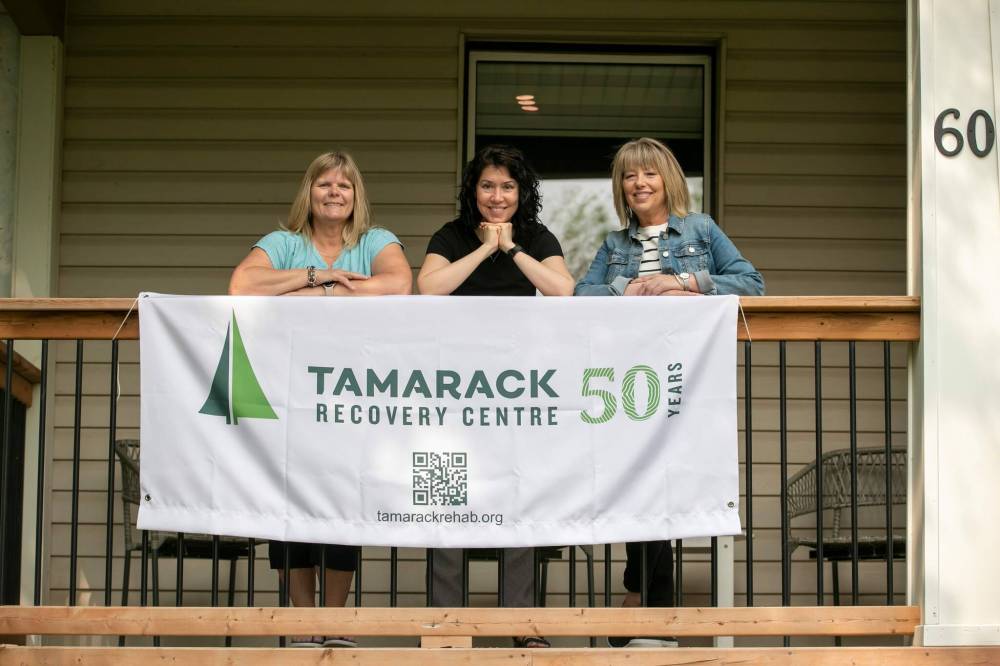
BROOK JONES / FREE PRESS
Tamarack operations manager Sherry Gable, executive director Lisa Cowan and clinical supervisor Jo Riedle (from left) at the community-based addictions treatment centre on Balmoral Street.
“I no longer wake up feeling empty and dreading the day ahead. Instead, I’m motivated and optimistic,” wrote one former resident. “I’m more at peace with myself and the world around me. There are certainly some days where old thought patterns and habits creep up, but I’m better equipped to handle those. I’m not having to turn to external things to change the way I feel. I’m able to fall back on the inner strength and supports I’ve built up along the way.”
Recognizing that financial need is often a major barrier to accessing addictions treatment in Manitoba, Tamarack Recovery Centre is hoping a campaign to raise $50,000 for its “50 for the Future” will encourage donors large and small.
Earlier this month, the centre received a $30,000 donation from Manitoba’s Credit Unions as the first major contribution to Tamarack’s new endowment fund.
“This is a proactive investment in our future,” Tamarack executive director Lisa Cowan said, adding the fund will help ensure no one is turned away from the facility’s services because they lack the funds.
“Our current data show that more and more people are seeking addictions treatment services. However, we know that not everyone can afford to access the help they need. The agency fund means we can build on and sustain our innovative and responsive participant subsidy program, reducing financial barriers to accessing treatment for future participants. We don’t ever want finances to be a barrier.”
Over the past five decades of supporting thousands of people in recovery, the program has been meeting participants where they are, providing continuous community-based care.
Tamarack’s residential treatment program is 60 days in duration. Extended programs are available for people seeking additional time in treatment, and ongoing after-care support is offered to all graduate clients.
Cowan, who was formally trained in England as a drama therapist, was always drawn to a helping profession. She set herself up in private practice, worked with women whose lives were impacted by sexual abuse, and later as a counsellor at Tamarack, before ultimately taking on the role of director.
“I very quickly just knew this place was different — so friendly and low-key — a place to be yourself and be real. Instantly I saw that in the staff, many of them in recovery themselves; a healthy perspective, a different degree of honesty. I felt welcome and open to using my skills,” she said.
“I care about this place. I feel really proud of the work we are doing.”
The fully accredited Balmoral Street centre has expanded over the years.
“We have a second facility two doors down. I’m truly fortunate with the team I have — that I got to choose — surrounded by people who have been here for 10 to 14 years. Between all of us, and the participants, we adapt the program, and there’s not a high level of bureaucracy here. We have a fabulous board of directors, and a completion rate that’s really excellent. Every day there is an opportunity to celebrate success in some way. You feel like you’re able to be part of something bigger than yourself.”
In a profession with a notoriously high burnout rate, Cowan points to a site survey showing the team’s surprising longevity.
“It does feel like such a supportive team. Participants help create and open doors; they’re supportive of each other, telling me about their day. That’s the stuff that fills my bucket.”
Between the centre’s two homes, the non-profit organization has an average of 23 staff and some student placements throughout the year.
“We really expanded and deepened our after-care program. There’s after-care support for life at no charge, with groups twice per week. The majority of our team (staff, graduates and participants) has lived experience with addiction or mental illness. There’s support from peers, case management — they can pop in any time. It’s a super chill setup family atmosphere.
“We are small, about 12 people in our treatment Centre. In the branch we can have up to 10 of our graduates for up to two years, with supports and engagement but building in more independence, and a return to education.”

Since 2013, Tamarack has an average completion rate of 83 per cent, notably exceeding the industry average of 44 per cent for long-term residential addictions treatment, and graduates report post-treatment sobriety rates well above national norms.
“We’ve just been operating so quietly — we are a big group of introverts,” Cowan said with a chuckle. “My way is to work and improve from the inside, not blow my own horn. We stay focused on just doing the work. There’s no communications or media relations person. We are not the latest thing in the community. We are quietly going about it.
“I really think sometimes what’s missing in the conversation — yes, we have to deal with the crisis, of course there are people hurting — we need to have longevity in mind when we are supporting people, to prevent people from going back. I think it’s that connection piece, we have no limit on after-care. We’ve always managed it. I believe we always will.”
To learn more and to support Tamarack, visit www.tamarackrehab.org/donors-supporters or call 204-772-9836.
fpcity@freepress.mb.ca