

Trump asks the Supreme Court to clear the way for federal downsizing plans
Advertisement
Read this article for free:
or
Already have an account? Log in here »
To continue reading, please subscribe:

Digital Subscription
One year of digital access for only $205*
- Enjoy unlimited reading on winnipegfreepress.com
- Read the E-Edition, our digital replica newspaper
- Access News Break, our award-winning app
- Play interactive puzzles
*First annual payment billed as $205.00 + GST for one year. This annual subscription will automatically renew at $233.00 + GST every 52 weeks (10% off the regular annual price of $259.35). Offer available to new and qualified returning subscribers only. Cancel any time.
To continue reading, please subscribe:
Add Free Press access to your Brandon Sun subscription for only an additional
$1 for the first 4 weeks*
- Enjoy unlimited reading on winnipegfreepress.com
- Read the E-Edition, our digital replica newspaper
- Access News Break, our award-winning app
- Play interactive puzzles
*Your next Brandon Sun subscription payment will increase by $1.00 and you will be charged $17.95 plus GST for four weeks. After four weeks, your payment will increase to $24.95 plus GST every four weeks.
Read unlimited articles for free today:
or
Already have an account? Log in here »
Hey there, time traveller!
This article was published 02/06/2025 (464 days ago), so information in it may no longer be current.
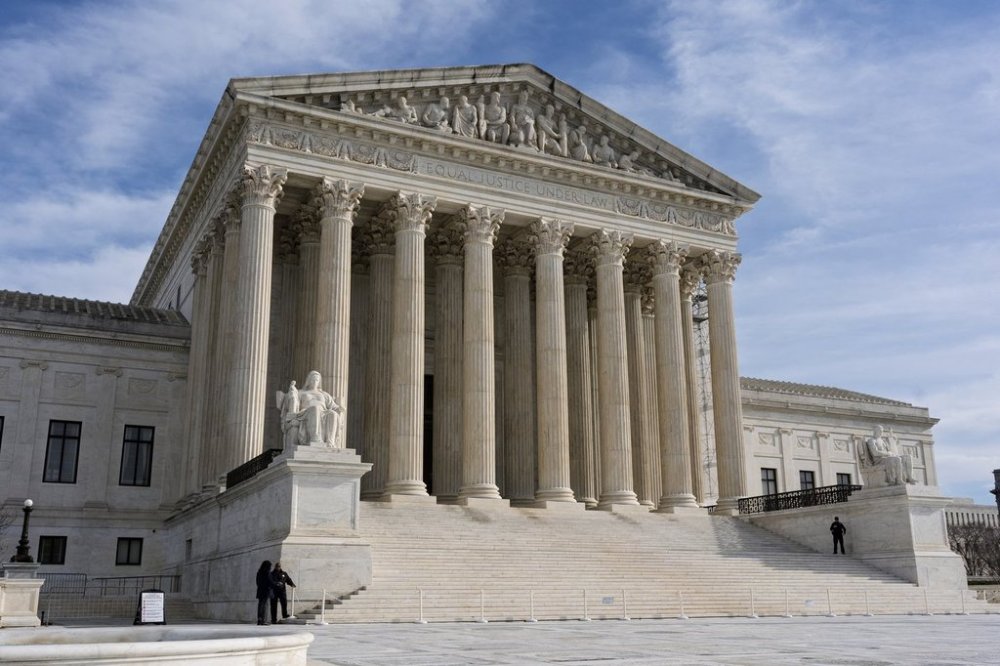
WASHINGTON (AP) — President Donald Trump’s administration on Monday renewed its request for the Supreme Court to clear the way for plans to downsize the federal workforce, while a lawsuit filed by labor unions and cities proceeds.
The high court filing came after an appeals court refused to freeze a California-based judge’s order halting the cuts, which have been led by the Department of Government Efficiency.
By a 2-1 vote, a panel of the U.S. 9th Circuit Court of Appeals found that the downsizing could have broader effects, including on the nation’s food-safety system and health care for veterans.
In her ruling last month, U.S. District Judge Susan Illston found that Trump’s administration needs congressional approval to make sizable reductions to the federal workforce.
The administration initially asked the justices to step in last month, but withdrew its appeal for technical, legal reasons. The latest filing is one in a series of emergency appeals arguing federal judges had overstepped their authority.
Illston’s order “rests on the indefensible premise that the President needs explicit statutory authorization from Congress to exercise his core Article II authority to superintend the internal personnel decisions of the Executive Branch,” Solicitor General D. John Sauer wrote in the new appeal.
Trump has repeatedly said voters gave him a mandate to remake the federal government, and he tapped billionaire ally Elon Musk to lead the charge through DOGE. Musk left his role last week.
Tens of thousands of federal workers have been fired, have left their jobs via deferred resignation programs, or have been placed on leave. There is no official figure for the job cuts, but at least 75,000 federal employees took deferred resignation, and thousands of probationary workers have already been let go.
Illston’s order directs numerous federal agencies to halt acting on the president’s workforce executive order signed in February and a subsequent memo issued by DOGE and the Office of Personnel Management. Illston was nominated by former Democratic President Bill Clinton.
Among the agencies affected by the order are the departments of Agriculture, Energy, Labor, the Interior, State, the Treasury and Veterans Affairs. It also applies to the National Science Foundation, Small Business Association, Social Security Administration and Environmental Protection Agency.
The Supreme Court set a deadline of next Monday for a response from the unions and cities, including Baltimore, Chicago and San Francisco.
Some of the labor unions and nonprofit groups are also plaintiffs in another lawsuit before a San Francisco judge challenging the mass firings of probationary workers. In that case, Judge William Alsup ordered the government in March to reinstate those workers, but the U.S. Supreme Court later blocked his order.