Technology helps revive folk fest documentary

Advertisement
Read this article for free:
or
Already have an account? Log in here »
To continue reading, please subscribe:

Digital Subscription
One year of digital access for only $205*
- Enjoy unlimited reading on winnipegfreepress.com
- Read the E-Edition, our digital replica newspaper
- Access News Break, our award-winning app
- Play interactive puzzles
*First annual payment billed as $205.00 + GST for one year. This annual subscription will automatically renew at $233.00 + GST every 52 weeks (10% off the regular annual price of $259.35). Offer available to new and qualified returning subscribers only. Cancel any time.
To continue reading, please subscribe:
Add Free Press access to your Brandon Sun subscription for only an additional
$1 for the first 4 weeks*
- Enjoy unlimited reading on winnipegfreepress.com
- Read the E-Edition, our digital replica newspaper
- Access News Break, our award-winning app
- Play interactive puzzles
*Your next Brandon Sun subscription payment will increase by $1.00 and you will be charged $17.95 plus GST for four weeks. After four weeks, your payment will increase to $24.95 plus GST every four weeks.
Read unlimited articles for free today:
or
Already have an account? Log in here »
Hey there, time traveller!
This article was published 10/06/2025 (428 days ago), so information in it may no longer be current.
The creator of a new documentary and oral history book about the Winnipeg Folk Festival doesn’t describe himself as a die-hard folkie.
“I’ve been more of a casual attender, but still a fan,” says Kevin Nikkel, a local filmmaker and writer with an interest in Winnipeg history and culture.
SUPPLIED Filmmaker Kevin Nikkel (left) with collaborator John Prentice.
This week, Nikkel releases two parallel projects about the history of the annual summer music festival, which celebrates its 50-ish anniversary at Birds Hill Provincial Park in July.
His book, Founding Folks: An Oral History of the Winnipeg Folk Festival, launches at McNally Robinson Grant Park Wednesday; followed by the opening of his feature-length documentary, When We Became Folk Fest, at Dave Barber Cinematheque on Friday.
“I’m really excited to show people this cinematic time capsule of the folk fest,” Nikkel says of the documentary directed with his late collaborator, Dave Barber.
It’s a movie that almost ended up in the trash.
Nikkel and Barber — Cinematheque’s founding programmer, who died in 2021 — were working on another local history documentary, Tales from the Winnipeg Film Group, when they started mulling another project.
Barber had come across a set of previously unusable film reels that hadn’t been watched in decades and were headed for the bin.
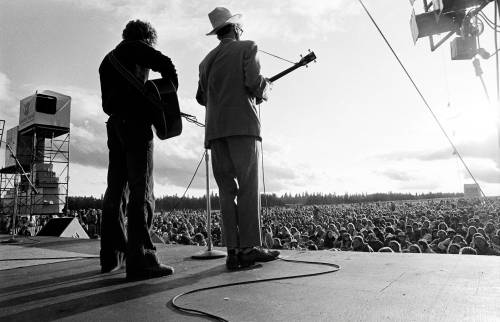
Captured by Winnipeg Film Group members in 1975, the grainy Super 8 footage shows a young Mitch Podolak, bearded and bespectacled, keeping things afloat during the second-ever Winnipeg Folk Festival.

The reels, which also included more than four hours of crowd shots and artist performances, were intended for a documentary that was scrapped in the editing booth because the video and audio were out of sync — a fatal issue at the time.
“We were able to access all this material because, technology being the way it is, it was far more reasonable to sync up the faulty audio with the picture because the software has improved so much,” Nikkel says.
“We picked up a project that had begun and was stalled and has become something completely different than what they had originally intended.”
Local composer and sound designer Andy Rudolph helped solve the post-production puzzle and UMFM 101.5 radio host John Prentice, who was present during the original film group shoot in 1975, was brought on as a collaborator.
When We Became Folk Fest pairs the vintage footage with archival photographs and offscreen interviews with festival instigators Podolak, prior to his death in 2019, wife Ava Kobrinsky, co-founder Colin Gorrie and others.
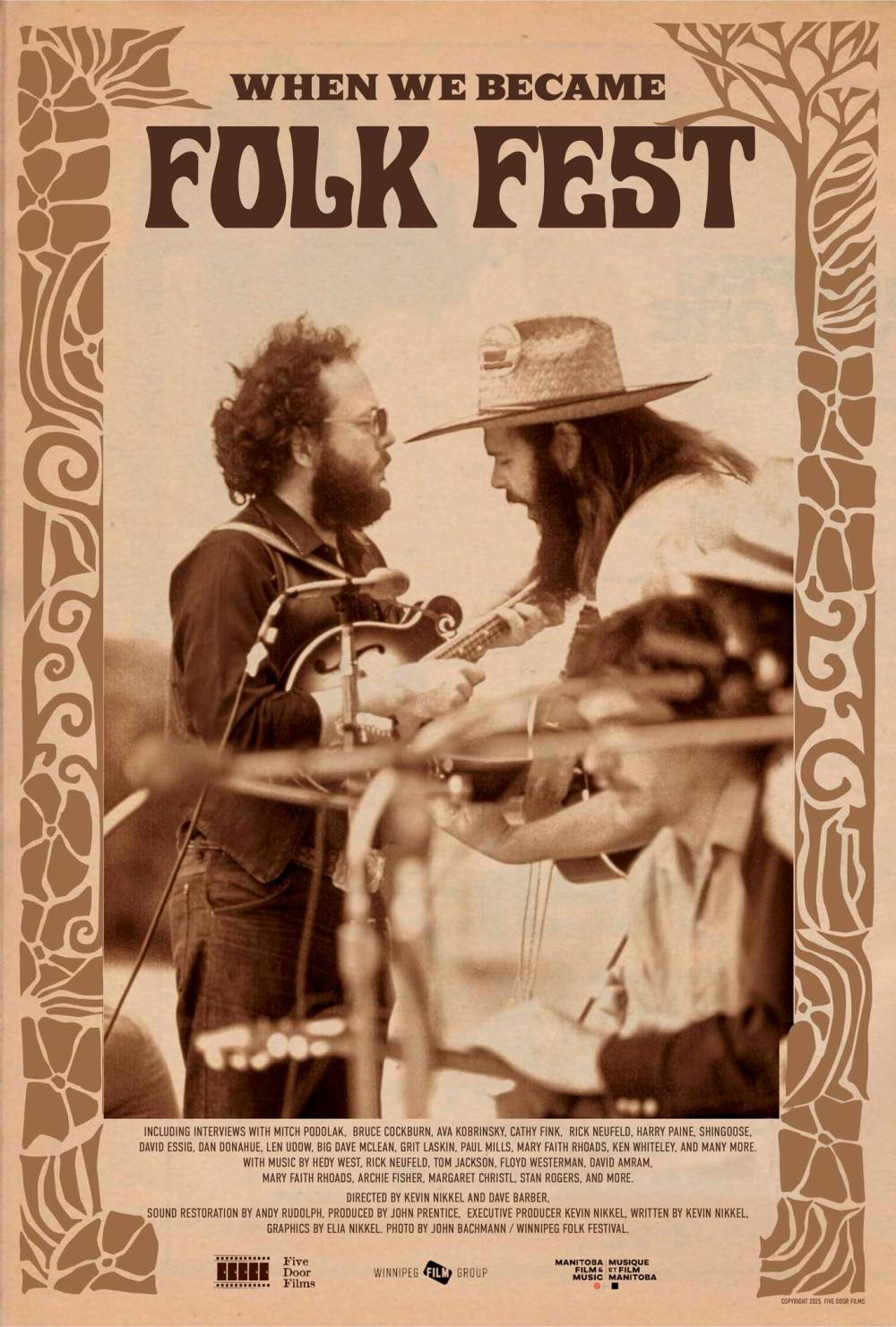
The film — which focuses on the event’s early politics, vision and business model — also includes conversations with the likes of performers Bruce Cockburn, Tom Jackson, Peter Paul Van Camp and Al Simmons.
“I’m really looking forward to sharing this window into our scene, our culture — and people might even recognize themselves or their relatives,” Nikkel says.
Creating a documentary is a big enough project on its own, but Nikkel knew from the outset he wanted to pair it with an oral history book. He took a similar tack with Establishing Shots: An Oral History of the Winnipeg Film Group, a book based on interviews from his 2017 documentary with Barber.
“My frustration as a filmmaker or editor is you sit down and have a nice long conversation with someone, but then you only take a couple quotes that end up in the film,” he says, adding writing has become a fitting companion to his filmmaking practice.
Founding Folks, published by University of Manitoba Press, features many of the same voices as the film but takes a deeper look at the festival’s early days and continued success, which Nikkel says is due in large part to its location and dedicated volunteers.
JOHN BACHMANN PHOTO A new documentary revives troubled footage from 1975 for a look back at 50-ish years of Folk Fest. These performers were among the first in 1974.
In an era when folk festivals across the country are failing, he hopes readers and viewers will recognize the rarity of a grassroots event that’s managed to carry on since 1974.
“For both of these projects, I’m really wanting to contribute to that sense of place and the fact that we have this very rich history and heritage,” Nikkel says.
“We often see this kind of archival material and think about Woodstock and some of these other highly important cultural gatherings from that era, but you never get to see that about yourself and about Winnipeg.”
BETSY THORSTEINSON PHOTO The footage captured by the Winnipeg Film Group in 1975 suffered the then-fatal flaw of out-of-sync images and sound: today’s technology was able to save it.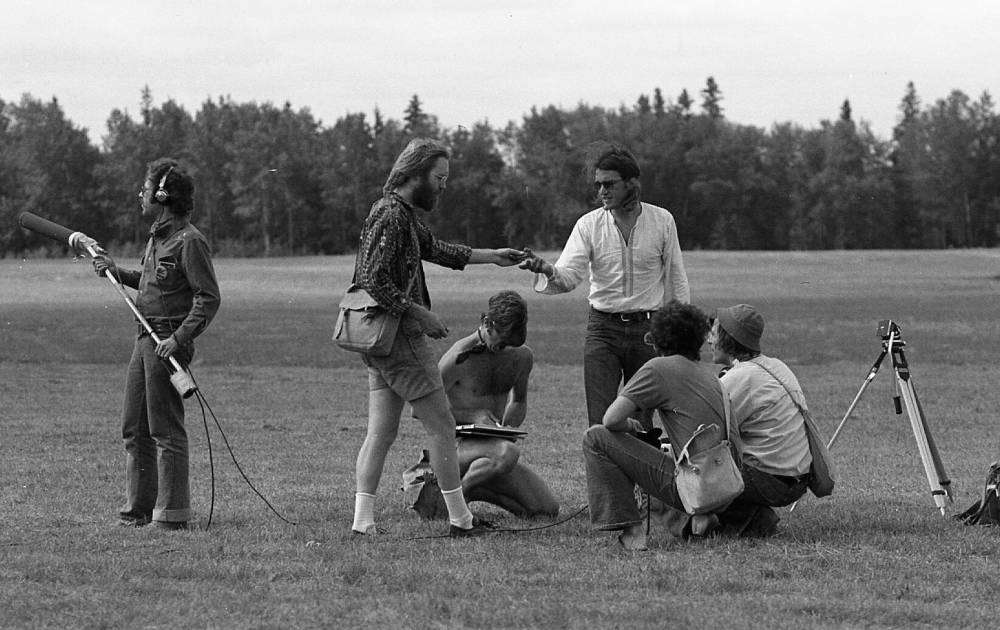
eva.wasney@winnipegfreepress.com

Eva Wasney has been a reporter with the Free Press Arts & Life department since 2019. Read more about Eva.
Every piece of reporting Eva produces is reviewed by an editing team before it is posted online or published in print — part of the Free Press‘s tradition, since 1872, of producing reliable independent journalism. Read more about Free Press’s history and mandate, and learn how our newsroom operates.
Our newsroom depends on a growing audience of readers to power our journalism. If you are not a paid reader, please consider becoming a subscriber.
Our newsroom depends on its audience of readers to power our journalism. Thank you for your support.
Book Launch
Founding Folks: An Oral History of the Winnipeg Folk Festival
● McNally Robinson Booksellers, 1120 Grant Ave.
● Wednesday, 7 p.m.
● Hosted by David Knipe with music by Big Dave McLean
Documentary Preview
When We Became Folk Fest
● Dave Barber Cinematheque, 100 Arthur St.
● Friday, 7 p.m.; Saturday, 5 p.m.; Sunday, 3 p.m.
● Opening night Q&A moderated by John Einarson
● Tickets $7.50 to $11.50 at davebarbercinematheque.com
Eva Wasney has been a reporter with the Free Press Arts & Life department since 2019. Read more about Eva.
Every piece of reporting Eva produces is reviewed by an editing team before it is posted online or published in print — part of the Free Press‘s tradition, since 1872, of producing reliable independent journalism. Read more about Free Press’s history and mandate, and learn how our newsroom operates.
Our newsroom depends on a growing audience of readers to power our journalism. If you are not a paid reader, please consider becoming a subscriber.
Our newsroom depends on its audience of readers to power our journalism. Thank you for your support.
Related Articles
Winnipeg Folk Fest marks 50 years with lineup including Isbell, Staples, Begonia, Welch, Sumner, DiFranco, Blackie and the Rodeo Kings


Advertisement Advertise With Us
Advertisement Advertise With Us