‘Gas station heroin’ is technically illegal and widely available. Here are the facts
Advertisement
Read this article for free:
or
Already have an account? Log in here »
To continue reading, please subscribe:
Digital Subscription
One year of digital access for only $1.44 a week*
- Enjoy unlimited reading on winnipegfreepress.com
- Read the E-Edition, our digital replica newspaper
- Access News Break, our award-winning app
- Play interactive puzzles
*Billed as $5.77 plus GST every four weeks. After 52 weeks, price increases to the regular rate of $19.95 plus GST every four weeks. Offer available to new and qualified returning subscribers only. Cancel any time.
To continue reading, please subscribe:
Add Free Press access to your Brandon Sun subscription for only an additional
$1 for the first 4 weeks*
- Enjoy unlimited reading on winnipegfreepress.com
- Read the E-Edition, our digital replica newspaper
- Access News Break, our award-winning app
- Play interactive puzzles
*Your next Brandon Sun subscription payment will increase by $1.00 and you will be charged $17.95 plus GST for four weeks. After four weeks, your payment will increase to $24.95 plus GST every four weeks.
Read unlimited articles for free today:
or
Already have an account? Log in here »
Hey there, time traveller!
This article was published 14/06/2025 (490 days ago), so information in it may no longer be current.
WASHINGTON (AP) — Health officials want you to think twice before buying one of those brightly colored little bottles often sold at gas stations, convenience stores and smoke shops.
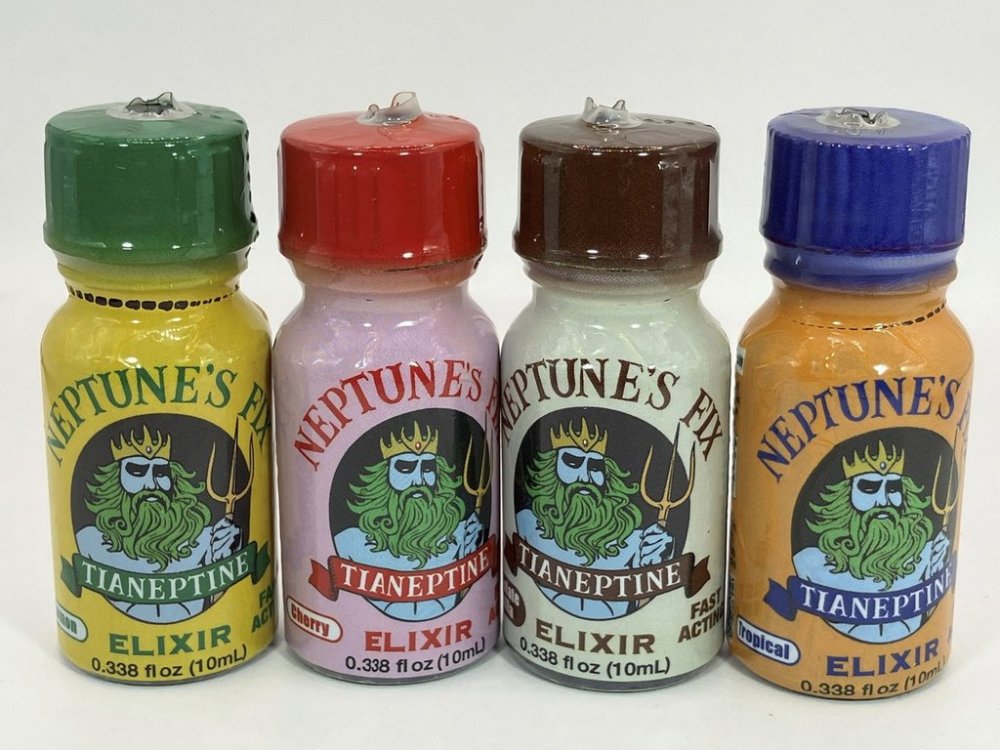
Sometimes called “gas station heroin,” the products are usually marketed as energy shots or cognitive supplements but actually contain tianeptine, an unapproved drug that can be addictive and carries risks of serious side effects.
U.S. poison control centers have reported a steady rise in calls linked to the drug for more than a decade. And last month the Food and Drug Administration sent a warning to health professionals about “the magnitude of the underlying danger or these products.”
Here’s what to know about gas station heroin.
How are these products sold in the U.S.?
Tianeptine is approved in a number foreign countries as an antidepressant, usually as a low-dose pill taken three times a day. But it has never been approved by the FDA for any medical condition in the U.S.
Additionally, the drug cannot legally be added to foods and beverages or sold as a dietary supplement — something the FDA has repeatedly warned U.S. companies about.
Still, under-the-radar firms sell tianeptine in various formulas, often with brand names like Zaza, Tianaa, Pegasus and TD Red. Although that is technically illegal, the FDA does not preapprove ingredients added to supplements and beverages.
“It’s kind of this grey area of consumer products, or supplements, where the contents are not regulated or tested the way they would be with a medication,” said Dr. Diane Calello of the New Jersey Poison Information and Education System.
Last year, Calello and her colleagues published a study documenting a cluster of emergency calls in New Jersey tied to a flavored elixir called Neptune’s Fix. People experienced distress, rapid heartbeat, low blood pressure and seizures after drinking it. More than a dozen of the 20 patients had to be admitted for intensive care.
Why use these products?
Many tianeptine products claim— without evidence or FDA approval— to help users treat medical conditions, including addiction, pain and depression.
In 2018, the FDA issued a warning letter to the maker of a product called Tianna, which claimed to provide “an unparalleled solution to cravings for opiates.”
While tianeptine is not an opioid, the drug binds to some of the same receptors in the brain, which can temporarily produce effects akin to oxycodone and other opioids. Tianeptine also carries some of the same physiological risks of opioids, including the potential to dangerously depress breathing.
“That’s what tends to get people into trouble,” said Dr. Hannah Hays of Nationwide Children’s Hospital in Columbus, Ohio. “They use it for opioid-like effects or to self-treat opioid withdrawal and that can lead to slow breathing and problems like that.”
People dealing with opioid addiction, pain, depression, anxiety and other conditions should see a health professional to get a prescription for FDA-approved treatments, Hays said.
Is tianeptine use going up?
Experts aren’t sure but national figures show a big rise in emergency calls involving the drug.
Calls to poison control centers increased 525% between 2018 and 2023, according to a data analysis published earlier this year. In about 40% of cases, the person had to seek medical care, with more than half of them needing critical care.
One explanation for the rise in calls is simply that more Americans are using the products.
But experts also say that the products are triggering more emergencies as they become more potent and dangerous. And the researchers in New Jersey who analyzed Neptune’s Fix found that the liquid also contained synthetic cannabis and other drugs.
“You never quite know what’s in that bottle,” Calello said. “It’s important for people to know that even if they have used a product before, they could get a bottle that contains something very different from what they’re looking for.”
Are there policies that could reduce tianeptine use?

Tianeptine is not included in the federal Controlled Substances Act, which bans or restricts drugs that have no medical use or have a high potential for abuse, such as heroin, LSD and PCP. But about a dozen states have passed laws prohibiting or restricting tianeptine, including Alabama, Georgia, Michigan, Minnesota, Ohio and Tennessee.
In some cases, those laws have led to more cases of withdrawal among users of tianeptine, which can be chemically addictive. But state data also shows some success in reducing harm tied to the drug.
Until recently, Alabama had the highest rate of tianeptine-related calls in the southern U.S., which increased more than 1,400% between 2018 to 2021. But after the state restricted tianeptine in 2021 calls began modestly decreasing while calls across other southern states continued to climb.
___
The Associated Press Health and Science Department receives support from the Howard Hughes Medical Institute’s Science and Educational Media Group and the Robert Wood Johnson Foundation. The AP is solely responsible for all content.