

Number of homeless people in Toronto more than doubled between 2021 and 2024: report
Advertisement
Read this article for free:
or
Already have an account? Log in here »
To continue reading, please subscribe:

Digital Subscription
One year of digital access for only $205*
- Enjoy unlimited reading on winnipegfreepress.com
- Read the E-Edition, our digital replica newspaper
- Access News Break, our award-winning app
- Play interactive puzzles
*First annual payment billed as $205.00 + GST for one year. This annual subscription will automatically renew at $233.00 + GST every 52 weeks (10% off the regular annual price of $259.35). Offer available to new and qualified returning subscribers only. Cancel any time.
To continue reading, please subscribe:
Add Free Press access to your Brandon Sun subscription for only an additional
$1 for the first 4 weeks*
- Enjoy unlimited reading on winnipegfreepress.com
- Read the E-Edition, our digital replica newspaper
- Access News Break, our award-winning app
- Play interactive puzzles
*Your next Brandon Sun subscription payment will increase by $1.00 and you will be charged $17.95 plus GST for four weeks. After four weeks, your payment will increase to $24.95 plus GST every four weeks.
Read unlimited articles for free today:
or
Already have an account? Log in here »
Hey there, time traveller!
This article was published 08/07/2025 (427 days ago), so information in it may no longer be current.
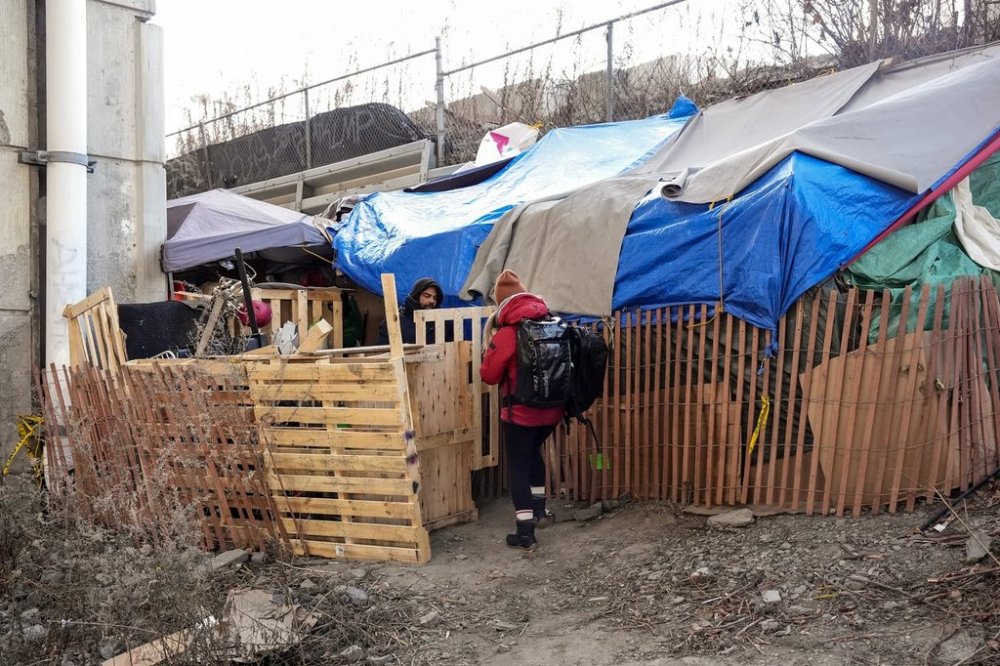
TORONTO – The number of homeless people in Toronto has more than doubled between the spring of 2021 and last fall, a newly released survey showed.
Toronto’s Street Needs Assessment survey estimated that 15,400 people were homeless in Toronto last October, up from about 7,300 in April 2021.
“These data highlight the failure of multiple systems, such as affordable housing, health care, mental health, income support, and the justice system,” a city report said.
“People are left with nowhere to turn, and the shelter system or staying outdoors become the last resort.”
The report said the increase in Toronto mirrors the situation in Ontario and across Canada after the COVID-19 pandemic directly affected homelessness rates.
“Specific groups continue to be overrepresented among those experiencing homelessness, outlining the need for targeted investments and specialized supports,” it said.
The report said nine per cent of homeless people in the city identified as Indigenous, while Indigenous people make up three per cent of Toronto’s overall population. It also said 58 per cent identified as Black, while Black people represent 10 per cent of the city’s overall population.
The most frequently cited reason for loss of housing was lack of income, the city said.
“The majority of people surveyed reported one or more health issue including mental health concerns, an illness or medical condition and substance use,” it said.
The report said the housing crisis requires strategic responses and Toronto is already seeing a reduction in the number of homeless people due to fewer refugee claimants in shelters, lower encampment numbers and movement of people into permanent housing.
“Individuals said the top factors that could have helped them avoid homelessness were housing affordability programs such as rent-geared-to-income (RGI), advice on tenant legal rights and support with employment or education,” the report said.
The city said a total of 1,078 people living outside were referred into the shelter system and more than 4,300 people were housed last year.
“Over the next decade, the city will invest in up to 20 new shelter sites that will be smaller, more cost effective and better suited to the needs of the people they serve,” it said, adding that seven of those sites have already been selected.
More than 80,000 people in Ontario were homeless in 2024, the Association of Municipalities of Ontario has said.
The association has called for a fundamentally different approach to tackling the homelessness crisis, one that prioritizes long-term housing solutions rather than temporary measures.
This report by The Canadian Press was first published July 8, 2025.