Radar satellite launched by India and NASA will track minuscule changes to Earth’s land and ice

Advertisement

Advertise with us

CAPE CANAVERAL, Fla. (AP) — NASA and India paired up to launch an Earth-mapping satellite on Wednesday capable of tracking even the slightest shifts in land and ice.

Read this article for free:


or

Already have an account? Log in here »

To continue reading, please subscribe:

Subscribe and receive a limited-edition Free Press branded hat or tote.

Digital Subscription

One year of digital access for only $205*

  • Enjoy unlimited reading on winnipegfreepress.com
  • Read the E-Edition, our digital replica newspaper
  • Access News Break, our award-winning app
  • Play interactive puzzles

*First annual payment billed as $205.00 + GST for one year. This annual subscription will automatically renew at $233.00 + GST every 52 weeks (10% off the regular annual price of $259.35). Offer available to new and qualified returning subscribers only. Cancel any time.

To continue reading, please subscribe:

Add Free Press access to your Brandon Sun subscription for only an additional

$1 for the first 4 weeks*

  • Enjoy unlimited reading on winnipegfreepress.com
  • Read the E-Edition, our digital replica newspaper
  • Access News Break, our award-winning app
  • Play interactive puzzles
Start now

*Your next Brandon Sun subscription payment will increase by $1.00 and you will be charged $17.95 plus GST for four weeks. After four weeks, your payment will increase to $24.95 plus GST every four weeks.

Hey there, time traveller!
This article was published 30/07/2025 (408 days ago), so information in it may no longer be current.

CAPE CANAVERAL, Fla. (AP) — NASA and India paired up to launch an Earth-mapping satellite on Wednesday capable of tracking even the slightest shifts in land and ice.

The $1.3 billion mission will help forecasters and first responders stay one step ahead of floods, landslides, volcanic eruptions and other disasters, according to scientists.

Rocketing to orbit from India, the satellite will survey virtually all of Earth’s terrain multiple times. Its two radars — one from the U.S. and the other from India — will operate day and night, peering through clouds, rain and foliage to collect troves of data in extraordinary detail.
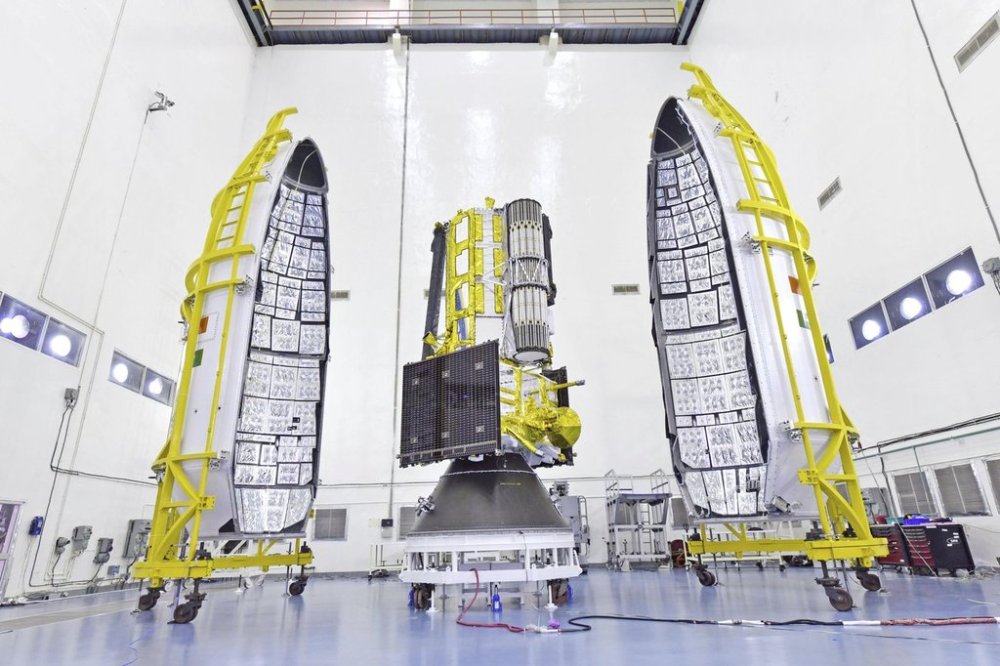
This photo provided by NASA shows the NISAR (NASA-ISRO Synthetic Aperture Radar) satellite on July 18, 2025, at the Indian Space Research Organization's Satish Dhawan Space Center in Sriharikota, Tirupati district, Andhra Pradesh, India. (Indian Space Research Organization/NASA via AP)

Microwave signals beamed down to Earth from the dual radars will bounce back up to the satellite’s super-sized antenna reflector perched at the end of a boom like a beach umbrella. Scientists will compare the incoming and outgoing signals as the spacecraft passes over the same locations twice every 12 days, teasing out changes as small as a fraction of an inch (1 centimeter).

“Congratulations India!” India’s minister of science and technology, Jitendra Singh, said via X once the satellite safely reached orbit. The mission “will benefit the entire world community.”

NASA’s deputy associate administrator Casey Swails, part of a small delegation that traveled to India for the launch, said it “really shows the world what our two nations can do. But more so than that, it really is a pathfinder for the relationship building,.”

It will take a full week to extend the satellite’s 30-foot (9-meter) boom and open the 39-foot-in-diameter (12-meter) drum-shaped reflector made of gold-plated wire mesh. Science operations should begin by the end of October.

Among the satellite’s most pressing measurements: melting glaciers and polar ice sheets; shifting groundwater supplies; motion and stress of land surfaces prompting landslides and earthquakes; and forest and wetland disruptions boosting carbon dioxide and methane emissions.
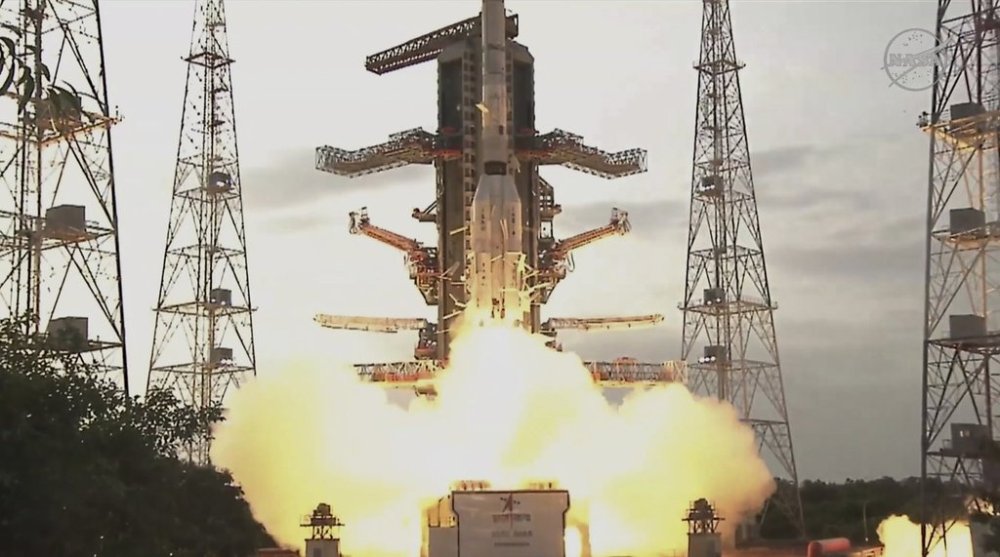
This image provided by NASA shows an Earth-mapping satellite, the first collaborative mission between NASA and the Indian Space Research Organization, launching from India on Wednesday, July 30, 2025. (NASA via AP)

It’s “a first-of-its-kind, jewel radar satellite that will change the way we study our home planet and better predict a natural disaster before it strikes,” NASA’s science mission chief Nicky Fox said ahead of liftoff. She was part of the NASA delegation that attended the launch in person.

NASA is contributing $1.2 billion to the three-year mission; it supplied the low-frequency radar and reflector. The Indian Space Research Organization’s $91 million share includes the higher-frequency radar and main satellite structure, as well as the launch from a barrier island in the Bay of Bengal. It’s the biggest space collaboration between the two countries.

The satellite called NISAR — short for NASA-ISRO Synthetic Aperture Radar — will operate from a near-polar-circling orbit 464 miles (747 kilometers) high. It will join dozens of Earth observation missions already in operation by the U.S. and India.

___

The Associated Press Health and Science Department receives support from the Howard Hughes Medical Institute’s Department of Science Education and the Robert Wood Johnson Foundation. The AP is solely responsible for all content.
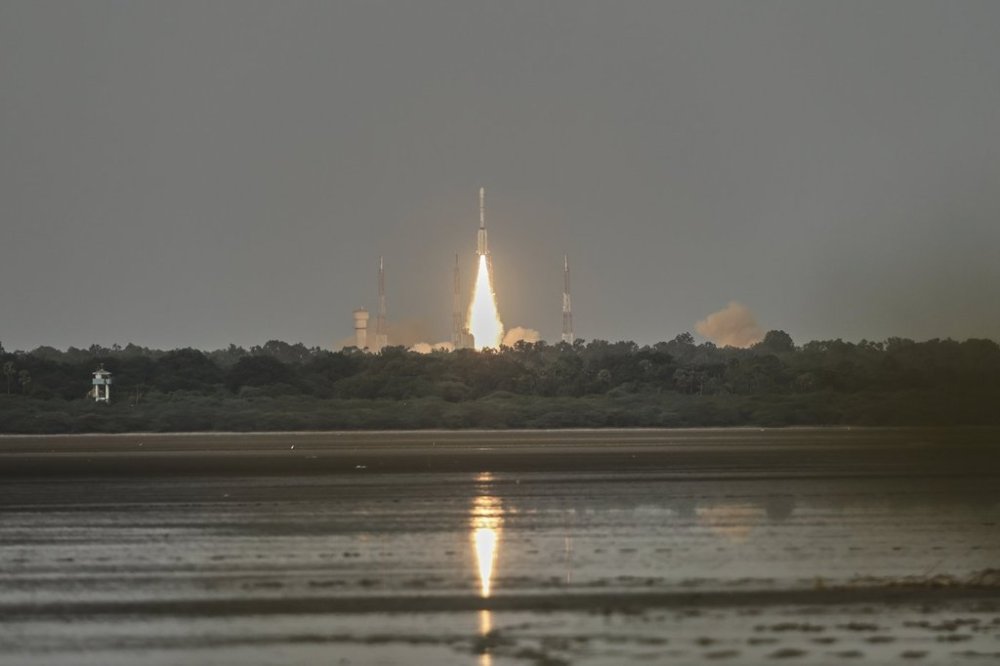
The NISAR satellite, a joint mission by NASA and ISRO, lifts off aboard a GSLV-F16 rocket, from the Satish Dhawan Space Centre in Sriharikota, India, Wednesday, July 30, 2025. (AP Photo/R. Parthibhan)
Report Error Submit a Tip

More Stories

Education minister’s reasons for revoking teacher’s licence ‘not good enough,’ judge decides

Maggie Macintosh 5 minute read Preview

Education minister’s reasons for revoking teacher’s licence ‘not good enough,’ judge decides

Maggie Macintosh 5 minute read Updated: 9:14 AM CDT

A Manitoba judge has rejected the education minister’s decision to end a teacher’s career because he repeatedly messaged with a 13-year-old girl on social media.

Read
Updated: 9:14 AM CDT

Awareness is the first line of defence

Joseph Borsa 4 minute read Preview

Awareness is the first line of defence

Joseph Borsa 4 minute read Updated: 8:15 AM CDT

September is Prostate Cancer Awareness Month in Canada. This proclamation helps focus public attention on the very important protective role that such awareness can play in reducing the death and suffering associated with this disease.

The underlying reason for that is simple. In its beginning, prostate cancer, as is true for all cancers, starts and grows silently and stealthily, giving no indication through pain or other symptoms of its presence and of the developing pathology. Everything appears normal to the unsuspecting host until the cancer has grown to an extent that it interferes with normal function. There might then be pain, bleeding or some other manifestation of the growing tumour.

Unfortunately, by that time the disease may have reached an advanced stage, which is much more difficult to treat, and less likely to have a favourable outcome. It is a general truth in dealing with all types of cancer that the earlier it is discovered and treated, the better the likelihood of a favourable outcome. Awareness can be a major determinant of whether such early discovery happens or not.

Discovery of the cancer during its period of silent, surreptitious growth creates the opportunity for early treatment. Fortunately, in the case of prostate cancer such detection is favoured by two factors.

Read
Updated: 8:15 AM CDT

Manitoba gains doctors for third straight year, but loses at pandemic-level rate: report

Scott Billeck 5 minute read Preview

Manitoba gains doctors for third straight year, but loses at pandemic-level rate: report

Scott Billeck 5 minute read Wednesday, Sep. 9, 2026

Manitoba is adding doctors at a record clip — but it’s also losing them at a rate not seen since the depths of the COVID-19 pandemic, a physicians advocacy organization cautioned Wednesday.

Read
Wednesday, Sep. 9, 2026

Letters, Sept. 11

7 minute read Preview

Letters, Sept. 11

7 minute read Updated: 8:07 AM CDT

In his letter to the editor — "Both education systems work", Sept. 9 — Paulo Borges states he “pays 100 per cent” of his school taxes, even though his children do not attend public school. I don’t think he’s unique — all property owners pay the full amount of school taxes, regardless of family status. He went on to suggest he “saved” the government money.

Read
Updated: 8:07 AM CDT

Artist’s inspired work brings Red River Métis story back to Portage and Main

Conrad Sweatman 8 minute read Preview

Artist’s inspired work brings Red River Métis story back to Portage and Main

Conrad Sweatman 8 minute read Updated: 2:47 PM CDT

Jennine Krauchi calls them the “grandmothers.” “They speak to you very silently. You never hear a word, but they speak,” Krauchi says, referring to the antique pieces of Métis needlework she’s carefully studied for years. But there are few precedents for her latest art project: a 85-foot-wide by 32-foot-high chain curtain of Métis needlework that drapes over the historic Bank of Montreal’s neoclassical facade.

Read
Updated: 2:47 PM CDT

‘Dynacare sucks’: premier muses about bringing lab services back into public system

Carol Sanders 6 minute read Preview

‘Dynacare sucks’: premier muses about bringing lab services back into public system

Carol Sanders 6 minute read Wednesday, Sep. 9, 2026

Premier Wab Kinew says Manitoba may bring Dynacare’s diagnostic lab services back into the public system rather than continue to sign contracts with the for-profit company.

“Dynacare sucks. They’ve made an absolute mess of this situation,” the premier said Wednesday, the day the company’s 350 employees reported back to work after the labour board halted their strike after just one day.

Kinew first made the remark about Dynacare in a CBC radio interview Wednesday morning and added he is “not happy with them.”

Dynacare performs the majority of non-emergency blood and urine tests in the province.

Read
Wednesday, Sep. 9, 2026