Radioactive wasp nest found at site where US once made nuclear bombs
Advertisement
Read this article for free:
or
Already have an account? Log in here »
To continue reading, please subscribe:

Digital Subscription
One year of digital access for only $205*
- Enjoy unlimited reading on winnipegfreepress.com
- Read the E-Edition, our digital replica newspaper
- Access News Break, our award-winning app
- Play interactive puzzles
*First annual payment billed as $205.00 + GST for one year. This annual subscription will automatically renew at $233.00 + GST every 52 weeks (10% off the regular annual price of $259.35). Offer available to new and qualified returning subscribers only. Cancel any time.
To continue reading, please subscribe:
Add Free Press access to your Brandon Sun subscription for only an additional
$1 for the first 4 weeks*
- Enjoy unlimited reading on winnipegfreepress.com
- Read the E-Edition, our digital replica newspaper
- Access News Break, our award-winning app
- Play interactive puzzles
*Your next Brandon Sun subscription payment will increase by $1.00 and you will be charged $17.95 plus GST for four weeks. After four weeks, your payment will increase to $24.95 plus GST every four weeks.
Read unlimited articles for free today:
or
Already have an account? Log in here »
Hey there, time traveller!
This article was published 30/07/2025 (389 days ago), so information in it may no longer be current.
COLUMBIA, S.C. (AP) — Workers at a site in South Carolina that once made key parts for nuclear bombs in the U.S. have found a radioactive wasp nest but officials said there is no danger to anyone.
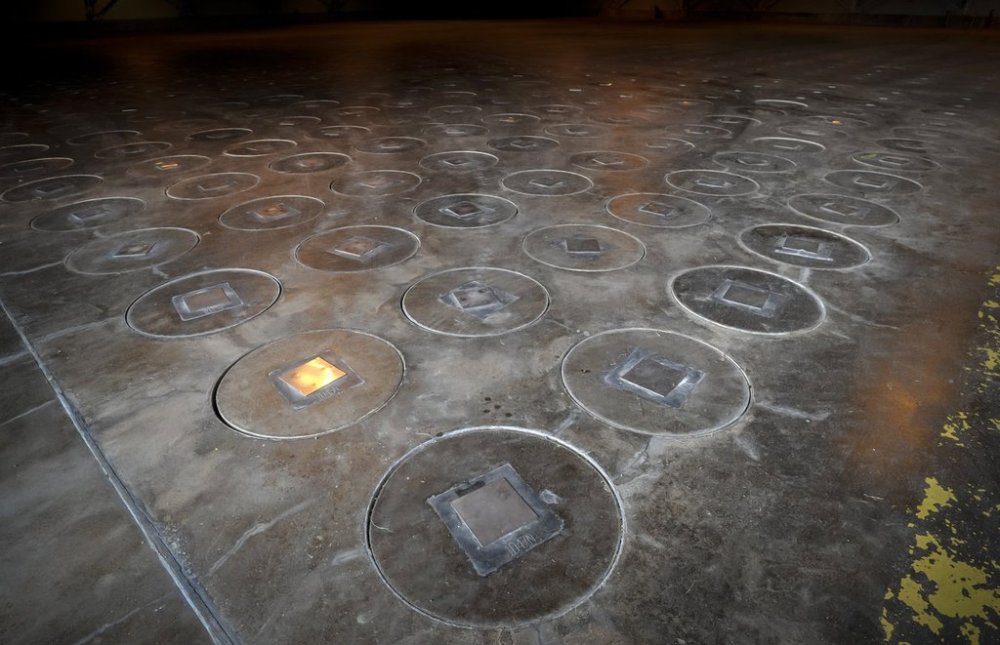
Employees who routinely check radiation levels at the Savannah River Site near Aiken found a wasp nest on July 3 on a post near tanks where liquid nuclear waste is stored, according to a report from the U.S. Department of Energy.
The nest had a radiation level 10 times what is allowed by federal regulations, officials said.
The workers sprayed the nest with insect killer, removed it and disposed of it as radioactive waste. No wasps were found, officials said.
The report said there is no leak from the waste tanks, and the nest was likely radioactive through what it called “onsite legacy radioactive contamination” from the residual radioactivity left from when the site was fully operational.
The watchdog group Savannah River Site Watch said the report was at best incomplete since it doesn’t detail where the contamination came from, how the wasps might have encountered it and the possibility there could be another radioactive nest if there is a leak somewhere.
Knowing the type of wasp nest could also be critical — some wasps make nest out of dirt and others use different material which could pinpoint where the contamination came from, Tom Clements, executive director of the group, wrote in a text message.
“I’m as mad as a hornet that SRS didn’t explain where the radioactive waste came from or if there is some kind of leak from the waste tanks that the public should be aware of,” Clements said.

The tank farm is well inside the boundaries of the site and wasps generally fly just a few hundred yards from their nests, so there is no danger they are outside the facility, according to a statement from Savannah River Mission Completion which now oversees the site.
If there had been wasps found, they would have significantly lower levels of radiation than their nests, according to the statement which was given to the Aiken Standard.
The site was opened in the early 1950s to manufacture the plutonium pits needed to make the core of nuclear bombs during the start of the Cold War with the Soviet Union. Now the site has shifted toward making fuel for nuclear plants and clean up.
The site generated more than 165 million gallons (625 million liters) of liquid nuclear waste which has, through evaporation, been reduced to about 34 million gallons (129 million liters), according to Savannah River Mission Completion.
There are still 43 of the underground tanks in use while eight have been closed.