Nurses union got wrong information from province: health minister ‘Still much, much more work to do,’ but number of net new hires at least 732, Asagwara says
Read this article for free:
or
Already have an account? Log in here »
To continue reading, please subscribe:
Digital Subscription
One year of digital access for only $1.44 a week*
- Enjoy unlimited reading on winnipegfreepress.com
- Read the E-Edition, our digital replica newspaper
- Access News Break, our award-winning app
- Play interactive puzzles
*Billed as $5.77 plus GST every four weeks. After 52 weeks, price increases to the regular rate of $19.95 plus GST every four weeks. Offer available to new and qualified returning subscribers only. Cancel any time.
To continue reading, please subscribe:
Add Free Press access to your Brandon Sun subscription for only an additional
$1 for the first 4 weeks*
- Enjoy unlimited reading on winnipegfreepress.com
- Read the E-Edition, our digital replica newspaper
- Access News Break, our award-winning app
- Play interactive puzzles
*Your next Brandon Sun subscription payment will increase by $1.00 and you will be charged $17.95 plus GST for four weeks. After four weeks, your payment will increase to $24.95 plus GST every four weeks.
Read unlimited articles for free today:
or
Already have an account? Log in here »
Hey there, time traveller!
This article was published 30/07/2025 (451 days ago), so information in it may no longer be current.
Manitoba has added at least 732 net new nurses in the last year, and more than half of those positions are in Winnipeg, Health Minister Uzoma Asagwara said Wednesday.
That exceeds the hiring of “nearly 600” additional nurses the minister touted in early May.
“We know that even with these net new nursing numbers, there’s still much, much more work to do and we’re going to continue to do it,” Asagwara said in an interview with the Free Press.
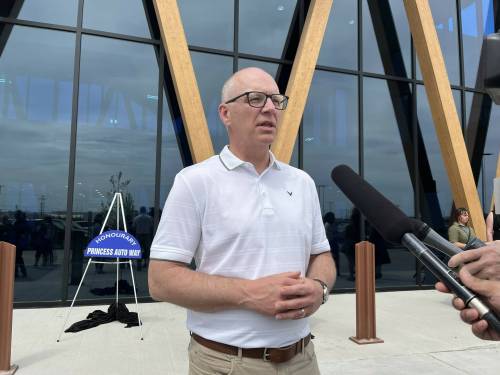
MIKAELA MACKENZIE / FREE PRESS FILES Health Minister Uzoma Asagwara 
The data provided Wednesday was culled from Manitoba Health payroll information from April 1, 2024 until May 31 of this year. It shows 1,692 equivalent-to-full-time nurses were hired and 960 resigned, retired or were terminated, resulting in 732 net new nurses working in the province.
That includes 355 net new nurses working for the Winnipeg Regional Health Authority, which does not include Manitoba’s biggest hospital, the Health Sciences Centre. The HSC is managed by Shared Health, which has added 206 net new nurses, the health minister’s office said.
The government provided the latest nurse numbers Wednesday after the Manitoba Nurses Union posted information online indicating the province had hired only 370 net new nurses for roughly the same time period, and that the Winnipeg Regional Health Authority actually lost 14 nurses.
Those numbers came from freedom of information requests the union said it filed weeks ago, asking regional health authorities how many nurses had been hired and how many were fired, retired or had resigned.
It made the request because members weren’t seeing evidence of new hires at work and wondered where all the net new people that the government was announcing went, said union president Darlene Jackson.
“It really feels like all these big announcements about how many health-care workers or how many nurses have been hired don’t equate to any big improvements in our health-care system,” Jackson said.
MIKAELA MACKENZIE / FREE PRESS FILES Darlene Jackson, president of the Manitoba Nurses Union
“The minister of health will do a TikTok reel talking about how many nurses they’ve hired into the system, and our members are then questioning immediately, ‘Where are these nurses? Because they certainly aren’t in my facility or on my unit.’ When our members are questioning those numbers — because they are the experts out there — then we feel compelled to say, ‘Show us your numbers, because our members want to know.’”
The MNU tallied the responses, showing 1,340 nurses were hired across all health regions — including casual and part-time positions — and another 970 nurses left, resulting in a net increase across the system of just 370. They showed a net loss of 14 nurses employed by the Winnipeg Regional Health Authority, and a net gain of 156 nurses employed by Shared Health, which includes the HSC.
“My understanding is the information that they received was incorrect,” said Asagwara, a psychiatric nurse.
“We work with employers to make sure that our data is accurate, that we’re not double-counting nurses across regions, that we’re presenting information when we share it that is transparent, that is accurate and can be backed up with the process.
“We want for nurses to trust the information that we’re sharing with them. We’ve been really transparent about our approach and our process.”
Only full-time equivalents were counted, said the minister.
“We have nothing to hide. The previous government hid behind numbers that they just made up, and were not forthcoming with Manitobans, where we had a net loss of nurses and health-care workers year over year,” Asagwara said.
“We’ve worked really, really hard to put a process in place that Manitobans can trust, that nurses can trust, and we’ve had success hiring net new health-care workers, as a result.”

Jackson said there needs to be more of a focus on fixing problems in the workplace. A survey of MNU members last month found that 44 per cent of respondents said workplace culture is worse now than a year ago; 34 per cent said it’s the same. Just 15 per cent said it is better.
“Instead of bickering about the numbers, why aren’t we addressing safety in health-care facilities so that everyone who accesses that building — whether you’re providing care or receiving care — is safe? Why aren’t we addressing the violence in health care? Why aren’t we addressing the overtime and the mandating and the workload issues?” Jackson asked.
“That’s what we need to be concentrating on. And bickering over numbers is a colossal waste of time, as far as I’m concerned.”
carol.sanders@freepress.mb.ca

Carol Sanders
Legislature reporter
Carol Sanders is a reporter at the Free Press legislature bureau. The former general assignment reporter and copy editor joined the paper in 1997. Read more about Carol.
Every piece of reporting Carol produces is reviewed by an editing team before it is posted online or published in print — part of the Free Press‘s tradition, since 1872, of producing reliable independent journalism. Read more about Free Press’s history and mandate, and learn how our newsroom operates.
Our newsroom depends on a growing audience of readers to power our journalism. If you are not a paid reader, please consider becoming a subscriber.
Our newsroom depends on its audience of readers to power our journalism. Thank you for your support.
Related Articles
Nurses give NDP failing grade on working conditions