About 7 people a year die trying to save others from drowning in Canada, study finds

Advertisement

Advertise with us

TORONTO - A new study says an average of seven people in Canada die each year trying to save another person from drowning.  

Read this article for free:


or

Already have an account? Log in here »

To continue reading, please subscribe:

Subscribe and receive a limited-edition Free Press branded hat or tote.

Digital Subscription

One year of digital access for only $205*

  • Enjoy unlimited reading on winnipegfreepress.com
  • Read the E-Edition, our digital replica newspaper
  • Access News Break, our award-winning app
  • Play interactive puzzles

*First annual payment billed as $205.00 + GST for one year. This annual subscription will automatically renew at $233.00 + GST every 52 weeks (10% off the regular annual price of $259.35). Offer available to new and qualified returning subscribers only. Cancel any time.

To continue reading, please subscribe:

Add Free Press access to your Brandon Sun subscription for only an additional

$1 for the first 4 weeks*

  • Enjoy unlimited reading on winnipegfreepress.com
  • Read the E-Edition, our digital replica newspaper
  • Access News Break, our award-winning app
  • Play interactive puzzles
Start now

*Your next Brandon Sun subscription payment will increase by $1.00 and you will be charged $17.95 plus GST for four weeks. After four weeks, your payment will increase to $24.95 plus GST every four weeks.

Hey there, time traveller!
This article was published 31/07/2025 (407 days ago), so information in it may no longer be current.

TORONTO – A new study says an average of seven people in Canada die each year trying to save another person from drowning.  

The researchers found that 74 people drowned between January 2010 and December 2019 after attempting a rescue in the water.  

“Intervening when there is a drowning incident is critical to the outcome of the person who started drowning. However, it’s really important to do that safely,” said Tessa Clemens, a co-author of the study and a researcher with the Drowning Prevention Research Centre Canada and the Lifesaving Society of Ontario. 
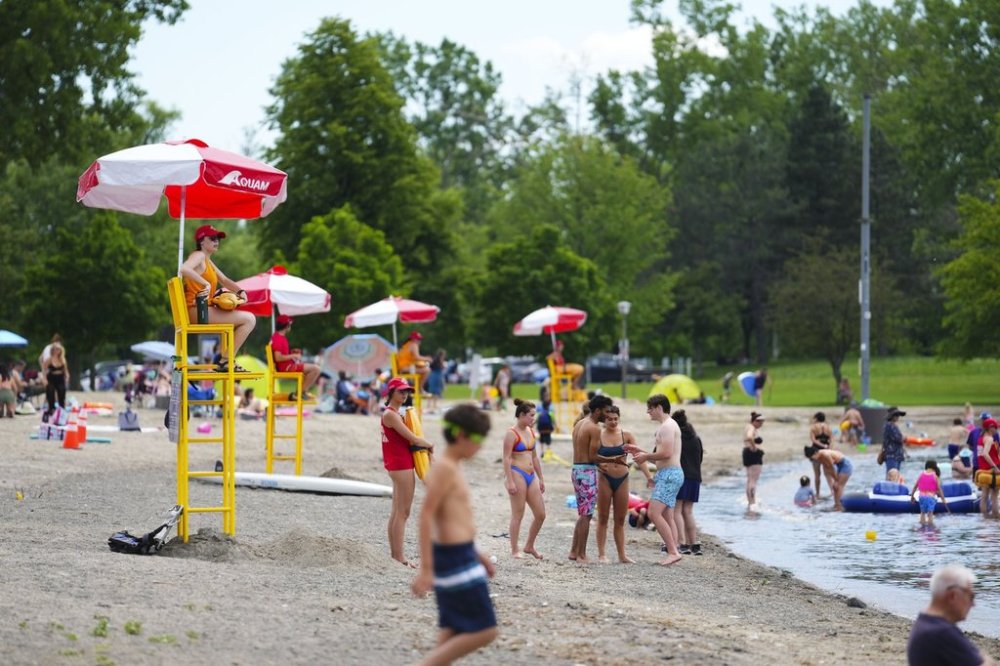
Lifeguards work at Britannia Beach of the Ottawa River in Ottawa on Friday, June 24, 2022. THE CANADIAN PRESS/Sean Kilpatrick

The Lifesaving Society released the study, which was first published in the BMJ in June, on Thursday because there has been a recent surge in drownings in Ontario and Quebec, said Stephanie Bakalar, the society’s senior communications officer. 

“In particular, we have heard of many instances of bystanders attempting rescues this summer and then becoming victims themselves,” Bakalar said in an email, noting they wanted to raise awareness about drowning prevention before the August long weekend. 

Clemens and her colleagues examined 4,535 fatal drownings over the 10-year period and found that in more than half of those cases, someone tried to rescue them.   

Most of those hundreds of rescuers did not have any lifesaving training, but frequently risked their own lives by trying to grab the drowning person in the water.  

Clemens said rescues involving getting in the water with the drowning person and trying to carry or tow them to shore should only be done by those who have taken some rescue training.

Lifesaving training teaches people how to approach a drowning person and help them without getting pulled underwater themselves, she said. 

In addition to the risk of getting pulled under, people tend to overestimate their own swimming ability in lakes, rivers and oceans, Clemens said. 

“Being able to swim in a pool can be very different than swimming in a natural water setting during a high-risk situation where somebody is in distress,” she said. 

“Most drowning in Canada does happen in natural water.”

People who haven’t had lifesaving training should try a “non-contact rescue,” including calling for help and throwing a life-jacket, ring buoy, floating toy or another buoyant object for the person to grab on to. They can also call out to the person and encourage them to swim toward them.

If someone is on shore or by a pool and sees someone drowning, they can lay flat on their stomach and reach a pole or another object out toward the person, but only if they are confident they won’t be pulled into the water.  

Clemens said the majority of the 74 rescuers who drowned knew the person they were trying to save, but some were unrelated bystanders. 

Many attempted rescues involve parents trying to save their children, Clemens said, so the instinct to do whatever it takes to save them is intense.  

She urges parents and caregivers to avoid ever being in that situation by never taking their eyes off their kids and staying within arm’s reach when they’re in the water, as well as putting up fences around backyard pools to prevent children from entering the pool area unsupervised. 

Clemens also said people should swim where there are lifeguards whenever possible and everyone — both adults and children — should wear a life-jacket while boating.  

She said everyone should know how to swim and that adult courses, as well as basic lifesaving training, are available through the Lifesaving Society.     

This report by The Canadian Press was first published July 31, 2025. 

Canadian Press health coverage receives support through a partnership with the Canadian Medical Association. CP is solely responsible for this content.

Report Error Submit a Tip

More Stories

Theatre by the River’s latest production draws wisdom from Ovid

Ben Waldman 5 minute read Preview

Theatre by the River’s latest production draws wisdom from Ovid

Ben Waldman 5 minute read 6:00 AM CDT

The seed of Sap — the production debuting tonight by Winnipeg indie company Theatre by the River — was planted during the reign of Augustus Caesar.

Published four years ago by British playwright Rafaella Marcus, Sap is a fable that shines light on the epic first-century poetry of Ovid’s Metamorphoses, intertwining the story of Daphne — who wills herself to be transformed into a tree when pursued by an overzealous suitor — as a modern reminder of the universal need for peer-led queer sanctuary amid an increasingly violent political landscape for members of the LGBTTQ+ community.

When director Elio Zarrillo encountered the poetic script, it seemed an obvious match for Theatre by the River, a roving company founded in 2006 to produce work that builds compassion and respect for underserved narrative.

After getting initial interest, Zarrillo — a Winnipeg-raised playwright and performer who’s been onstage in recent years at Winnipeg Jewish Theatre (Narrow Bridge) and Prairie Theatre Exchange (The Outside Inn) — chose an appropriate location for a readthrough with Theatre by the River’s production team.

Read
6:00 AM CDT

Assisted living could alleviate ‘bed block’

Jesse Hajer and Tom Simms 5 minute read 2:00 AM CDT

There is a severe shortage of public and non-profit rent-geared-to-income/services-geared-to-income assisted-living housing for older adults in Manitoba. Seniors assisted living is a form of housing that includes rent, food, laundry and cleaning services.

Presently, the provincial government almost exclusively relies on the private market to provide assisted-living housing for seniors. Monthly private-market assisted-living housing rent for seniors ranges from $3,000 to $6,000 per month. The total income for an individual older adult receiving old age security (OAS) and guaranteed income supplement (GIS) pensions is less than $2,000 per month.

It is clear that low- and fixed-income seniors are not able to afford private-market assisted-living housing, resulting in the premature entry of these older adults into long-term care homes because seniors assisted-living housing is not publicly subsidized, whereas long-term care facilities do provide income-based subsidies.

Low- and fixed-income seniors are also experiencing a food affordability crisis which is negatively impacting their health and well-being. An enhanced assisted-living housing program that includes congregate meals would play an important role in addressing this growing affordability problem, along with reducing social isolation and loneliness.

Closure of Nomads field massive upset for North End

Joshua Frey-Sam 5 minute read Preview

Closure of Nomads field massive upset for North End

Joshua Frey-Sam 5 minute read Updated: 8:49 AM CDT

The North Winnipeg Nomads have a flag on the field.

The long-standing minor football club was recently informed that its field is unfit to host games and that it would need to find a new home for its five youth and adult teams until repairs are made to the playing surface.

“Our board has made every effort to address the condition of our home field,” the club wrote in a statement. “Unfortunately, following a professional assessment, the field has been determined to be unsafe and unstable for our athletes.”

All five of the club’s teams will play their 2026 season at Frank Whyte Field, part of the Northwood Community Centre, with no confirmed date for when they can play on their home field again.

Read
Updated: 8:49 AM CDT

Childfree Winnipeg group gives women without kids a place to gather

AV Kitching 5 minute read Preview

Childfree Winnipeg group gives women without kids a place to gather

AV Kitching 5 minute read Wednesday, Sep. 9, 2026

Katelyn Sawatzky founded Childfree Winnipeg Women in 2021 to bring together women who don’t have kids — be it by choice or circumstance — and do not plan on raising children.

The group is designed to help them share experiences and build meaningful friendships.

The community welcomes cisgender, straight, transgender, bisexual and lesbian women. Parents, including empty nesters and men, are turned away.

“Our group is a safe space where women can hang out with other women without being asked when you’re going to have kids or why you don’t have kids … where you don’t feel like you have to validate or defend your choices in any way, because everyone gets it,” Sawatzky says.

Read
Wednesday, Sep. 9, 2026

Ferraro, Skinner getting lay of the land before training camp starts

Mike McIntyre 8 minute read Preview

Ferraro, Skinner getting lay of the land before training camp starts

Mike McIntyre 8 minute read Wednesday, Sep. 9, 2026

They’ve both been around the NHL block a bit, but make no mistake, Stuart Skinner and Mario Ferraro are experiencing some “new kid at school” type jitters this week.

The pair were prized July 1 free agent signings by the Winnipeg Jets and are now quickly trying to get the lay of the land — from teammates and systems and structure to restaurants, schools and the best routes to the rink — in what is a frantic time on both a professional and personal level.

“It’s a big change, right?” Ferraro said Wednesday following a pre-training camp skate at the Hockey For All Centre.

“Like moving cities, getting settled somewhere else, with my family, my wife, my daughter, our two dogs. But I think it’s gone really well and smooth. We found a great place here, and we’re really happy with where we’re living.”

Read
Wednesday, Sep. 9, 2026

U of M students call for ban on far-right group

Maggie Macintosh 4 minute read Preview

U of M students call for ban on far-right group

Maggie Macintosh 4 minute read Yesterday at 6:00 AM CDT

Some University of Manitoba students are calling on their school to ban a far-right group from campus after posters promoting mass deportations were found during the summer break.

More than 50 people rallied on Wednesday, the first day of classes, to make known their concerns about a group called the Dominion Society of Canada.

The protest was organized after a supporter of the self-described nationalist group posted a video over the Labour Day weekend that shows him putting up flyers in Fort Garry.

“Canada is a really beautiful country and I have been welcomed here by a lot of beautiful people and it’s been amazing, but when I see harmful rhetoric online and now, on campus, it gives me a lot of anxiety,” said Ela Ancheta, an arts major at U of M.

Read
Yesterday at 6:00 AM CDT