

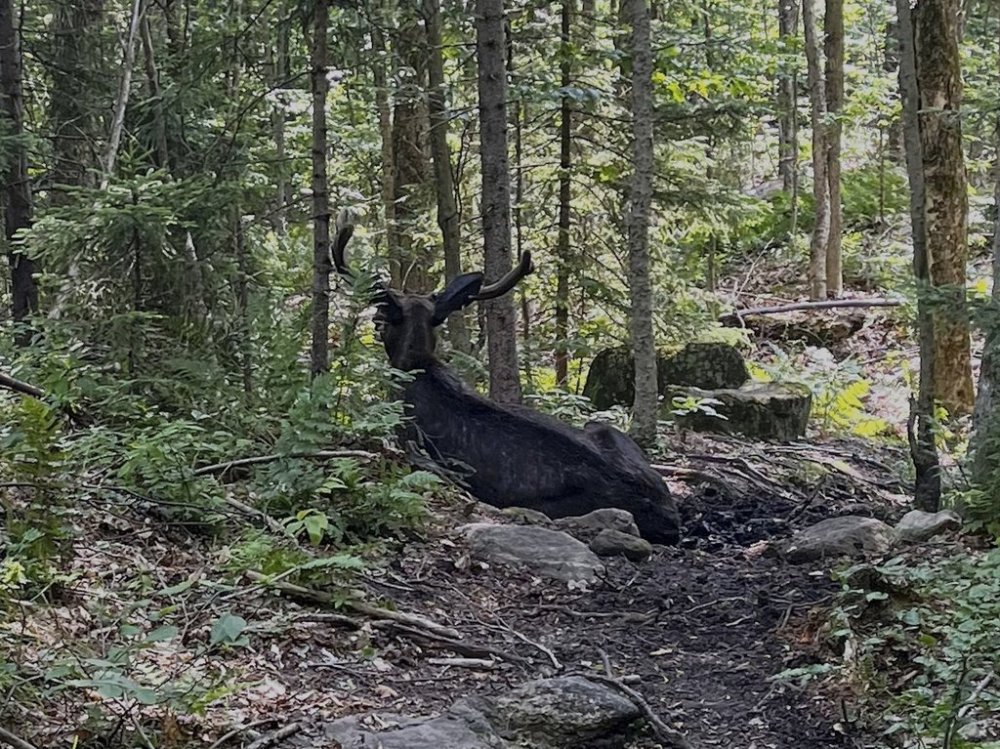
Ailing bull moose on Adirondack mountain hiking trail in New York put down
Advertisement
Read this article for free:
or
Already have an account? Log in here »
To continue reading, please subscribe:
Monthly Digital Subscription
$1 per week for 24 weeks*
- Enjoy unlimited reading on winnipegfreepress.com
- Read the E-Edition, our digital replica newspaper
- Access News Break, our award-winning app
- Play interactive puzzles
*Billed as $4.00 plus GST every four weeks. After 24 weeks, price increases to the regular rate of $19.95 plus GST every four weeks. Offer available to new and qualified returning subscribers only. Cancel any time.
Monthly Digital Subscription
$4.99/week*
- Enjoy unlimited reading on winnipegfreepress.com
- Read the E-Edition, our digital replica newspaper
- Access News Break, our award-winning app
- Play interactive puzzles
*Billed as $19.95 plus GST every four weeks. Cancel any time.
To continue reading, please subscribe:
Add Free Press access to your Brandon Sun subscription for only an additional
$1 for the first 4 weeks*
*Your next subscription payment will increase by $1.00 and you will be charged $16.99 plus GST for four weeks. After four weeks, your payment will increase to $23.99 plus GST every four weeks.
Read unlimited articles for free today:
or
Already have an account? Log in here »
Hey there, time traveller!
This article was published 07/08/2025 (234 days ago), so information in it may no longer be current.
A bull moose whose lingering presence around an Adirondack mountain hiking trail this summer forced its closure was euthanized after showing signs of severely deteriorating health, environmental officials said Thursday.
The Goodman Mountain trail in the Horseshoe Lake Wild Forest had been temporarily closed since June 6 after the oddly behaving moose began staying on or around the trail near the summit. The moose, about 6 feet (1.8 meters) tall at the shoulder, was first spotted by the trail in May and efforts coax it away were unsuccessful.
Wildlife biologists and a state veterinarian who visited the trail near Tupper Lake, New York, on Wednesday saw that the moose was severely emaciated and showed other signs of advanced disease. They determined euthanasia to be the most humane course of action, given the animal’s condition and low likelihood of survival, according to the state Department of Environmental Conservation.
“While we never take such actions lightly, humane euthanasia is sometimes the most responsible course of action. In addition, information gathered from this animal will help DEC better understand and manage moose in New York,” Jacqueline Lendrum, director of the agency’s Division of Fish and Wildlife, said in a prepared statement.
Researchers have estimated that the moose was about 4 years old.
Dr. Jennifer Bloodgood of the Cornell College of Veterinary Medicine said a necropsy will be performed to help authorities understand the cause of the moose’s decline and to provide more information on threats to the large mammals in New York state.
The state’s moose population was wiped out in the 1800s but has gradually grown from animals that wandered in from other northern states and Canada starting around 1980. There might be roughly 700 moose in the Adirondack region.