Climate change major driver of surging algae levels in Canada’s lakes: study

Advertisement

Advertise with us

TORONTO - A study of dozens of Canadian lakes suggests global warming is the major driver of surging algae levels, raising questions about the health of a sizable chunk of Earth's freshwater as temperatures continue to climb.

Read this article for free:


or

Already have an account? Log in here »

To continue reading, please subscribe:

Subscribe and receive a limited-edition Free Press branded hat or tote.

Digital Subscription

One year of digital access for only $205*

  • Enjoy unlimited reading on winnipegfreepress.com
  • Read the E-Edition, our digital replica newspaper
  • Access News Break, our award-winning app
  • Play interactive puzzles

*First annual payment billed as $205.00 + GST for one year. This annual subscription will automatically renew at $233.00 + GST every 52 weeks (10% off the regular annual price of $259.35). Offer available to new and qualified returning subscribers only. Cancel any time.

To continue reading, please subscribe:

Add Free Press access to your Brandon Sun subscription for only an additional

$1 for the first 4 weeks*

  • Enjoy unlimited reading on winnipegfreepress.com
  • Read the E-Edition, our digital replica newspaper
  • Access News Break, our award-winning app
  • Play interactive puzzles
Start now

*Your next Brandon Sun subscription payment will increase by $1.00 and you will be charged $17.95 plus GST for four weeks. After four weeks, your payment will increase to $24.95 plus GST every four weeks.

Hey there, time traveller!
This article was published 07/08/2025 (410 days ago), so information in it may no longer be current.

TORONTO – A study of dozens of Canadian lakes suggests global warming is the major driver of surging algae levels, raising questions about the health of a sizable chunk of Earth’s freshwater as temperatures continue to climb.

Average algae levels have spiked seven-fold since around the 1960s compared to the previous century, according to a study of 80 lakes across Canada.

Those changes were more pronounced in lakes near human impacts on the environment but were still seen far away from farms, mines and forestry, the study said.
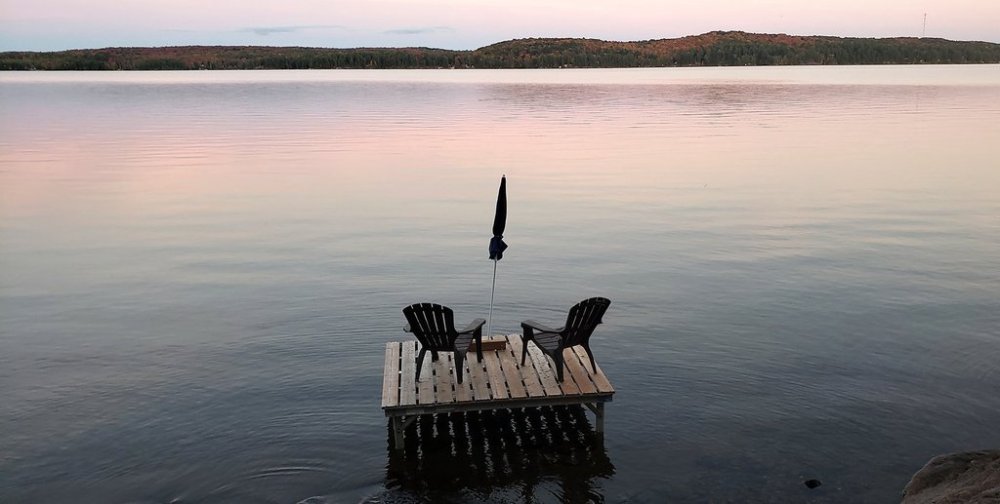
Muskoka chairs sit on a dock looking over Boshkung Lake, in Algonquin Highlands, Ont., Monday, Oct. 5, 2020. THE CANADIAN PRESS/Giordano Ciampini

“Even lakes in pristine catchments are vulnerable to change,” said the study, published last month in Communications Earth and Environment.

To try to explain what’s behind that spike, researchers looked at other possible algae influences such as rain, the sun’s radiation and land use changes, such as farming.

Temperature was the leading factor the study associated with surging algae growth.

“This is a warning,” said Hamid Ghanbari, the study’s lead author and a post-doctoral researcher at Université Laval in Quebec City.

The study doesn’t determine which lakes are facing dangerous levels of algae growth or account for toxic algal blooms. The seven-fold increase since the 1960s is an average across the 80 studied lakes.

Some with low algae levels to begin with are still at fairly low levels. But for lakes with lots to begin with, a seven-fold increase could lead to problems, including toxic algal blooms, researchers said.

“If (algae growth) reaches a level of being considered dangerous, we will see some consequences. It’s going to harm the lake ecosystem, it’s going to hurt the wildlife around it, and it’s also going to hurt our wallet,” said Ghanbari.

Algae are at the base of the lake’s food web, feeding the small fish and zooplankton that then feed the larger fish, and so on. But too much algae growth can suck the oxygen out of the bottom of the lake, leading to large fish kills and so-called “dead zones” where it’s hard for aquatic life to survive.

Toxic algal blooms are also a persistent issue for some of Canada’s drinking water sources, from Saskatchewan’s Buffalo Pound Lake to Ontario’s Bay of Quinte, leading to taste, odour and safety concerns and prompting upgrades to local treatment facilities. Contaminated lake water can also be deadly for dogs and cattle.

Pollution packed with nitrogen and phosphorus, such as from fertilizers or stormwater runoff, can fuel algae growth. And what this study shows is lakes already dealing with direct human impacts are even more vulnerable to climate change, said Katrina Eyvindson, the chair of Western University’s geography and environment department, who was not involved in the project.

“I think that’s what’s really key in this research,” she said, calling the project an “impressive undertaking.”

The research team led by scientists at Laval and McGill University pieced together an algae chronology that starts in 2014 and dates back all the way to 1850 by studying chlorophyll levels in lake sediment cores. Chlorophyll, molecules critical in turning sunlight to plant energy, are a proxy for algae and cyanobacteria known as blue-green algae, which also performs photosynthesis.

Those samples were drawn from lakes covering a massive swath of Canada and facing different conditions.

By the mid 1960s – a “breakpoint” identified by the researchers – both temperature and chlorophyll increases began to accelerate.

Climate change, driven by the burning of fossil fuels, is warming Canada about twice as fast as the global average. Since the mid-20th century, average temperatures in Canada have increased by 2.4C degrees, federal records indicate.

The findings underscore the urgent need to fight climate change and protect Canada’s lakes, said Irene Gregory-Eaves, a McGill biology professor and study co-author. Canada has the most lakes of any country and holds about seven per cent of the world’s renewable fresh water.

“I would hope that this is like a big megaphone for, you know, getting people interested in climate change, trying to put pressure on government to make sure that strong policies and laws are in place to bend the curve on emissions,” she said.

This report by The Canadian Press was first published Aug. 7, 2025.

Report Error Submit a Tip

More Stories

Elmwood–East Kildonan candidate promises to tackle ‘inefficiency’ in government

Gabrielle Piché 3 minute read Preview

Elmwood–East Kildonan candidate promises to tackle ‘inefficiency’ in government

Gabrielle Piché 3 minute read Yesterday at 6:17 PM CDT

The former assistant of late Elmwood–East Kildonan councillor Jason Schreyer is again running for the seat.

Chris Sweryda officially launched his campaign Saturday. He did so with the backdrop of a grocery program he runs, where food is sold near-cost out of St. Gerard School’s gym.

Rows of cereal, pasta sauce and chips filled tables ahead of the program’s afternoon opening. Sweryda created the pop-up with Schreyer months ahead of the former councillor’s April 2025 death.

The program sees roughly 500 people each day it’s open (which is every other week on Saturday), Sweryda said.

Read
Yesterday at 6:17 PM CDT

Gillingham in lead with decided voters

Nicole Buffie 6 minute read Preview

Gillingham in lead with decided voters

Nicole Buffie 6 minute read Friday, Sep. 18, 2026

A cloud of uncertainty is hanging over Winnipeg as October’s municipal election nears.

Three months after a poll showed more than 40 per cent of Winnipeggers wanted to see someone other than current mayor Scott Gillingham elected, a new Abacus Data poll indicates more than half of Winnipeg voters are undecided heading into next month’s civic election.

Of decided voters, 55 per cent favour Gillingham compared to 23 per cent for former councillor and provincial cabinet minister Kevin Klein and 11 per cent for funeral director Mike Vogiatzakis.

Of all respondents, just over 50 per cent said they were unsure while 13 per cent said they will not vote.

Read
Friday, Sep. 18, 2026

Serious crash at West Kildonan intersection known for collisions

Nicole Buffie 3 minute read Preview

Serious crash at West Kildonan intersection known for collisions

Nicole Buffie 3 minute read Updated: 6:09 PM CDT

Residents in West Kildonan say an intersection that was the site of a serious car crash Sunday morning is notoriously dangerous.

Rob Lick heard a loud bang around 7 a.m. and rushed out of his home on Leila to see what the commotion was. He saw two crushed SUVs, a white and black one, in the intersection. Police vehicles arrived shortly after.

“It sounded like when (garbage trucks) drop a big dumpster,” he said. “I heard somebody crying or wailing, they were standing by the vehicle so I don’t know who exactly it was or if someone was injured.”

The sound of sirens followed shortly after when emergency crews came to the scene. The intersection was immediately blocked off.

Read
Updated: 6:09 PM CDT

National Black Canadians Summit celebrates culture, combats racism

Gabrielle Piché 4 minute read Preview

National Black Canadians Summit celebrates culture, combats racism

Gabrielle Piché 4 minute read Yesterday at 6:06 PM CDT

Despite the event’s name — the National Black Canadians Summit — Bruce Miller felt he should attend.

He booked a ticket. And so, this weekend, the Indigenous Manitoban joined roughly 1,500 people flocking to the RBC Convention Centre.

It’s a full schedule — addresses from a former Canadian governor general, sessions on Black mental health and anti-Black racism.

The annual event draws politicians, artists and other professionals from across the country.

Read
Yesterday at 6:06 PM CDT

A quick look at where provinces and territories stand on time changes

The Canadian Press 2 minute read Preview

A quick look at where provinces and territories stand on time changes

The Canadian Press 2 minute read Friday, Sep. 18, 2026

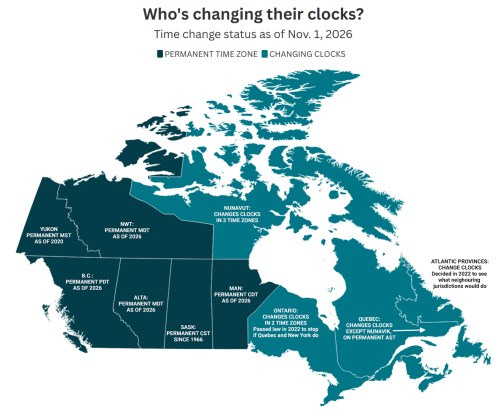
WINNIPEG - Manitoba's government said Thursday the province will be sticking with daylight time year-round, making it the latest jurisdiction to move away from twice-annual time changes. Here's a look at where things stand across Canada:

British Columbia said in March that it was moving to permanent Pacific daylight time. The change also means that parts of northeastern B.C., which have been on mountain standard time year round, are now in alignment with the rest of the province.

Alberta also switched to permanent daylight time this year in what it calls Alberta time. The change means it now has the same time as Saskatchewan year round.

Saskatchewan has been on permanent central standard time since 1966.

Read
Friday, Sep. 18, 2026

Grieving child builds backyard rocket ship

Harriet Zaidman 4 minute read Yesterday at 2:01 AM CDT

I Built a Rocket Ship (Kids Can Press, 32 pages, hardcover, $22) by Winnipegger Anna Lazowski is a tender story for children ages 4-8 about a little girl trying to make sense of her mother’s death. The child engages in conversation with her late mom, agreeing and disagreeing about things said as she carries objects (and of course, the cat) to the backyard. There, she is building a rocket ship she will pilot into the skies to find her mom again.

Jennica Lounsbury’s varied perspectives show the range of emotions the little girl experiences.

● ● ●

Northwoods Lullaby by Mary Casanova (University of Minnesota Press, 32 pages, hardover, $25) is a bedtime book for readers up to age eight, perfect to bring a busy, happy day to a close. Just like children who are listening to adults reading the book, all the animal babies are being tucked into their nests and burrows by loving parents: “Thump and scamper,/nimble clover./ Soon it’s time to rest. Baby loon/ nestles in/as Papa floats along.”