

Peru enacts amnesty for military personnel and police in Shining Path insurgency
Advertisement
Read this article for free:
or
Already have an account? Log in here »
To continue reading, please subscribe:

Digital Subscription
One year of digital access for only $205*
- Enjoy unlimited reading on winnipegfreepress.com
- Read the E-Edition, our digital replica newspaper
- Access News Break, our award-winning app
- Play interactive puzzles
*First annual payment billed as $205.00 + GST for one year. This annual subscription will automatically renew at $233.00 + GST every 52 weeks (10% off the regular annual price of $259.35). Offer available to new and qualified returning subscribers only. Cancel any time.
To continue reading, please subscribe:
Add Free Press access to your Brandon Sun subscription for only an additional
$1 for the first 4 weeks*
- Enjoy unlimited reading on winnipegfreepress.com
- Read the E-Edition, our digital replica newspaper
- Access News Break, our award-winning app
- Play interactive puzzles
*Your next Brandon Sun subscription payment will increase by $1.00 and you will be charged $17.95 plus GST for four weeks. After four weeks, your payment will increase to $24.95 plus GST every four weeks.
Read unlimited articles for free today:
or
Already have an account? Log in here »
Hey there, time traveller!
This article was published 13/08/2025 (423 days ago), so information in it may no longer be current.
LIMA, Peru (AP) — Peru’s president on Wednesday signed an amnesty bill into law, preventing military personnel and police officers from being prosecuted over alleged human rights abuses during the country’s armed conflict decades ago.
The new law came despite calls from the local and international community to strike it down. The war that raged between the Peruvian military and the Shining Path communist insurgency from 1980 to 2000 left an estimated 70,000 people dead, the majority of them in rural areas.
President Dina Boluarte said during an official ceremony that Peru “honors” those people who confronted the insurgency with “courage and dedication.” She added that military members and police officers have carried “for years the burden of endless trials, unjust accusations, and a pain that has affected not only them but also their families.”
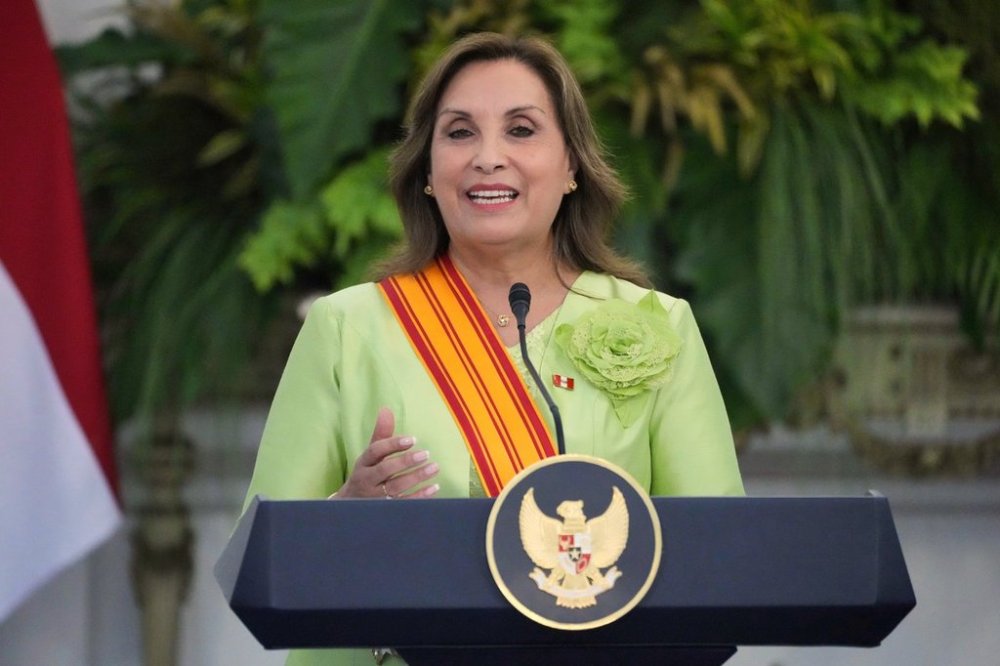
The decision to enact the law drew immediate criticism from some rights groups.
Human Rights Watch said in a statement that the law “grants impunity” to those involved in serious crimes, adding that Peru now “joins Nicaragua, Venezuela and other countries” in “disregarding the rights of victims.”
“This law is quite simply a betrayal of Peruvian victims,” said Juanita Goebertus, Americas director at the rights group. “It undermines decades of efforts to ensure accountability for atrocities and weakens the country’s rule of law even further.”
The law was passed by Congress in July. A coalition of human rights organizations said that it could wipe out 156 convictions and another 600 cases that are being prosecuted.
Supporters of the law come from right-wing political parties that have historically defended the military, including the Popular Force party led by Keiko Fujimori, daughter of former President Alberto Fujimori, who died in September. The ex-president, who led Peru from 1990 to 2000, was in prison for most of the last 15 years of his life in prison after being convicted of crimes against humanity.
Fujimori’s administration helped to put the nation’s economy on track following years of hyperinflation and defeated the Shining Path, a fanatic communist group that led a violent campaign to overthrow the government. But his government took an authoritarian turn in 1992, when he ordered the military to shut down Peru’s congress and its supreme court and declared a state of emergency.
Other amnesty laws passed in 1995 in Peru shielded military and police personnel from prosecution for alleged human rights abuses during the country’s internal conflict, including massacres, torture and forced disappearances.
The Inter-American Court of Human Rights had at least twice previously declared amnesty laws in Peru invalid for violating the right to justice and breaching international human rights standards.
A truth commission determined that the majority of the conflict’s victims were Indigenous Peruvians caught up in clashes between security forces and Shining Path.
____
Follow AP’s coverage of Latin America and the Caribbean at https://apnews.com/hub/latin-america