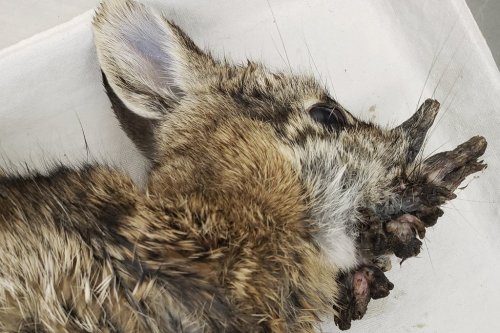
Rabbits with ‘horns’ in Colorado are being called ‘Frankenstein bunnies.’ Here’s why

Advertisement

Advertise with us

DENVER (AP) — A group of rabbits in Colorado with grotesque, hornlike growths may seem straight out of a low-budget horror film, but scientists say there's no reason to be spooked — the furry creatures merely have a relatively common virus.

Read this article for free:


or

Already have an account? Log in here »

To continue reading, please subscribe:

Subscribe and receive a limited-edition Free Press branded hat or tote.

Digital Subscription

One year of digital access for only $205*

  • Enjoy unlimited reading on winnipegfreepress.com
  • Read the E-Edition, our digital replica newspaper
  • Access News Break, our award-winning app
  • Play interactive puzzles

*First annual payment billed as $205.00 + GST for one year. This annual subscription will automatically renew at $233.00 + GST every 52 weeks (10% off the regular annual price of $259.35). Offer available to new and qualified returning subscribers only. Cancel any time.

To continue reading, please subscribe:

Add Free Press access to your Brandon Sun subscription for only an additional

$1 for the first 4 weeks*

  • Enjoy unlimited reading on winnipegfreepress.com
  • Read the E-Edition, our digital replica newspaper
  • Access News Break, our award-winning app
  • Play interactive puzzles
Start now

*Your next Brandon Sun subscription payment will increase by $1.00 and you will be charged $17.95 plus GST for four weeks. After four weeks, your payment will increase to $24.95 plus GST every four weeks.

Hey there, time traveller!
This article was published 13/08/2025 (408 days ago), so information in it may no longer be current.

DENVER (AP) — A group of rabbits in Colorado with grotesque, hornlike growths may seem straight out of a low-budget horror film, but scientists say there’s no reason to be spooked — the furry creatures merely have a relatively common virus.

The cottontails recently spotted in Fort Collins are infected with the mostly harmless Shope papillomavirus, which causes wart-like growths that protrude from their faces like metastasizing horns.

Viral photos have inspired a fluffle of unflattering nicknames, including “Frankenstein bunnies,” “demon rabbits” and “zombie rabbits.” But their affliction is nothing new, with the virus inspiring ancient folklore and fueling scientific research nearly 100 years ago.
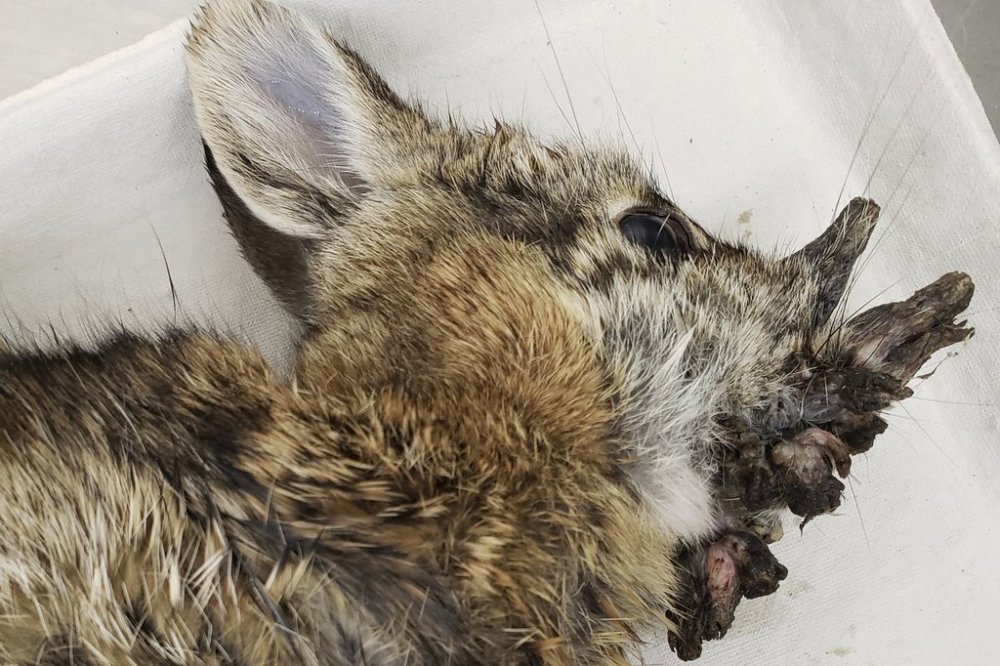
This photo provided by the Iowa Department of Natural Resources shows a deceased Eastern cottontail rabbit infected with Shope papillomavirus in October 2021. (Iowa Department of Natural Resources via AP)

The virus likely influenced the centuries-old jackalope myth in North America, which told of a rabbit with antlers or horns, among other animal variations. The disease in rabbits also contributed to scientists’ knowledge about the connection between viruses and cancer, such as the human papillomavirus that causes cervical cancer.

The virus in rabbits was named after Dr. Richard E Shope, a professor at The Rockefeller University who discovered the disease in cottontails in the 1930s.

News about the rabbit sightings in Fort Collins, 65 miles (105 kilometers) north of Denver, started getting attention after residents started spotting them around town and posting pictures.

Kara Van Hoose, a spokesperson for Colorado Parks and Wildlife, told The Associated Press on Wednesday that the agency has been getting calls about the rabbits seen in Fort Collins.

But she said that it’s not uncommon to see infected rabbits, especially in the summer, when the fleas and ticks that spread the virus are most active. The virus can spread from rabbit to rabbit but not to other species, including humans and pets, she said.

This Aug. 2025 photo provided by University of Kansas Biodiversity Institute shows a rabbit specimen with the Shope papilloma virus at University of Kansas Biodiversity Institute. (Courtesy of the University of Kansas Biodiversity Institute via AP)

The growths resemble warts but can look like horns if they grow longer, Van Hoose said. The growths don’t harm rabbits unless they grow on their eyes or mouths and interfere with eating. Rabbits’ immune systems are able to fight the virus and, once they do, the growths will disappear, she said.

___

Finley reported from Norfolk, Virginia.
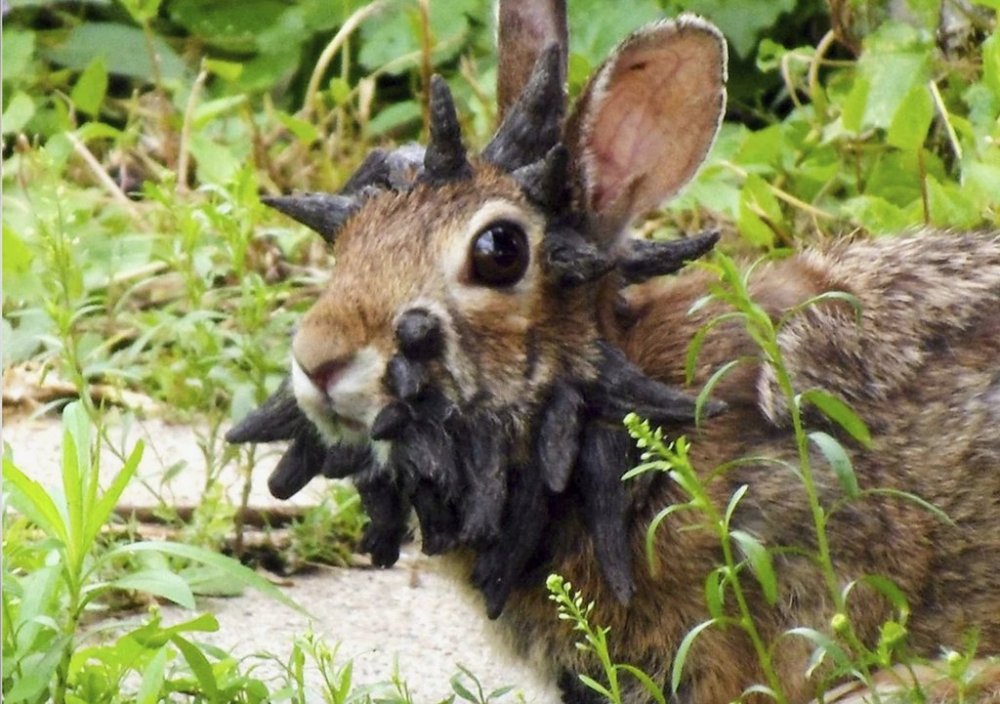
FILE - This June 26, 2013, image made from a video provided by Gunnar Boettcher shows a rabbit in Mankato, Minn., that Boettcher dubbed
FILE - This June 26, 2013, image made from a video provided by Gunnar Boettcher shows a rabbit in Mankato, Minn., that Boettcher dubbed "Frankenstein," due to what looks like horns growing out of its head. (Gunnar Boettcher via AP, File)
Report Error Submit a Tip

More Stories

Rabbits with ‘horns’ in Colorado are being called ‘Frankenstein bunnies.’ Here’s why

Ben Finley And Colleen Slevin, The Associated Press 3 minute read Preview

Rabbits with ‘horns’ in Colorado are being called ‘Frankenstein bunnies.’ Here’s why

Ben Finley And Colleen Slevin, The Associated Press 3 minute read Friday, Aug. 15, 2025

DENVER (AP) — A group of rabbits in Colorado with grotesque, hornlike growths may seem straight out of a low-budget horror film, but scientists say there's no reason to be spooked — the furry creatures merely have a relatively common virus.

The cottontails recently spotted in Fort Collins are infected with the mostly harmless Shope papillomavirus, which causes wart-like growths that protrude from their faces like metastasizing horns.

Viral photos have inspired a fluffle of unflattering nicknames, including “Frankenstein bunnies,” “demon rabbits” and “zombie rabbits.” But their affliction is nothing new, with the virus inspiring ancient folklore and fueling scientific research nearly 100 years ago.

The virus likely influenced the centuries-old jackalope myth in North America, which told of a rabbit with antlers or horns, among other animal variations. The disease in rabbits also contributed to scientists' knowledge about the connection between viruses and cancer, such as the human papillomavirus that causes cervical cancer.

Read
Friday, Aug. 15, 2025

Potential Jets backup options include two possible netminder reunions

Ken Wiebe 7 minute read Preview

Potential Jets backup options include two possible netminder reunions

Ken Wiebe 7 minute read Wednesday, Sep. 23, 2026

Kevin Cheveldayoff couldn’t help but make light of the situation.

Near the end of the press conference to discuss where things stand with training camp holdout Connor Hellebuyck, the general manager of the Jets was asked if he felt comfortable with the five goalies who were in training camp.

“You know I can’t have five on the roster,” Cheveldayoff quipped.

Only Cheveldayoff knows for sure how he feels about the organizational depth at the position and whether he’s planning to open the campaign with either Dom DiVincentiis or Thomas Milic in the backup role behind Stuart Skinner.

Read
Wednesday, Sep. 23, 2026

Governments fund AI training for aerospace, manufacturing workers

Free Press staff 1 minute read 2:01 AM CDT

Aerospace and manufacturing workers in Manitoba will be trained on digital traceability, production data and applied artificial intelligence through a government-funded pilot program.

The federal and provincial governments announced a joint $500,000 for the AeroTrace Workforce Pilot program on Thursday.

Manitoba Aerospace and Defence (formerly Manitoba Aerospace) will deliver the training through the Canada-Manitoba Workforce Tariff Response Program.

Mode40, a Manitoba firm, will assist. The data intelligence company built AeroTrace, which is a traceability and supplier-readiness platform focused on aerospace and defence supply chains.

Flammable gas culprit of 2024 Transcona home explosion: police

Malak Abas 2 minute read Preview

Flammable gas culprit of 2024 Transcona home explosion: police

Malak Abas 2 minute read 4:45 PM CDT

Flammable gas is believed to be the cause of a 2024 house explosion in Transcona that damaged neighbouring homes and displaced residents.

“As a result of the investigation and upon Crown review, the explosion is believed to be an isolated incident,” Winnipeg Police Service Const. Dani McKinnon said in an email Friday afternoon.

“There are no public safety concerns connected to this incident, and no criminal charges have been laid.”

The sudden blast happened in a bungalow on Camrose Bay on June 26, 2024. It levelled the home and caused significant damage to 22 other houses. At the time, it was described as “catastrophic” by the fire chief at the scene.

Read
4:45 PM CDT

Puzzles Palace

1 minute read Monday, Jul. 27, 2026

To solve our puzzles, please subscribe with this special offer: |

Province hires 17 psychiatrists to work in Winnipeg, Selkirk

Morgan Modjeski 4 minute read Preview

Province hires 17 psychiatrists to work in Winnipeg, Selkirk

Morgan Modjeski 4 minute read Updated: 5:52 PM CDT

SELKIRK — The province has hired 17 psychiatrists this year in an attempt to alleviate pressure on hospital emergency rooms.

Premier Wab Kinew said Friday people suffering mental-health crises are ending up in emergency rooms all too often because they have nowhere else to turn.

“Whatever mental health care looks like for you and your family, you’re journey is going to be supported by these 17 net new psychiatrists,” Kinew said at a news conference outside Selkirk Mental Health Centre.

Of the 17 psychiatrists, 14 will work primarily in Winnipeg and three at the Selkirk facility.

Read
Updated: 5:52 PM CDT