Takeaways from AP’s investigation into online school for incarcerated teens
Advertisement
Read this article for free:
or
Already have an account? Log in here »
To continue reading, please subscribe:

Digital Subscription
One year of digital access for only $205*
- Enjoy unlimited reading on winnipegfreepress.com
- Read the E-Edition, our digital replica newspaper
- Access News Break, our award-winning app
- Play interactive puzzles
*First annual payment billed as $205.00 + GST for one year. This annual subscription will automatically renew at $233.00 + GST every 52 weeks (10% off the regular annual price of $259.35). Offer available to new and qualified returning subscribers only. Cancel any time.
To continue reading, please subscribe:
Add Free Press access to your Brandon Sun subscription for only an additional
$1 for the first 4 weeks*
- Enjoy unlimited reading on winnipegfreepress.com
- Read the E-Edition, our digital replica newspaper
- Access News Break, our award-winning app
- Play interactive puzzles
*Your next Brandon Sun subscription payment will increase by $1.00 and you will be charged $17.95 plus GST for four weeks. After four weeks, your payment will increase to $24.95 plus GST every four weeks.
Read unlimited articles for free today:
or
Already have an account? Log in here »
Hey there, time traveller!
This article was published 13/08/2025 (401 days ago), so information in it may no longer be current.
GAINESVILLE, Fla. (AP) — No matter the offense, states must educate students in juvenile detention. It’s a complicated challenge, no doubt — and success stories are scarce.
In Florida, where more than 1,000 students are in long-term confinement, the state last year put those kids’ schooling online. That’s despite strong evidence that online learning failed many kids during the pandemic. The state juvenile justice system contracted with the Florida Virtual School, one of the nation’s oldest and largest online learning systems.
State leaders were hoping Florida Virtual School would bring more rigorous, uniform standards across their juvenile justice classrooms. When students left detention, the theory went, they could have the option of continuing in the online school until graduation.
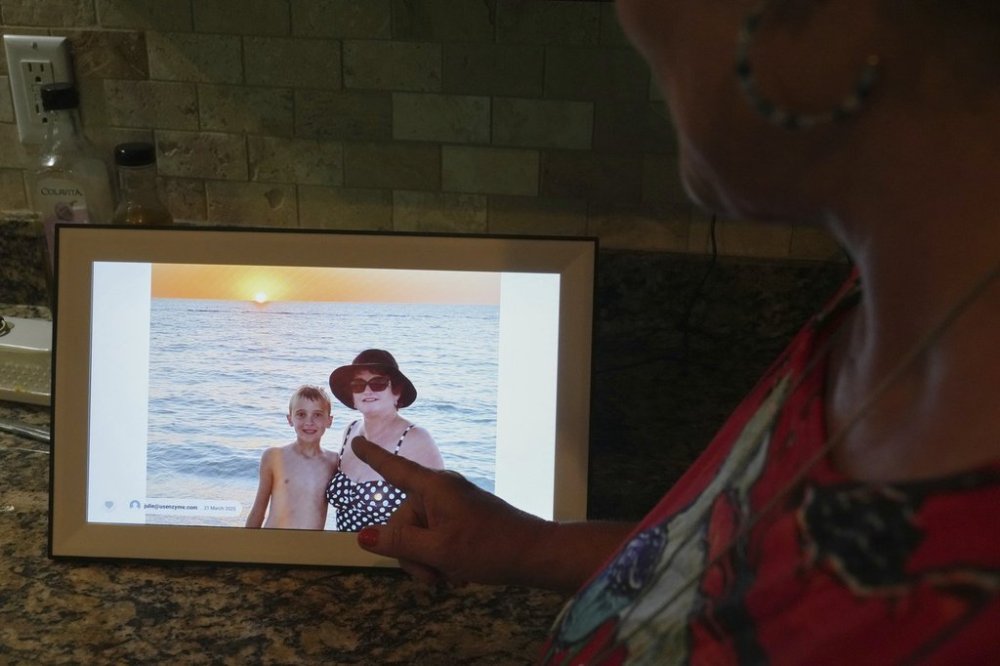
But an AP investigation showed the online learning has been disastrous. Not only are students struggling to learn, but their frustration with virtual school also leads them to get into more trouble — thus extending their stay in juvenile detention.
Here are key takeaways from the investigation.
Detained students say they’re getting little support with online school
In interviews, students describe difficulty understanding their online schoolwork. In embracing Florida Virtual School, the residential commitment centers stopped providing in-person teachers for each subject, relying instead on the online faculty. The adults left in classrooms with detainees are largely serving as supervisors, and students say they rarely can answer their questions or offer assistance. Students also report difficulty getting help from the online teachers.
A dozen letters from incarcerated students, written to lawmakers and obtained by The Associated Press, describe online schoolwork that’s hard to access or understand — with little support from staff.
“Dear Law maker, I really be trying to do my work so I won’t be getting in trouble but I don’t be understanding the work,” wrote one student. “They don’t really hands on help me.”
Wrote another: “My zoom teachers they never email me back or try to help me with my work. It’s like they think we’re normal kids. Half of us don’t even know what we’re looking at.”
Frustration with school has led to outbursts — adding to students’ time in custody
When students misbehave in long-term confinement, their stays can be extended. At the low end is a “level freeze,” when a student can’t make progress toward release for a few days. For more serious offenses, students are sent back to county detention centers to face new charges. The weeks they spend there are called “dead time,” because they can’t count toward their overall sentence.
And since Florida adopted online school in its residential commitment centers, students’ frustration with their learning has led to longer stays.
One teen described having trouble passing an online pre-algebra test. The adult supervising the classroom couldn’t help him. Frustrated, he threw his desk against the wall. He received a “level freeze” of three to five days, essentially extending his time at the residential commitment center.
Another teen has broken three laptops, his grandmother says — two of them in frustration with not receiving help with online school. Each offense has added to his time in confinement. He initially was sentenced to six to nine months for breaking into a vape store, but now is on track to be locked up at least 28 months.
The total number of youth in Florida’s residential commitment centers increased to 1,388 in June, the latest data reported by the state, up 177 since July 2024, when the department adopted virtual instruction. That could indicate detainees are staying in confinement longer.
“Correlation does not equal causation,” responded Amanda Slama, a Department of Juvenile Justice spokeswoman.
Going back to school after leaving detention is tricky

One of the arguments Florida made for using online schooling was that students could continue their studies at Florida Virtual School after leaving detention, when many struggle to re-enter their local public schools.
That’s not as easy as it seems. One student in AP’s investigation was refused entry to his local middle school; officials said he was too old to enroll. When his parents tried to sign up for Florida Virtual, they were told they couldn’t sign up so late in the school year.
Florida Virtual leaders say they provide a transition specialist for each student who leaves residential commitment to help them find a school. But this family says they were never offered this help. No one told them about a special version of Florida Virtual that would have allowed the student to pick up where he left off in detention.
____
The Associated Press receives support from the Public Welfare Foundation for reporting focused on criminal justice, and AP’s education coverage receives financial support from multiple private foundations. AP is solely responsible for all content. Find AP’s standards for working with philanthropies, a list of supporters and funded coverage areas at AP.org.