Green spaces are key to combating record heat in marginalized communities
Advertisement
Read this article for free:
or
Already have an account? Log in here »
To continue reading, please subscribe:

Digital Subscription
One year of digital access for only $205*
- Enjoy unlimited reading on winnipegfreepress.com
- Read the E-Edition, our digital replica newspaper
- Access News Break, our award-winning app
- Play interactive puzzles
*First annual payment billed as $205.00 + GST for one year. This annual subscription will automatically renew at $233.00 + GST every 52 weeks (10% off the regular annual price of $259.35). Offer available to new and qualified returning subscribers only. Cancel any time.
To continue reading, please subscribe:
Add Free Press access to your Brandon Sun subscription for only an additional
$1 for the first 4 weeks*
- Enjoy unlimited reading on winnipegfreepress.com
- Read the E-Edition, our digital replica newspaper
- Access News Break, our award-winning app
- Play interactive puzzles
*Your next Brandon Sun subscription payment will increase by $1.00 and you will be charged $17.95 plus GST for four weeks. After four weeks, your payment will increase to $24.95 plus GST every four weeks.
Read unlimited articles for free today:
or
Already have an account? Log in here »
Hey there, time traveller!
This article was published 22/08/2025 (412 days ago), so information in it may no longer be current.
Keith Lambert and his family cope with the extreme heat of summertime Chicago by going in and out of their house as quickly as possible and making sure their insulated shades are always drawn.
“It’s really just minimizing the exposure,” Lambert said. “It’s about doing your best to manage your cooling touch points.”
Lambert is like tens of millions of Americans navigating major heat waves, with temperatures consistently exceeding 90 degrees Fahrenheit (32 degrees Celsius). More often than not, the heat hits hardest for people of color and low-income residents, although Lambert and his family consider themselves middle class.
“The reality is there is a financial tie as to your comfort level and your well-being when it comes to extreme heat conditions,” Lambert said. ““If you don’t have the means and or effort to cool, you have three choices: You bake, you’re suffering and dealing with it, or do the best to go out and find places that have air conditioning.”
Mortality records from cities across the country have shown that heat kills along socioeconomic and racial lines.
Environmental justice advocates trace this inequality back to decades of discriminatory housing policy, especially redlining — the 1930s government practice of rating neighborhoods’ investment worthiness using race as a determining factor and denying mortgages to minority buyers.
“The redlining and all of the historic environmental injustices that happens to Black and brown communities in this country are now coming to a head because it’s impacting everyone,” said Alicia White, founder of Project Petals, an environmental nonprofit focusing on those communities.
“It’s impacting our communities the most,” White said.
More green spaces needed
The extreme heat isn’t just uncomfortable; it’s the top cause of weather-related fatalities nationwide. According to a New York City mortality report, extreme heat kills an average of 350 New Yorkers each year. While heatwaves are “incredibly deadly,” according to Eric Klinenberg, a sociology professor at New York University, they are also “largely ignored.” Heat is invisible and makes for less spectacular imagery than hurricanes or floods.
“But also the people heatwaves affect are often made invisible in our public life,” said Klinenberg, the author of “Heat Wave: A Social Autopsy of Disaster in Chicago.” “They’re disproportionately poor, Black and elderly. They often live in segregated neighborhoods.”
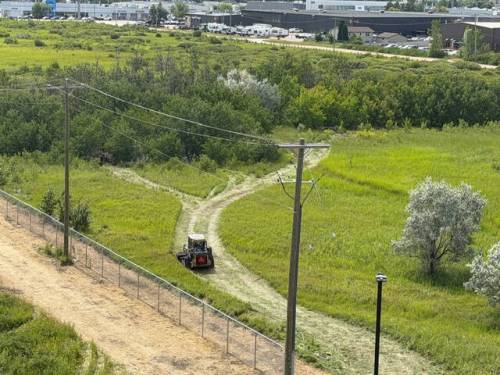
Environmentalists say one solution to beating the heat in sprawling cities is planting more trees, creating green spaces like parks and meadows and covering rooftops with plants.
In Arizona, the nonprofit Unlimited Potential, which focuses on promoting health and wellness, maintains a program to develop the urban forestry workforce to grow and maintain the tree canopy in Phoenix.
Tawsha Trahan, director of healthy communities at Unlimited Potential, said growing the tree canopy in Phoenix, especially in low-income neighborhoods, is needed as the lack of trees contributes to their hotter temperatures.
“(There) are many reasons that contribute to having hotter neighborhoods but one of those reasons is they simply have much less trees,” Trahan said. “It’s visual. You can drive around in a neighborhood and see a substantial difference with the tree canopy cover.”
Last fall, the New York City Council passed laws adding trees to the city charter’s sustainability plans and requiring the city to develop an urban forest plan to increase tree cover from 22 to 30 percent by 2035. Still many predominantly Black and Latino neighborhoods do not have green spaces within a five mile radius.
White, the Project Petals founder, said her organization is working to change that by providing the communities with resources they need to create green spaces, such as community gardens. Since 2015, Project Petals has helped open 10 green spaces, ranging from a quarter of an acre (1,000 square meters) to five acres (20,200 square meters).
“These spaces really help to filter our air and they lower our temperature,” White said.
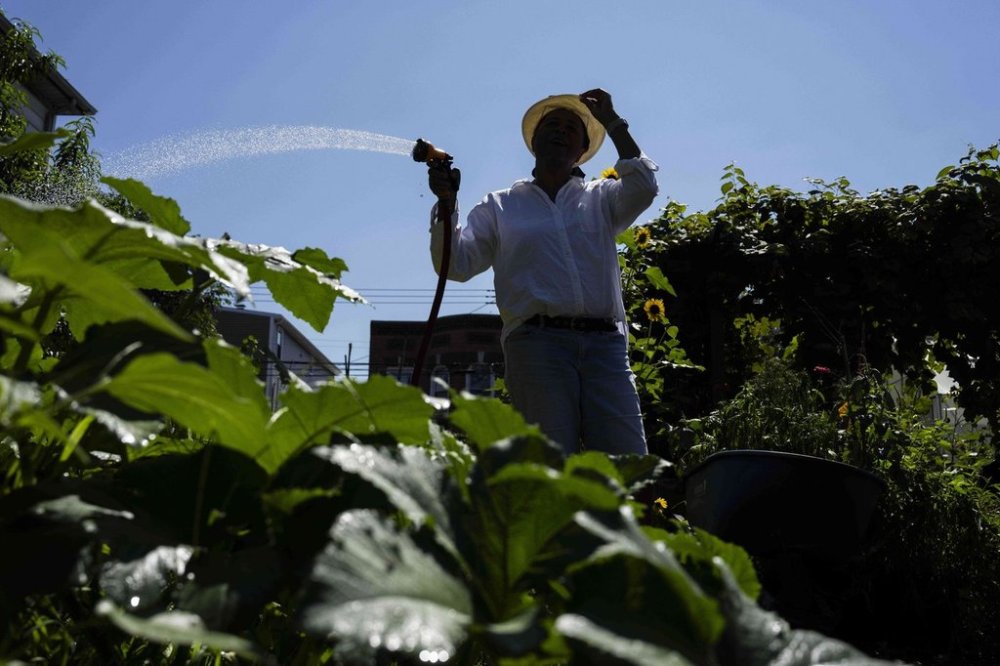
But these spaces, like one in the Jamaica section of Queens with its abundant greenery, aren’t just an area to cool down or find shade. They are a place where community can grow. White said you can often find residents and volunteers sitting down for conversation, finding a quiet space to read a book, studying for school and growing their own food.
“In a place like New York, we are called the concrete jungle, (some) people don’t have access to green spaces at all,” White said.
Fighting heat with data
With increasing temperatures and development patterns, experts say its only going to get hotter, unless something is done. Some are using data as a way to alert communities to the growing dangers.
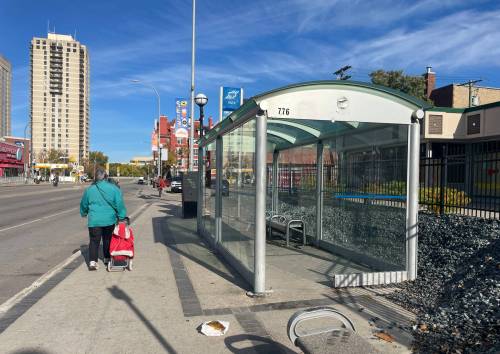
For example, Kevin Lanza, an assistant professor of environmental sciences at UTHealth Houston School of Public Health in Austin, is helping cities mitigate heat exposure at bus stops. Because Texas’s communities of color rely heavily on public transportation systems, this increases their exposure to heat, Lanza said.
In 2019, Lanza’s study found that the hottest days saw lower bus ridership. But when the bus stops were shaded by trees, the area was twice as cool and prevented steep ridership lost. The findings prompted the Houston transit authority, METRO, and other agencies to begin work to redesign their bus stops to provide relief from the heat, Lanza said.
As of June, according to reporting from Houston Public Media, six shelters have been redesigned to allow more airflow, with more stops expected to be replaced over the next six months.
In 2023, Cap Metro, the transit authority in Austin, also used Lanza’s study to develop a plan to mitigate heat impacts by planting more trees across the city and near existing bus stops.
Climate dashboard helping Latino communities
Julia Silver, a lifelong resident of California, used to spend her summers with her family at an outdoor public pool. Now, amid record-breaking heat waves, Silver and her family have spent the majority of the summer inside their Los Angeles home, the local mall or other air-conditioned facilities.
“It’s just kind of become unbearable during those hot summer days to spend time outside,” said Silver, a researcher at the UCLA Latino Policy and Politics Institute.
In June, Institute launched a Latino Climate and Health Dashboard, which creates a centralized source that shows the climate disparities of Latino neighborhoods across California. Developed with guidance from a statewide advisory committee of climate justice, public health, and data equity experts, the dashboard shows 90% of California’s Latino population faces climate inequities, from higher air pollution to more days of extreme heat than white residents.
“The disparities shown in the dashboard are not random,” said Silver, a senior research analyst at the LLPI and the project’s leader.
Silver said the main purpose of the dashboard is to ensure local leaders, community groups, government agencies and others have access to trustworthy data that reflects the experience communities in California and so many other states are facing.

“The more climate change intensifies the more difficult it is for people to live, and the more dangerous it is for people to be outside,” Silver said.
The dashboard will help create a shift to more inclusive climate planning by helping organizations understand who is most affected and where the greatest needs are.
“By shining a light on these patterns, we can start correcting them,” said Arturo Vargas Bustamante, research faculty director at LPPI and principal investigator for the project.
___
Associated Press writer Christine Fernando in Chicago contributed.